Sibelius Tapiola

Sibelius Tapiola

Author: Joshua Weilerstein July 10, 2026 Duration: 47:03

Ancient, mysterious, brooding savage dreams;
Within them dwells the Forest's mighty God,
And wood-sprites in the gloom weave magic secrets.

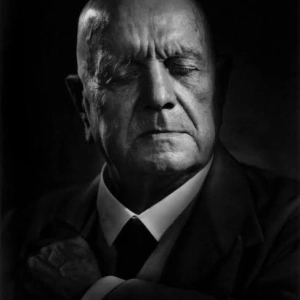
These lines are affixed to the first page of Sibelius' tone poem Tapiola, a piece that is mysterious in many ways and stands as Sibelius' last completed major work. You might be expecting me to say that Sibelius died soon after its composition, but this is not the case. Sibelius wrote Tapiola in 1926, but did not pass away until 1957. Over the course of Sibelius' final 30 years, he wrote almost no music, a creative silence that has never been properly explained. There are many theories about this silence, but the answer to why Sibelius stopped composing might never be found. So, we have this final major piece, Tapiola, written at the very height of the composer's powers. Tapiola, a piece of around 15–20 minutes in duration, is concentrated Sibelius at its very best. It is a piece full of mystery, atmosphere, and most of all, the immense and overwhelming power of nature. Tapiola directly translates to "The Realm of Tapio," Tapio being the forest spirit that is prominent in the Finnish national epic myth, the Kalevala. Throughout this piece, Sibelius uses an incredible economy of ideas to create something wholly unique. There is not a single composer who sounds like Sibelius, and furthermore, no piece of Sibelius' that sounds like this one, save maybe for the 7th symphony, written just before Tapiola. It is a piece absolutely at odds with modern life, with the speed and energy of a city, with the short, attention-grabbing dopamine hits of social media, and even with our modern understanding of nature. As the writer Jay Goodwin says, "Like all art, music is chiefly a humanistic pursuit, meant to provide us with a window to our world. In this piece, however, there is the hair-raising sense that the paradigm has been reversed and that we are the ones being watched. There is the sense that the music is listening to us." I would only change one word in that quote: during Tapiola, I think we have the sense that nature is listening to us, because this music is, essentially, nature. I can't wait to talk you through this wonderfully enigmatic work. Join us!


There’s a particular kind of curiosity that draws people to classical music, but the sheer scale of the repertoire can feel overwhelming. Sticky Notes: The Classical Music Podcast, hosted by conductor Joshua Weilerstein, meets that curiosity right where it is. Think of it as a series of open conversations about the music itself, designed to be equally engaging for someone hearing a symphony for the first time and for a lifelong devotee. Episodes might feature a thoughtful interview with a performing artist, offering a glimpse behind the curtain, or they could focus entirely on a single piece, peeling back its layers to explore why it resonates. Weilerstein guides these explorations with clarity and enthusiasm, moving seamlessly from foundational concepts to more nuanced details about different musical eras. The entire premise of this podcast is built on a genuine belief that this music belongs to all of us. It’s about replacing any sense of intimidation with connection and understanding. While past seasons are gradually being re-released, each episode stands as its own invitation to listen more deeply.
Author: Language: English Episodes: 50

Sticky Notes: The Classical Music Podcast
Podcast Episodes
Schubert: Die Schöne Mullerin Mini-Episode No. 1 (Free Preview) [not-audio_url] [/not-audio_url]

Duration: 6:52
This is a free preview of my new series of mini-episodes over on Patreon all about Schubert's Die Schöne Mullerin, one of the great masterpieces of the 19th century. Each week we'll explore one song from the cycle, in a…
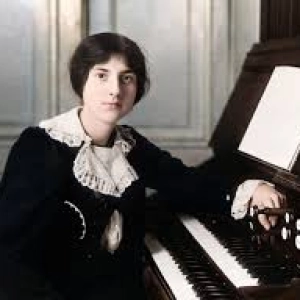
Lili Boulanger: Psalm 130 [not-audio_url] [/not-audio_url]

Duration: 46:24
The story of Lili Boulanger's life is one of the most fascinating and tragic in all of musical history. A remarkably precocious talent, Boulanger learned to read sheet music before the alphabet, played the violin, piano,…
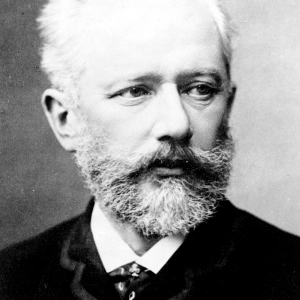
Tchaikovsky Symphony No. 6 (Part 2) [not-audio_url] [/not-audio_url]

Duration: 48:23
In a letter to Tchaikovsky's nephew Vladimir Davydov, Tchaikovsky wrote: "I'm very pleased with its content, but dissatisfied, or rather not completely satisfied, with the instrumentation. For some reason it's not coming…
Tchaikovsky Symphony No. 6 (Part 1) [not-audio_url] [/not-audio_url]

Duration: 50:44
The great and somewhat controversial conductor Leopold Stokowski said this about Tchaikovsky: "His musical utterance comes directly from the heart and is a spontaneous expression of his innermost feeling. It is as sincer…
Beethoven String Quartet, Op. 59, No.2 [not-audio_url] [/not-audio_url]

Duration: 56:56
I'm always tickled by composer trivia questions, like which standard canon works begin in a major key and end in a minor key? I'll give you one, but please comment others below: Mendelssohn's 4th Symphony. Well, how abou…
Brahms Symphony No. 2 LIVE w/ The Aalborg Symphony [not-audio_url] [/not-audio_url]

Duration: 58:32
Brahms spent much of his adult life battling with his ambition to write the next great symphony and his terror at the shadow of Beethoven standing behind him. Brahms tortured himself for 14 years with his first symphony,…
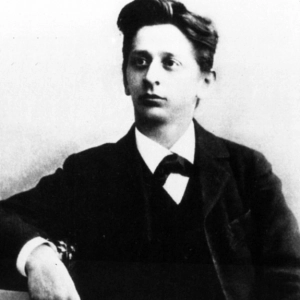
Zemlinsky: The Mermaid [not-audio_url] [/not-audio_url]

Duration: 1:01:32
The story of Alexander von Zemlinsky's The Mermaid begins with a passionate love affair and ends in heartbreak of the most unabashedly big-R Romantic kind. In 1900, the young, fabulously talented, and famously beautiful…
Pergolesi Stabat Mater [not-audio_url] [/not-audio_url]

Duration: 59:02
Many aspects of Giovanni Battista Pergolesi's life seem relatively normal when it comes to composers of the Baroque era. He was prolific, died young, and his music became very famous only after his death. However, all th…
Rachmaninoff Piano Concerto No. 2 [not-audio_url] [/not-audio_url]

Duration: 52:41
We humans seem to love comeback stories, and there is no comeback quite as compelling in the classical music world as Rachmaninoff's Second Piano Concerto. It was written three years after the disastrous premiere of his…