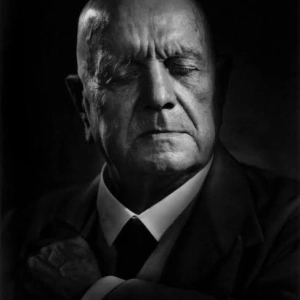
Sibelius Tapiola

Sibelius Tapiola

Author: Joshua Weilerstein July 10, 2026 Duration: 47:03

Ancient, mysterious, brooding savage dreams;
Within them dwells the Forest's mighty God,
And wood-sprites in the gloom weave magic secrets.

These lines are affixed to the first page of Sibelius' tone poem Tapiola, a piece that is mysterious in many ways and stands as Sibelius' last completed major work. You might be expecting me to say that Sibelius died soon after its composition, but this is not the case. Sibelius wrote Tapiola in 1926, but did not pass away until 1957. Over the course of Sibelius' final 30 years, he wrote almost no music, a creative silence that has never been properly explained. There are many theories about this silence, but the answer to why Sibelius stopped composing might never be found. So, we have this final major piece, Tapiola, written at the very height of the composer's powers. Tapiola, a piece of around 15–20 minutes in duration, is concentrated Sibelius at its very best. It is a piece full of mystery, atmosphere, and most of all, the immense and overwhelming power of nature. Tapiola directly translates to "The Realm of Tapio," Tapio being the forest spirit that is prominent in the Finnish national epic myth, the Kalevala. Throughout this piece, Sibelius uses an incredible economy of ideas to create something wholly unique. There is not a single composer who sounds like Sibelius, and furthermore, no piece of Sibelius' that sounds like this one, save maybe for the 7th symphony, written just before Tapiola. It is a piece absolutely at odds with modern life, with the speed and energy of a city, with the short, attention-grabbing dopamine hits of social media, and even with our modern understanding of nature. As the writer Jay Goodwin says, "Like all art, music is chiefly a humanistic pursuit, meant to provide us with a window to our world. In this piece, however, there is the hair-raising sense that the paradigm has been reversed and that we are the ones being watched. There is the sense that the music is listening to us." I would only change one word in that quote: during Tapiola, I think we have the sense that nature is listening to us, because this music is, essentially, nature. I can't wait to talk you through this wonderfully enigmatic work. Join us!


There’s a particular kind of curiosity that draws people to classical music, but the sheer scale of the repertoire can feel overwhelming. Sticky Notes: The Classical Music Podcast, hosted by conductor Joshua Weilerstein, meets that curiosity right where it is. Think of it as a series of open conversations about the music itself, designed to be equally engaging for someone hearing a symphony for the first time and for a lifelong devotee. Episodes might feature a thoughtful interview with a performing artist, offering a glimpse behind the curtain, or they could focus entirely on a single piece, peeling back its layers to explore why it resonates. Weilerstein guides these explorations with clarity and enthusiasm, moving seamlessly from foundational concepts to more nuanced details about different musical eras. The entire premise of this podcast is built on a genuine belief that this music belongs to all of us. It’s about replacing any sense of intimidation with connection and understanding. While past seasons are gradually being re-released, each episode stands as its own invitation to listen more deeply.
Author: Language: English Episodes: 50

Sticky Notes: The Classical Music Podcast
Podcast Episodes
Ravel, Ravel, Ravel, w/Boris Giltburg and G. Henle Verlag! [not-audio_url] [/not-audio_url]

Duration: 59:12
Magician, Swiss Watchmaker, Aloof, Elegant, Precise, Soulful, Childlike, Naive, Warm: these are all words that have been used to describe Maurice Ravel, a man of elegant contradictions. But perhaps these contradictions a…
Amy Beach, "Gaelic" Symphony [not-audio_url] [/not-audio_url]

Duration: 1:00:56
Amy Beach is a name that might not be familiar to you. She was born in 1867 and died in 1944, and her life was one of the most fascinating and varied in musical history. She was a child prodigy, became a successful piani…
Smetana: Ma Vlast [not-audio_url] [/not-audio_url]

Duration: 1:05:54
Nationalism, patriotism, cultural identity, a sense of home; these are concepts and ideas whose popularity have ebbed and flowed throughout history. Nationalism has been seen as a natural expression of cultural identity…
Berg Violin Concerto [not-audio_url] [/not-audio_url]

Duration: 48:49
In the early 1930s, at the height of the atonal and twelve tone movement in music, the American violinist Louis Krasner commissioned a concerto from the Viennese Composer Alban Berg. Berg declined at first, saying that h…
Beethoven String Quartet, Op. 135 [not-audio_url] [/not-audio_url]

Duration: 57:42
There is nothing like hearing a Late Beethoven String Quartet for the first time. Beethoven's late string quartets, Op. 127, Op. 130, Op. 131, Op. 132, and Op. 135, are among the 5 greatest pieces of music ever written f…
Berlioz Symphonie Fantastique LIVE w/ The Aalborg Symphony [not-audio_url] [/not-audio_url]

Duration: 1:12:20
I'm so happy to share this live episode of Sticky Notes that I did with the Aalborg Symphony Orchestra in Denmark back in October! This episode covered Berlioz's remarkable Symphonie Fantastique - the ultimate symphonic…
Shostakovich Symphony No. 8 [not-audio_url] [/not-audio_url]

Duration: 1:08:33
Here are two statements by Dmitri Shostakovich about the same piece, the 8th symphony that we are talking about today: Statement No. 1, Shostakovich's published comments about the symphony when it was first performed in…
Literary Works in Classical Music [not-audio_url] [/not-audio_url]

Duration: 46:31
My Patreon sponsor for this episode, Adrian, set me a challenge: The influence of literary works on classical compositions, exploring pieces inspired by poetry, novels, or plays. He also asked me to do something else, an…