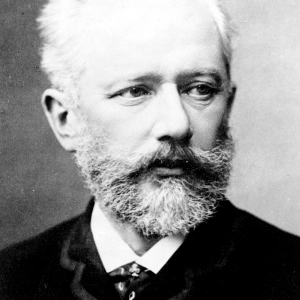
Tchaikovsky Symphony No. 6 (Part 1)

Tchaikovsky Symphony No. 6 (Part 1)

Author: Joshua Weilerstein March 21, 2026 Duration: 50:44

The great and somewhat controversial conductor Leopold Stokowski said this about Tchaikovsky: "His musical utterance comes directly from the heart and is a spontaneous expression of his innermost feeling. It is as sincere as if it were written with his blood." I couldn't agree more with Stokowski, because I think he hits on a word that has made Tchaikovsky's music so powerful to almost every audience that encounters it: sincere. Tchaikovsky's music is so profoundly moving because you feel as if there is no gap between the music and Tchaikovsky's emotions. It's as if he is earnestly speaking to you through his music. But paradoxically, this ability that Tchaikovsky had made him a punching bag of critics and cynics throughout his career and even into today. Even though Tchaikovsky remains one of the most popular composers in the Western Classical canon, his name is still not treated with the respect of a composer like Beethoven or Brahms or other luminaries. I understand that, but I also think Tchaikovsky's skills as a composer are extremely underrated, which brings me to Tchaikovsky's 6th and final symphony, nicknamed the "Pathetique."

Tchaikovsky's 6th symphony essentially rewrites the traditional symphonic form. It is one of the few 19th century symphonies that end quietly, and that ending is one of the most extraordinary and daring in the entire repertoire. It is a piece of remarkable complexity and brilliant construction, and it packs an emotional wallop that leaves you walking out of the hall slightly changed from the way you walked in. In fact, this piece is so multi-layered that I wanted to devote some extra time to it, so I've decided to make this a two-part episode. This week, we're going to talk about the controversies over Tchaikovsky's emotional state as he composed this symphony, and the first two movements of the piece: a massive, 17-minute first movement that ingeniously melds multiple different symphonic forms into one long breath, and a waltz with a twist. We'll get into a lot more detail than we usually do, giving us a chance to really give Tchaikovsky the respect he deserves.


There’s a particular kind of curiosity that draws people to classical music, but the sheer scale of the repertoire can feel overwhelming. Sticky Notes: The Classical Music Podcast, hosted by conductor Joshua Weilerstein, meets that curiosity right where it is. Think of it as a series of open conversations about the music itself, designed to be equally engaging for someone hearing a symphony for the first time and for a lifelong devotee. Episodes might feature a thoughtful interview with a performing artist, offering a glimpse behind the curtain, or they could focus entirely on a single piece, peeling back its layers to explore why it resonates. Weilerstein guides these explorations with clarity and enthusiasm, moving seamlessly from foundational concepts to more nuanced details about different musical eras. The entire premise of this podcast is built on a genuine belief that this music belongs to all of us. It’s about replacing any sense of intimidation with connection and understanding. While past seasons are gradually being re-released, each episode stands as its own invitation to listen more deeply.
Author: Language: English Episodes: 50

Sticky Notes: The Classical Music Podcast
Podcast Episodes
Ravel, Ravel, Ravel, w/Boris Giltburg and G. Henle Verlag! [not-audio_url] [/not-audio_url]

Duration: 59:12
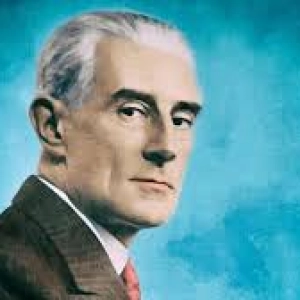
Magician, Swiss Watchmaker, Aloof, Elegant, Precise, Soulful, Childlike, Naive, Warm: these are all words that have been used to describe Maurice Ravel, a man of elegant contradictions. But perhaps these contradictions a…
Amy Beach, "Gaelic" Symphony [not-audio_url] [/not-audio_url]

Duration: 1:00:56
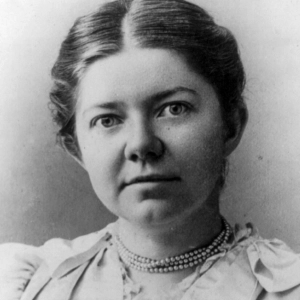
Amy Beach is a name that might not be familiar to you. She was born in 1867 and died in 1944, and her life was one of the most fascinating and varied in musical history. She was a child prodigy, became a successful piani…
Smetana: Ma Vlast [not-audio_url] [/not-audio_url]

Duration: 1:05:54
Nationalism, patriotism, cultural identity, a sense of home; these are concepts and ideas whose popularity have ebbed and flowed throughout history. Nationalism has been seen as a natural expression of cultural identity…
Berg Violin Concerto [not-audio_url] [/not-audio_url]

Duration: 48:49
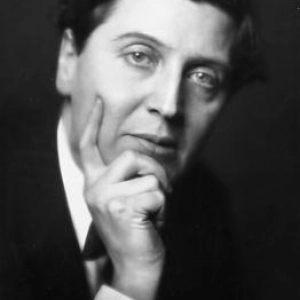
In the early 1930s, at the height of the atonal and twelve tone movement in music, the American violinist Louis Krasner commissioned a concerto from the Viennese Composer Alban Berg. Berg declined at first, saying that h…
Beethoven String Quartet, Op. 135 [not-audio_url] [/not-audio_url]

Duration: 57:42
There is nothing like hearing a Late Beethoven String Quartet for the first time. Beethoven's late string quartets, Op. 127, Op. 130, Op. 131, Op. 132, and Op. 135, are among the 5 greatest pieces of music ever written f…
Berlioz Symphonie Fantastique LIVE w/ The Aalborg Symphony [not-audio_url] [/not-audio_url]

Duration: 1:12:20
I'm so happy to share this live episode of Sticky Notes that I did with the Aalborg Symphony Orchestra in Denmark back in October! This episode covered Berlioz's remarkable Symphonie Fantastique - the ultimate symphonic…
Shostakovich Symphony No. 8 [not-audio_url] [/not-audio_url]

Duration: 1:08:33
Here are two statements by Dmitri Shostakovich about the same piece, the 8th symphony that we are talking about today: Statement No. 1, Shostakovich's published comments about the symphony when it was first performed in…
Literary Works in Classical Music [not-audio_url] [/not-audio_url]

Duration: 46:31
My Patreon sponsor for this episode, Adrian, set me a challenge: The influence of literary works on classical compositions, exploring pieces inspired by poetry, novels, or plays. He also asked me to do something else, an…