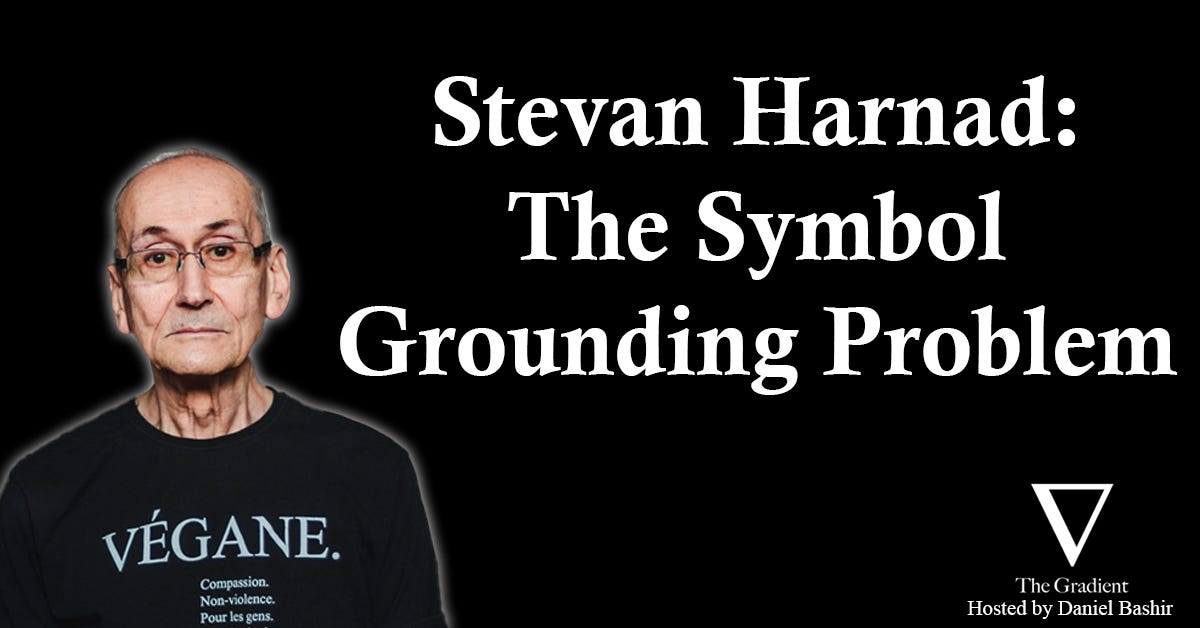
Kevin Dorst: Against Irrationalist Narratives

Kevin Dorst: Against Irrationalist Narratives

Author: Daniel Bashir July 18, 2024 Duration: 2:15:21

Episode 131

I spoke with Professor Kevin Dorst about:

* Subjective Bayesianism and epistemology foundations

* What happens when you’re uncertain about your evidence

* Why it’s rational for people to polarize on political matters

Enjoy—and let me know what you think!

Kevin is an Associate Professor in the Department of Linguistics and Philosophy at MIT. He works at the border between philosophy and social science, focusing on rationality.

Find me on Twitter for updates on new episodes, and reach me at editor@thegradient.pub for feedback, ideas, guest suggestions.

I spend a lot of time on this podcast—if you like my work, you can support me on Patreon :) You can also support upkeep for the full Gradient team/project through a paid subscription on Substack!

Subscribe to The Gradient Podcast:  Apple Podcasts  | Spotify | Pocket Casts | RSSFollow The Gradient on Twitter

Outline:

* (00:00) Intro

* (01:15) When do Bayesians need theorems?

* (05:52) Foundations of epistemology, metaethics, formal models, error theory

* (09:35) Extreme views and error theory, arguing for/against opposing positions

* (13:35) Changing focuses in philosophy — pragmatic pressures

* (19:00) Kevin’s goals through his research and work

* (25:10) Structural factors in coming to certain (political) beliefs

* (30:30) Acknowledging limited resources, heuristics, imperfect rationality

* (32:51) Hindsight Bias is Not a Bias

* (33:30) The argument

* (35:15) On eating cereal and symmetric properties of evidence

* (39:45) Colloquial notions of hindsight bias, time and evidential support

* (42:45) An example

* (48:02) Higher-order uncertainty

* (48:30) Explicitly modeling higher-order uncertainty

* (52:50) Another example (spoons)

* (54:55) Game theory, iterated knowledge, even higher order uncertainty

* (58:00) Uncertainty and philosophy of mind

* (1:01:20) Higher-order evidence about reliability and rationality

* (1:06:45) Being Rational and Being Wrong

* (1:09:00) Setup on calibration and overconfidence

* (1:12:30) The need for average rational credence — normative judgments about confidence and realism/anti-realism

* (1:15:25) Quasi-realism about average rational credence?

* (1:19:00) Classic epistemological paradoxes/problems — lottery paradox, epistemic luck

* (1:25:05) Deference in rational belief formation, uniqueness and permissivism

* (1:39:50) Rational Polarization

* (1:40:00) Setup

* (1:37:05) Epistemic nihilism, expanded confidence akrasia

* (1:40:55) Ambiguous evidence and confidence akrasia

* (1:46:25) Ambiguity in understanding and notions of rational belief

* (1:50:00) Claims about rational sensitivity — what stories we can tell given evidence

* (1:54:00) Evidence vs presentation of evidence

* (2:01:20) ChatGPT and the case for human irrationality

* (2:02:00) Is ChatGPT replicating human biases?

* (2:05:15) Simple instruction tuning and an alternate story

* (2:10:22) Kevin’s aspirations with his work

* (2:15:13) Outro

Links:

* Professor Dorst’s homepage and Twitter

* Papers

* Modest Epistemology

* Hedden: Hindsight bias is not a bias

* Higher-order evidence + (Almost) all evidence is higher-order evidence

* Being Rational and Being Wrong

* Rational Polarization

* ChatGPT and human irrationality


Get full access to The Gradient at thegradientpub.substack.com/subscribe
Hosted by Daniel Bashir, The Gradient: Perspectives on AI moves beyond surface-level headlines to explore the intricate machinery and human ideas shaping artificial intelligence. Each episode is built on a foundation of deep research, leading to conversations that are both technically substantive and broadly accessible. You'll hear from researchers, engineers, and philosophers who are actively building and critiquing our technological future, discussing not just how AI systems work, but the larger implications of their integration into society. This isn't about speculative hype; it's a grounded examination of real progress, persistent challenges, and ethical considerations from those on the front lines. The discussions peel back layers on topics like model architecture, policy, and the fundamental science behind the algorithms becoming part of our daily lives. For anyone curious about the substance behind the buzz-whether you have a technical background or are simply keen to understand a defining technology of our age-this podcast offers a crucial and thoughtful resource. Tune in for a consistently detailed and nuanced take that treats artificial intelligence with the complexity it deserves.
Author: Language: English Episodes: 100

The Gradient: Perspectives on AI
Podcast Episodes
Michael Levin & Adam Goldstein: Intelligence and its Many Scales [not-audio_url] [/not-audio_url]

Duration: 57:21
In episode 97 of The Gradient Podcast, Daniel Bashir speaks to Professor Michael Levin and Adam Goldstein. Professor Levin is a Distinguished Professor and Vannevar Bush Chair in the Biology Department at Tufts Universit…
Jonathan Frankle: From Lottery Tickets to LLMs [not-audio_url] [/not-audio_url]

Duration: 1:08:22
In episode 96 of The Gradient Podcast, Daniel Bashir speaks to Jonathan Frankle.Jonathan is the Chief Scientist at MosaicML and (as of release). Jonathan completed his PhD at MIT, where he investigated the properties of…
Nao Tokui: "Surfing" Musical Creativity with AI [not-audio_url] [/not-audio_url]

Duration: 1:02:19
In episode 95 of The Gradient Podcast, Daniel Bashir speaks to Nao Tokui.Nao Tokui is an artist/DJ and researcher based in Tokyo. While pursuing his Ph.D. at The University of Tokyo, he produced his first music album and…
Divyansh Kaushik: The Realities of AI Policy [not-audio_url] [/not-audio_url]

Duration: 1:17:44
In episode 94 of The Gradient Podcast, Daniel Bashir speaks to Divyansh Kaushik.Divyansh is the Associate Director for Emerging Technologies and National Security at the Federation of American Scientists where his focus…
Tal Linzen: Psycholinguistics and Language Modeling [not-audio_url] [/not-audio_url]

Duration: 1:14:50
In episode 93 of The Gradient Podcast, Daniel Bashir speaks to Professor Tal Linzen.Professor Linzen is an Associate Professor of Linguistics and Data Science at New York University and a Research Scientist at Google. He…
Kevin K. Yang: Engineering Proteins with ML [not-audio_url] [/not-audio_url]

Duration: 1:00:00
In episode 92 of The Gradient Podcast, Daniel Bashir speaks to Kevin K. Yang.Kevin is a senior researcher at Microsoft Research (MSR) who works on problems at the intersection of machine learning and biology, with an emp…
Miles Grimshaw: Benchmark, LangChain, and Investing in AI [not-audio_url] [/not-audio_url]

Duration: 1:00:47
In episode 90 of The Gradient Podcast, Daniel Bashir speaks to Miles Grimshaw.Miles is General Partner at Benchmark. He was previously a General Partner at Thrive Capital, where he helped the firm raise its fourth and fi…
Shreya Shankar: Machine Learning in the Real World [not-audio_url] [/not-audio_url]

Duration: 1:16:36
In episode 89 of The Gradient Podcast, Daniel Bashir speaks to Shreya Shankar.Shreya is a computer scientist pursuing her PhD in databases at UC Berkeley. Her research interest is in building end-to-end systems for peopl…
Stevan Harnad: AI's Symbol Grounding Problem [not-audio_url] [/not-audio_url]

Duration: 1:58:21
In episode 88 of The Gradient Podcast, Daniel Bashir speaks to Professor Stevan Harnad.Stevan Harnad is professor of psychology and cognitive science at Université du Québec à Montréal, adjunct professor of cognitive sci…