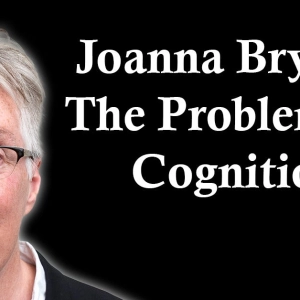
Venkatesh Rao: Protocols, Intelligence, and Scaling

Venkatesh Rao: Protocols, Intelligence, and Scaling

Author: Daniel Bashir March 7, 2024 Duration: 2:18:35

“There is this move from generality in a relative sense of ‘we are not as specialized as insects’ to generality in the sense of omnipotent, omniscient, godlike capabilities. And I think there's something very dangerous that happens there, which is you start thinking of the word ‘general’ in completely unhinged ways.”

In episode 114 of The Gradient Podcast, Daniel Bashir speaks to Venkatesh Rao.

Venkatesh is a writer and consultant. He has been writing the widely read Ribbonfarm blog since 2007, and more recently, the popular Ribbonfarm Studio Substack newsletter. He is the author of Tempo, a book on timing and decision-making, and is currently working on his second book, on the foundations of temporality. He has been an independent consultant since 2011, supporting senior executives in the technology industry. His work in recent years has focused on AI, semiconductor, sustainability, and protocol technology sectors. He holds a PhD in control theory (2003) from the University of Michigan. He is currently based in the Seattle area, and enjoys dabbling in robotics in his spare time. You can learn more about his work at venkateshrao.com

Have suggestions for future podcast guests (or other feedback)? Let us know here or reach us at editor@thegradient.pub

Subscribe to The Gradient Podcast:  Apple Podcasts  | Spotify | Pocket Casts | RSSFollow The Gradient on Twitter

Outline:

* (00:00) Intro

* (01:38) Origins of Ribbonfarm and Venkat’s academic background

* (04:23) Voice and recurring themes in Venkat’s work

* (11:45) Patch models and multi-agent systems: integrating philosophy of language, balancing realism with tractability

* (21:00) More on abstractions vs. tractability in Venkat’s work

* (29:07) Scaling of industrial value systems, characterizing AI as a discipline

* (39:25) Emergent science, intelligence and abstractions, presuppositions in science, generality and universality, cameras and engines

* (55:05) Psychometric terms

* (1:09:07) Inductive biases (yes I mentioned the No Free Lunch Theorem and then just talked about the definition of inductive bias and not the actual theorem 🤡)

* (1:18:13) LLM training and efficiency, comparing LLMs to humans

* (1:23:35) Experiential age, analogies for knowledge transfer

* (1:30:50) More clarification on the analogy

* (1:37:20) Massed Muddler Intelligence and protocols

* (1:38:40) Introducing protocols and the Summer of protocols

* (1:49:15) Evolution of protocols, hardness

* (1:54:20) LLMs, protocols, time, future visions, and progress

* (2:01:33) Protocols, drifting from value systems, friction, compiling explicit knowledge

* (2:14:23) Directions for ML people in protocols research

* (2:18:05) Outro

Links:

* Venkat’s Twitter and homepage

* Mediocre Computing

* Summer of Protocols and 2024 Call for Applications (apply!)

* Essays discussed

* Patch models and their applications to multivehicle command and control

* From Mediocre Computing

* Text is All You Need

* Magic, Mundanity, and Deep Protocolization

* A Camera, Not an Engine

* Massed Muddler Intelligence

* On protocols

* The Unreasonable Sufficiency of Protocols

* Protocols Don’t Build Pyramids

* Protocols in (Emergency) Time

* Atoms, Institutions, Blockchains


Get full access to The Gradient at thegradientpub.substack.com/subscribe
Hosted by Daniel Bashir, The Gradient: Perspectives on AI moves beyond surface-level headlines to explore the intricate machinery and human ideas shaping artificial intelligence. Each episode is built on a foundation of deep research, leading to conversations that are both technically substantive and broadly accessible. You'll hear from researchers, engineers, and philosophers who are actively building and critiquing our technological future, discussing not just how AI systems work, but the larger implications of their integration into society. This isn't about speculative hype; it's a grounded examination of real progress, persistent challenges, and ethical considerations from those on the front lines. The discussions peel back layers on topics like model architecture, policy, and the fundamental science behind the algorithms becoming part of our daily lives. For anyone curious about the substance behind the buzz-whether you have a technical background or are simply keen to understand a defining technology of our age-this podcast offers a crucial and thoughtful resource. Tune in for a consistently detailed and nuanced take that treats artificial intelligence with the complexity it deserves.
Author: Language: English Episodes: 100

The Gradient: Perspectives on AI
Podcast Episodes
Joon Park: Generative Agents and Human-Computer Interaction [not-audio_url] [/not-audio_url]

Duration: 2:21:25
In episode 77 of The Gradient Podcast, Daniel Bashir speaks to Joon Park.Joon is a third-year PhD student at Stanford, advised by Professors Michael Bernstein and Percy Liang. He designs, builds, and evaluates interactiv…
Christoffer Holmgård: AI for Video Games [not-audio_url] [/not-audio_url]

Duration: 1:09:06
In episode 76 of The Gradient Podcast, Andrey Kurenkov speaks to Dr Christoffer HolmgårdDr. Holmgård is a co-founder and the CEO of Modl.ai, which is building AI Engine for game development. Before starting the company,…
Riley Goodside: The Art and Craft of Prompt Engineering [not-audio_url] [/not-audio_url]

Duration: 59:42
In episode 75 of The Gradient Podcast, Daniel Bashir speaks to Riley Goodside. Riley is a Staff Prompt Engineer at Scale AI. Riley began posting GPT-3 prompt examples and screenshot demonstrations in 2022. He previously…
Talia Ringer: Formal Verification and Deep Learning [not-audio_url] [/not-audio_url]

Duration: 1:45:35
In episode 74 of The Gradient Podcast, Daniel Bashir speaks to Professor Talia Ringer.Professor Ringer is an Assistant Professor with the Programming Languages, Formal Methods, and Software Engineering group at the Unive…
Brigham Hyde: AI for Clinical Decision-Making [not-audio_url] [/not-audio_url]

Duration: 41:43
In episode 72 of The Gradient Podcast, Daniel Bashir speaks to Brigham Hyde.Brigham is Co-Founder and CEO of Atropos Health. Prior to Atropos, he served as President of Data and Analytics at Eversana, a life sciences com…
Scott Aaronson: Against AI Doomerism [not-audio_url] [/not-audio_url]

Duration: 1:09:32
In episode 72 of The Gradient Podcast, Daniel Bashir speaks to Professor Scott Aaronson. Scott is the Schlumberger Centennial Chair of Computer Science at the University of Texas at Austin and director of its Quantum Inf…
Ted Underwood: Machine Learning and the Literary Imagination [not-audio_url] [/not-audio_url]

Duration: 1:43:59
In episode 71 of The Gradient Podcast, Daniel Bashir speaks to Ted Underwood.Ted is a professor in the School of Information Sciences with an appointment in the Department of English at the University of Illinois at Urba…
Irene Solaiman: AI Policy and Social Impact [not-audio_url] [/not-audio_url]

Duration: 1:12:11
In episode 70 of The Gradient Podcast, Daniel Bashir speaks to Irene Solaiman.Irene is an expert in AI safety and policy and the Policy Director at HuggingFace, where she conducts social impact research and develops publ…
Drago Anguelov: Waymo and Autonomous Vehicles [not-audio_url] [/not-audio_url]

Duration: 1:05:23
In episode 69 of The Gradient Podcast, Daniel Bashir speaks to Drago Anguelov.Drago is currently a Distinguished Scientist and Head of Research at Waymo, where he joined in 2018. Earlier, he spent eight years at Google w…
Joanna Bryson: The Problems of Cognition [not-audio_url] [/not-audio_url]

Duration: 1:13:05
In episode 68 of The Gradient Podcast, Daniel Bashir speaks to Professor Joanna Bryson.Professor Bryson is Professor of Ethics and Technology at the Hertie School, where her research focuses on the impact of technology o…