Episode 304-Interview with Melissa Pons

Episode 304-Interview with Melissa Pons

Author: Dr. Steven Shepard December 3, 2025 Duration: 33:37
Because I do so much work in the world of sound, I’m always looking for resources that will inspire and challenge me. One of them is earth.fm, an online resource for people who appreciate the sounds of the natural world. Sound recordists from all over the world—and I mean ALL over the world—contribute tracks to earth.fm to be shared with anyone who wants to listen. They have a great Web site, which is just earth-dot-fm, and a terrific app, available in your favorite app store. In the process of getting to know them I got to know Melissa Pons, their primary content curator. Melissa is enormously talented: beyond earth.fm, her award-winning work as a sound designer and content creator has been featured on the BBC and NPR, among others. But as I got to know Melissa’s work, I began to think of her as much more than a skilled recordist: I also saw her as a thoughtful and deliberate listener. Her field recording albums cover the acoustic waterfront, and her contributions to earth.fm are as varied as they are beautiful. So, I asked Melissa, who is based in Portugal, to join me for a conversation about field recording, sound design, and the importance of going outside, being quiet, and listening to the voice of the natural world. In the program, you get to meet Melissa Pons.

Dr. Steven Shepard has spent a lifetime with his senses tuned to the environment, and The Natural Curiosity Project is the audio result of that deep attention. Each episode is built from his photographs, field recordings, and written observations, woven together into a narrative that feels less like a lecture and more like a shared exploration. You’ll hear the specific rustle of leaves in a particular forest, the call of a bird he’s been tracking for weeks, and the quiet reflections that arise from simply paying close attention. The core idea driving this podcast is a powerful one: that genuine curiosity is not just a personal trait but a transformative force. By immersing listeners in the details of the natural world-the often overlooked patterns, sounds, and stories-Shepard aims to spark that fundamental sense of wonder. He operates on the conviction that from curiosity comes discovery, and from that discovery, a more meaningful knowledge and, ultimately, a deeper understanding of our place within the world. This isn’t about grand pronouncements, but about the incremental insights gained through patient observation. Tuning into this podcast means joining a guided, sensory experience designed to reawaken your own questions about the landscape outside your window and the intricate systems that sustain it. The hope is that by the end of an episode, the world sounds a little different, looks a bit more intricate, and feels worthy of a second, more curious glance.
Author: Language: English Episodes: 50

The Natural Curiosity Project
Podcast Episodes
Episode 332-Jurassic AI [not-audio_url] [/not-audio_url]

Duration: 20:18
The world is currently gaga over AI—artificial intelligence. It is a remarkable technology, with the potential to create remarkable opportunities in many fields in the coming years. It is, however, enormously powerful, a…
Episode 331-Talk Dirty to Me Part 2 [not-audio_url] [/not-audio_url]

Duration: 16:11
This is part two of my series on soil ecosystem health. In this episode I’m in the Mad River Valley in central Vermont with ecologist Curt Lindberg, listening to the sounds of the soil in areas with and without invasive…
Episode 330-A Golden Story [not-audio_url] [/not-audio_url]

Duration: 9:09
In 1942, Simon & Schuster, in partnership with Western Publishing, released a new book series for kids. The initial print run of one-and-a-half million books sold out in five months, including one of the initial twelve t…
Episode 329-Musings on Bernd Heinrich [not-audio_url] [/not-audio_url]

Duration: 9:25
I just finished reading my 83rd book of the year, Bernd Heinrich’s “The Common Uncommon.” Bernd is the author of many books about the natural world, including Mind of the Raven, Winter World, The Geese at Beaver Bog, A Y…
Episode 328-Ages of the Anthropocene [not-audio_url] [/not-audio_url]

Duration: 26:03
A lot has been written about the ages of human existence, beginning with the Stone and Iron and Bronze Ages, then going all the way through to the Information Age. But I believe that there are actually more identifiable…
Episode 327-Talk Dirty to Me, Part 1 [not-audio_url] [/not-audio_url]

Duration: 11:51
It’s all around us. It lies beneath our feet, it gets embedded in our clothing and skin, and the air is filled with it. It makes us sneeze. Great clouds of the stuff are lifted from the African Sahara by harmattans and s…
Episode 326-Thoughts on Log From the Sea of Cortez [not-audio_url] [/not-audio_url]

Duration: 10:32
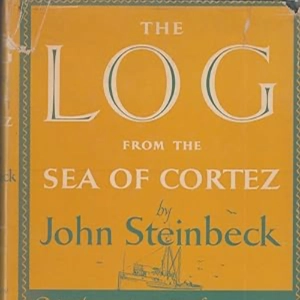
In 1940, author John Steinbeck and his good friend and marine biologist Ed Ricketts set off on a six-week collecting expedition in the Sea of Cortez. The book that resulted from that journey isn't well known, but it is w…
Episode 324-Jennifer Comeau and Milo the Green Mussel [not-audio_url] [/not-audio_url]

Duration: 16:13
You've heard me refer more than once to my friend Liz McKenzie, the Alaska-based filmmaker who made the documentary, "The Singing Planet." Well, a few months ago, Liz was visiting family in northern Florida, and while sh…
Episode 323-Life's Battery [not-audio_url] [/not-audio_url]

Duration: 12:17
Contrary to popular belief, life may very well not have begun on the sunlit surface of the planet--but rather in the deepest part of the deepest oceans. In his new book, "The Dark Frontier," marine geobiologist Jeffrey M…