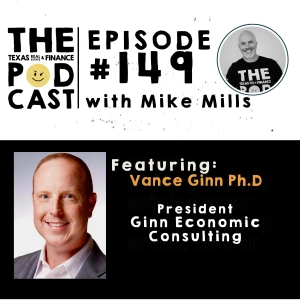
Navigating the world of housing market regulations can be challenging, especially when they directly impact real estate growth and home affordability. In this episode, Mike Mills and Vance Ginn, Ph.D., discuss the crucial policy changes and their implications for the real estate industry. Don't miss this deep dive into economic strategies that could redefine your business.
In this insightful episode, Mike Mills is joined by Vance Ginn, Ph.D., to discuss "How Housing Market Regulations Affect Real Estate Growth and Affordability." They examine the current economic policies impacting the real estate market, including fiscal policy, property tax reform, and regulatory changes affecting home prices and inventory. Vance explains the complexities behind government interventions and market regulations that can make or break the growth of the housing sector. The episode also highlights how these regulations impact Realtors, from commission structures to competition laws. With practical advice for real estate professionals, this episode is a must-listen for anyone looking to understand the financial landscape and how it shapes the housing market.
Key Takeaways:
Understanding Housing Market Regulations:
Vance Ginn, Ph.D., breaks down the complexities of housing market regulations and how they directly impact real estate growth and affordability. He explains how government policies, such as zoning laws and interest rate decisions, are shaping the housing market and what Realtors need to know to stay competitive.
Impact of Inflation and Interest Rates:
The episode highlights the significant impact of inflation and rising interest rates on home prices and market dynamics. Mike Mills and Vance Ginn discuss how these economic factors affect housing affordability and what strategies real estate professionals can employ to mitigate these challenges.
Navigating Property Tax Reform:
Ginn provides insights into potential property tax reforms and how they could affect both Realtors and homeowners. He offers practical advice on how real estate professionals can adapt their business strategies in response to changes in property taxation policies.
Antitrust Issues and Market Competition:
The discussion explores the impact of antitrust issues within the real estate market, including recent changes to Realtor commission structures and market consolidation among homebuilders. Ginn and Mills analyze how these factors influence competition and what Realtors need to know to thrive in a regulated environment.
Leveraging Economic Knowledge for Growth:
The episode emphasizes the importance of understanding economic policies and their implications for the real estate market. Vance Ginn shares valuable strategies for Realtors to leverage their knowledge of fiscal policy and market regulations to achieve business growth and maintain a competitive edge.
Guest Bio: Vance Ginn, Ph.D.
Vance Ginn, Ph.D., is a leading economist and a passionate advocate for free-market principles and fiscal conservatism. As the Founder and President of Ginn Economic Consulting and host of the "Let People Prosper" show, Dr. Ginn offers high-impact economic insights that shape policy discussions across the United States. With experience as the Associate Director for Economic Policy at the White House's Office of Management and Budget and as Chief Economist at the Texas Public Policy Foundation, he brings a wealth of knowledge on housing market regulations, fiscal policy, and economic growth. Dr. Ginn is frequently featured in major media outlets, sharing his expertise on economic freedom, monetary policy, and tax reform. Residing in Round Rock, Texas, with his family, he remains dedicated to promoting economic policies that foster prosperity and opportunity for all.
Resources:
Vance Ginn's Website - Explore more of Vance Ginn's work, economic insights, and consulting services.
https://www.vanceginn.com/
Let People Prosper Podcast - Tune into Vance Ginn's podcast, where he discusses economic policy, fiscal conservatism, and market trends.
https://www.youtube.com/@letpeopleprosper
Vance Ginn's Substack Newsletter - Stay updated with Vance Ginn's economic analysis and expert commentary by subscribing to his Substack newsletter.
https://vanceginn.substack.com/
Texas Real Estate and Finance Podcast on YouTube - Watch this episode and more from The Texas Real Estate and Finance Podcast on YouTube.
https://www.youtube.com/@mikemillsmortgage
Geneva Financial Home Loans - Learn more about the mortgage banking services offered by Mike Mills at Geneva Financial.
www.millsteammortgage.com
TimeStamp Summary
[0:13 - 2:50] - Introduction and Episode Overview
Mike Mills introduces the podcast and discusses the current economic climate, focusing on the challenges of housing affordability amid rising mortgage rates and low transaction volumes, and sets the stage for a deep dive into economic policies affecting real estate.
[2:51 - 5:14] - Introduction of Guest Vance Ginn, Ph.D.
Mills introduces guest Vance Ginn, Ph.D., a leading economist known for his expertise in free-market principles and economic policy, and previews the discussion topics for the episode.
[5:15 - 6:54] - Housing Affordability Crisis in the U.S.
Ginn explains the root causes of the housing affordability crisis, including supply constraints, significant government debt, and inflationary pressures following COVID-19, which have contributed to inflated home prices and reduced affordability.
[6:55 - 9:55] - Is the Housing Market in a Bubble?
Mills and Ginn discuss whether the current housing market is in a bubble, with Ginn suggesting that high interest rates and decreased affordability indicate an impending correction, despite inventory levels remaining low.
[9:56 - 11:28] - Factors Influencing Market Dynamics
Ginn elaborates on the interaction between supply and demand in the housing market, noting that while demand is falling due to high mortgage rates, restricted supply is preventing a rapid decline in home prices.
[11:29 - 14:06] - Economic Indicators and Recession Signals
Mills and Ginn discuss economic indicators, such as rising unemployment and downward revisions in job numbers, which suggest that a recession may be looming, despite mixed signals from official reports.
[14:07 - 17:33] - Critique of Job Data and Media Reporting
The conversation critiques the inaccuracies in government-reported job data and the role of biased media in shaping public perception, emphasizing the disconnect between stock market performance and real-world economic conditions.
[17:34 - 20:57] - Inflation and the Impact of Central Bank Policies
Ginn explains the ongoing inflationary pressures and critiques Federal Reserve policies, warning that premature interest rate cuts could lead to a repeat of the inflationary spiral of the late 1970s.
[20:58 - 23:17] - Comparing Current Economic Risks to 2008
Mills compares the current economic situation to the 2008 financial crisis, noting that while today's risks may not be centered around housing, similar systemic vulnerabilities could trigger widespread economic disruption.
[23:18 - 24:46] - Potential Contagion Effects in the Global Economy
The discussion explores potential "Black Swan" events and contagion effects that could destabilize the global economy, exacerbated by interconnected financial markets and unpredictable policy changes.
[24:47 - 27:21] - Critique of Central Banking and Market Manipulation
Ginn expresses skepticism about the Federal Reserve's role in managing the economy and argues that markets, not central banks, should dictate interest rates and money supply to avoid prolonged economic distortions.
[27:22 - 28:51] - Risks of Premature Interest Rate Cuts
Mills and Ginn discuss the risks associated with cutting interest rates too soon, which could reignite inflation without addressing underlying economic imbalances, particularly in sectors like housing and consumer goods.
[28:52 - 31:39] - Unsustainable Fiscal Policies and Economic Consequences
Ginn criticizes unsustainable government spending and emphasizes the need for reforms in entitlement programs to prevent long-term economic instability and reduce the burden on future generations.
[31:40 - 34:16] - Local Housing Policies and Zoning Reforms
The discussion shifts to local policy solutions, highlighting zoning reforms in Austin, Texas, as an example of how reducing regulatory barriers can increase housing supply and improve affordability.
[34:17 - 36:58] - Populism and Lack of Focus on National Debt
Ginn attributes the lack of political focus on the rising national debt to populism on both sides of the political spectrum, where short-term promises overshadow meaningful fiscal reforms.
[36:59 - 38:39] - Legislative Inaction and Flawed Tax Policies
The conversation critiques the lack of substantial legislative action on tax policy and fiscal responsibility, suggesting that many proposals are more about political maneuvering than sound economic strategy.
[38:40