370E-403-Double Comet

370E-403-Double Comet

Author: Albert D. Grauer January 6, 2026 Duration: 2:01
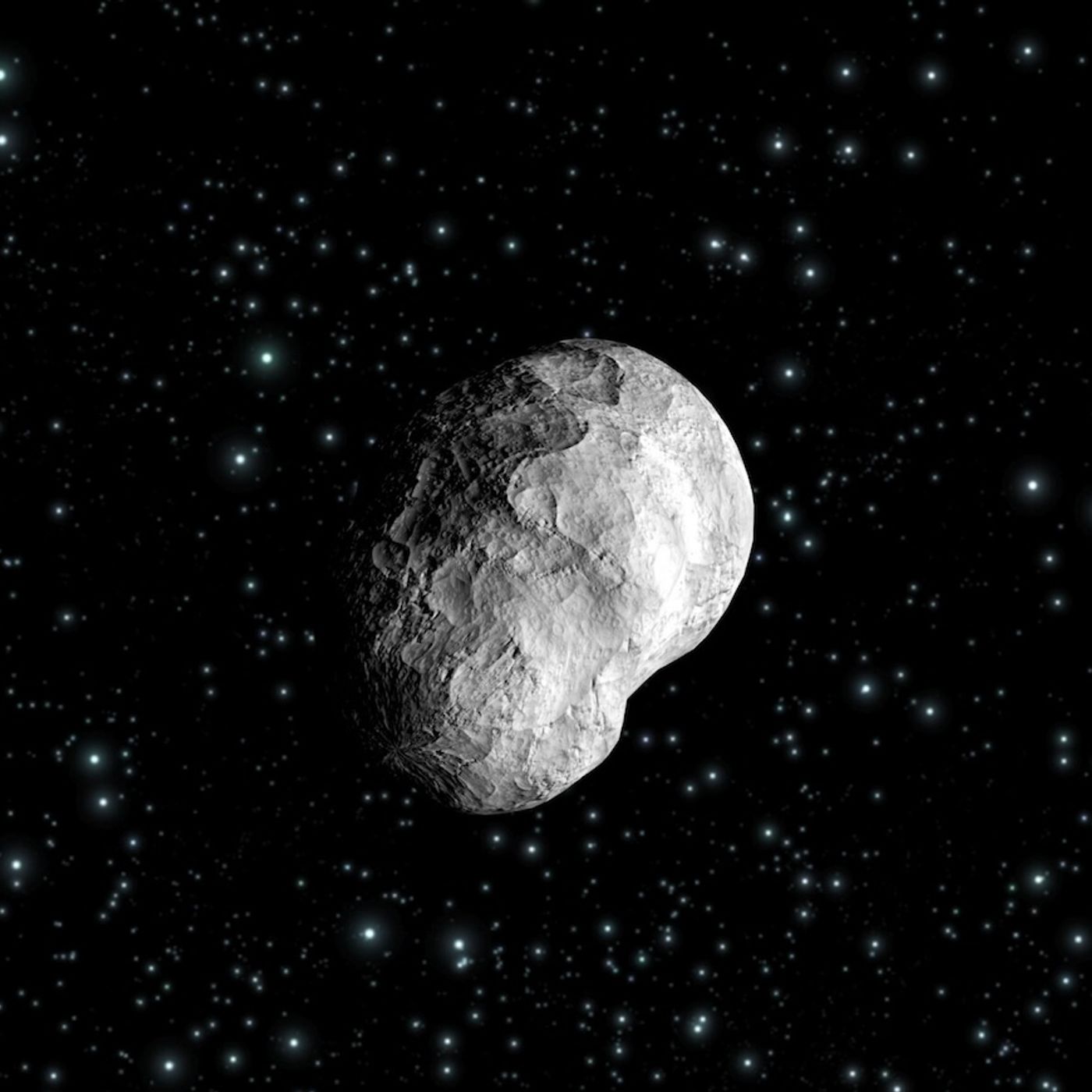
In November of 2006, University of Arizona's Spacewatch astronomers on Kitt Peak discovered a faint moving point of light in the night sky which appeared to be a garden variety main belt asteroid orbiting the Sun between Mars and Jupiter. The Minor Planet Center calculated it's orbit and gave it the name 2006 VW139. Five years later when it again moved closest to the Sun the Pan-STARRS group in Hawaii discovered that 2006 VW139 is surrounded by a gas cloud like a comet and it was given a comet designation, 288P. My Catalina Sky Survey teammate Steve Larson is a member of the team of astronomers who use the Hubble Space Telescope to observe asteroids which have comet like burps. Observations by the Hubble Space Telescope between August 2016 and January 2017 clearly show 288P to be two similar, mile diameter, asteroids orbiting each other about 60 miles apart, surrounded by a gas cloud, as they move about the Sun. The Hubble team estimates that about 5,000 years ago this strange object was formed when a rapidly rotating comet nucleus came apart into two large pieces. It's gas cloud is likely to come from volatile ices like carbon dioxide and water vapor which were liberated by solar heating. Objects like this one are very interesting since they may have had a role in bringing water to a bone dry Earth in the early days of our solar system.

Each episode of Travelers In The Night feels like a quiet, personal conversation under a dark sky. Hosted by astronomer Dr. Albert D. Grauer, this podcast brings the distant cosmos into sharp, intimate focus. Dr. Grauer isn't just an observer; he's an active participant in the hunt, working with the Catalina Sky Survey team that has consistently discovered near-Earth asteroids for years. In these brief and engaging segments, you'll hear firsthand accounts of what it's like to track these ancient celestial travelers-the asteroids and comets that silently pass by our world. The discussions move beyond simple facts to explore the real-world implications of these discoveries, from planetary defense to the sheer wonder of our dynamic solar system. Accompanied by the contemplative music of John Lyell's "Eternity," each installment offers a moment of calm reflection on humanity's place in the universe. It’s a perfect blend of grounded science and cosmic curiosity, making complex astronomical concepts accessible and deeply fascinating. For anyone who has ever looked up and wondered what's out there moving in the dark, this podcast provides a direct line to the front lines of discovery.
Author: Language: English Episodes: 1000

Travelers In The Night
Podcast Episodes
317E-336-Meteorite Mystery [not-audio_url] [/not-audio_url]

Duration: 2:01
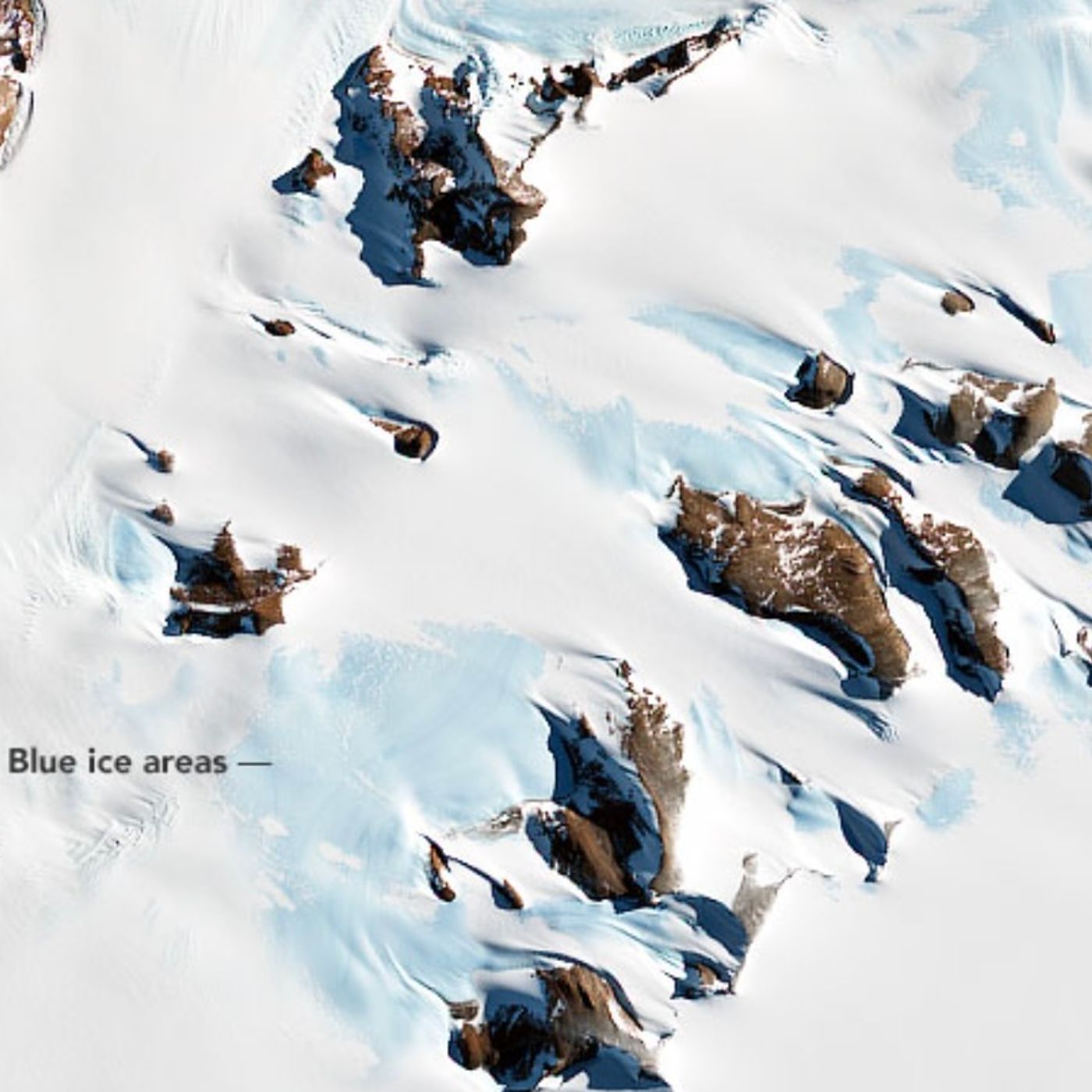
A research expedition to near the south pole is developing to investigate a meteorite mystery. Meteorites landing on the Antarctica ice sheet are slowly transported along by ice flows until they are dumped into the ocean…
829-Space Weather and National Security [not-audio_url] [/not-audio_url]

Duration: 2:01
The Sun emits a solar wind of charged particles reaching speeds of more than a million miles per hour, bursts of energetic ultraviolet photons, huge blobs of ionized gas called coronal mass ejections and other phenomena…
316E-335-DART [not-audio_url] [/not-audio_url]

Duration: 2:01
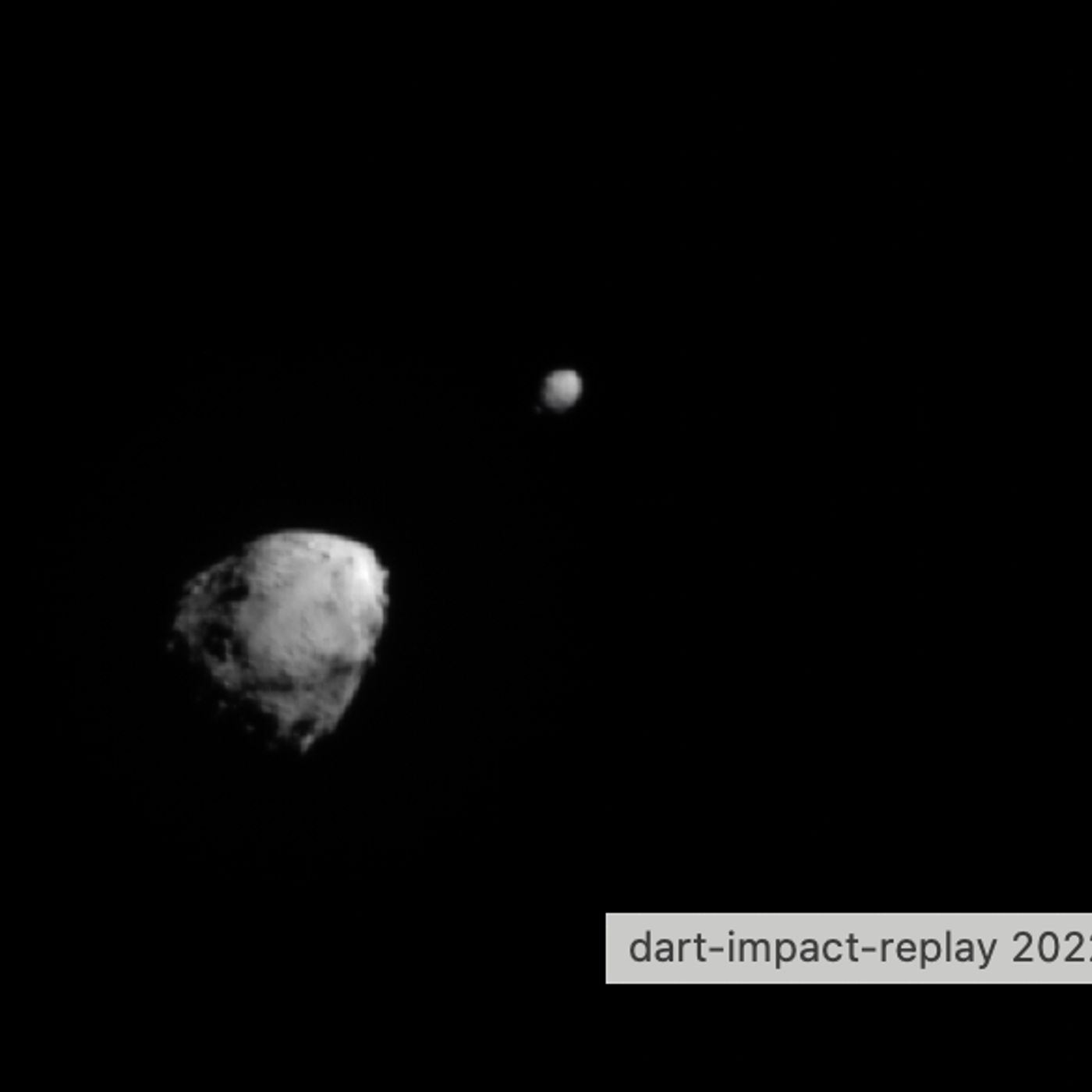
A stony asteroid 130m or about 430 feet in diameter has a mass of 3 billion Kg or 6.5 billion pounds. Such an object is likely to strike the Earth every 11,000 years or so creating a crater a mile in diameter crater and…
828-Alive With Light [not-audio_url] [/not-audio_url]

Duration: 2:01
Most humans live in cities under a dome of light pollution. They have never witnessed that the natural night sky is not dark; but rather it is alive with it's own lights.To see for yourself, pick a natural night sky loca…
315E-334-Last 19 Hours [not-audio_url] [/not-audio_url]

Duration: 2:01
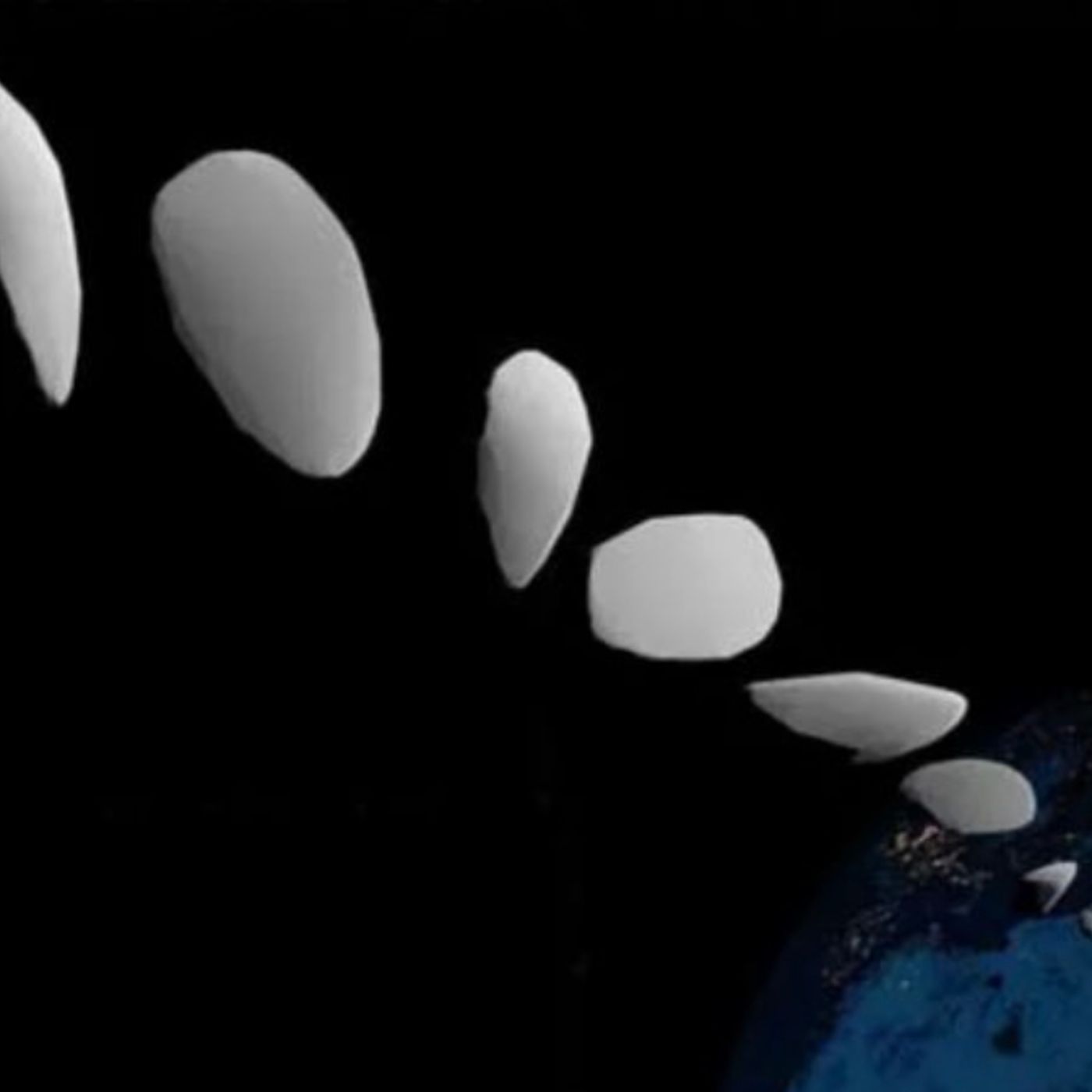
2008 TC3 was discovered by my Catalina Sky Survey teammate Richard Kowalski on October 6, 2008. It is the first of only 9 asteroids which humans have tracked traveling through space, have seen exploding in our atmosphere…
827-Meteor Parents [not-audio_url] [/not-audio_url]

Duration: 2:01
One of the joys of visiting a natural night sky location on a clear dark of the Moon night is to observe meteors streaking across the sky. It took more than 2,000 years for humans to figure out at meteors and comets are…
314E-333-Whoppers [not-audio_url] [/not-audio_url]

Duration: 2:01
Recently, my Catalina Team Captain Eric Christensen discovered a potentially hazardous 3,000 foot diameter asteroid, 2017 CH1. Asteroid hunters are discovering less than one asteroid of this size or greater per month. Er…
826-Ants and Asteroids [not-audio_url] [/not-audio_url]

Duration: 2:01
About 66 million years ago a 6 to 9 mile diameter asteroid traveling at approximately 12 miles per second slammed into the Gulf of Mexico off of the modern coastline of the Yucatan Peninsula in Mexico. Ants survived, flo…
313E-332-Greg's Destination [not-audio_url] [/not-audio_url]

Duration: 2:01
A winter storm hit Mt. Lemmon, Arizona closing access to the observatory by blowing over trees and producing large snow drifts. After the Mountain Operations Crew cleared the road, my Catalina Sky Survey teammate Greg Le…
825-Backyard Asteroid Discovery [not-audio_url] [/not-audio_url]

Duration: 2:01
My Catalina Sky Survey teammate David Rankin’s regular job is asteroid hunting at the telescope and creating software to improve detection as well as to better keep track of space rocks that come near our home planet. Du…