372E-406-Close Ones

372E-406-Close Ones

Author: Albert D. Grauer January 20, 2026 Duration: 2:01
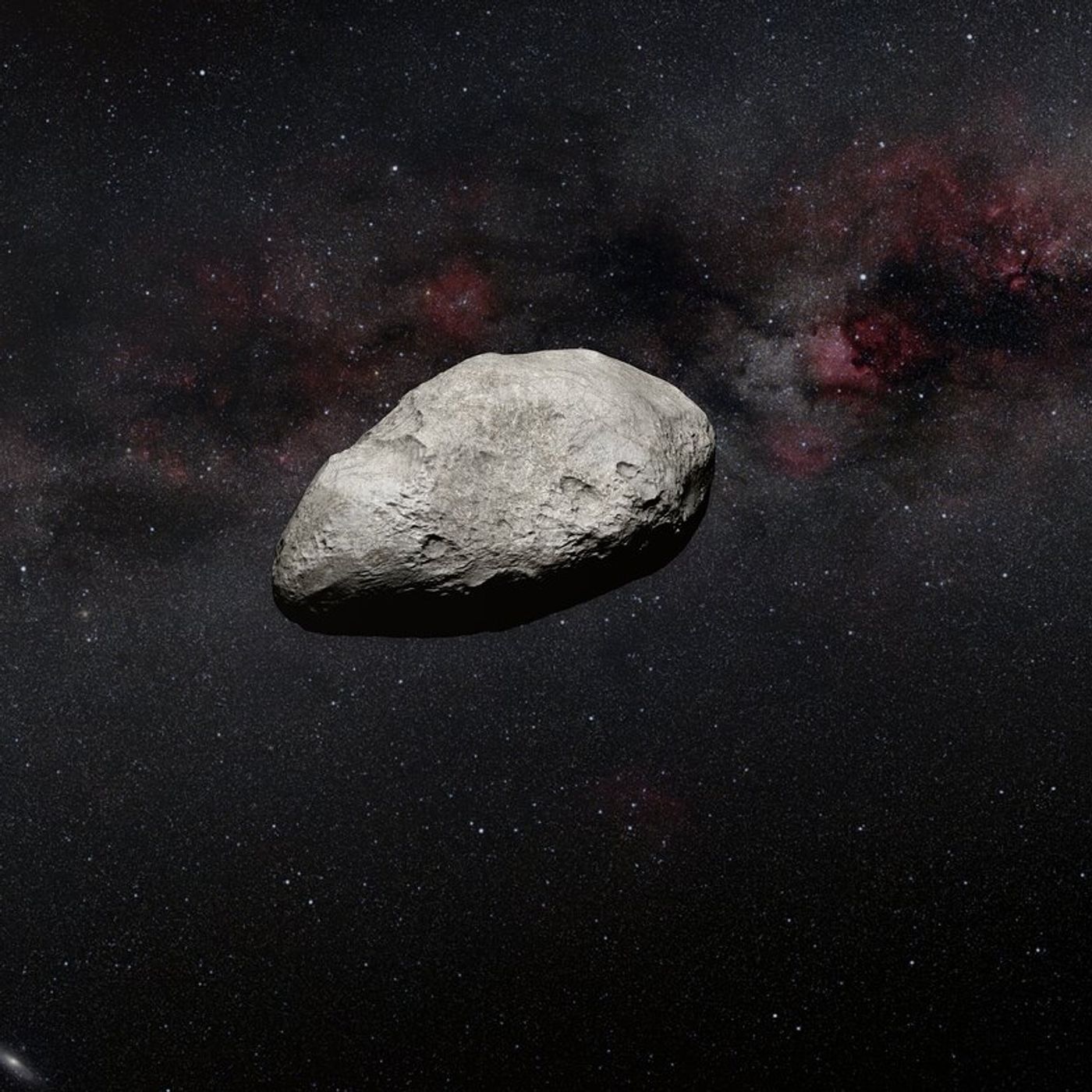
In less than 24 hours, while observing with the Catalina Sky Survey's 60 inch telescope on Mt. Lemmon, Arizona , I discovered two 25 foot diameter space rocks that theoretically can pass less than a quarter of the Moon's distance from us. After I posted my discovery observations on the Minor Planet Center's Near Earth Object Confirmation page one of them received immediate attention, as an incoming object, and was tracked by observers at 14 different observatories around the world. Scientists at the Minor Planet Center used these data to calculate it's 926 day orbital path around the Sun, estimate it's size, and give it the name 2017 TH5. 36 hours after I first spotted 2017 TH5 streaking through the night sky it came to less than 60,000 miles from the surface of our planet traveling at 7.6 miles per second. 8 hours and 49 minutes later it passed less than half a lunar distance from the surface of our moon. If 2017 TH5 would have been on an impact trajectory with Earth humans would have had time to prepare for a spectacular light show. Approximately once every 5 years a tiny asteroid like 2017 TH5 enters our atmosphere exploding at an altitude about 3 times higher than airliners fly releasing the energy of about 5,000 tons of TNT. Asteroid hunters are well on our way towards being able to issue a warning to stay away from doors and windows should a small space rock be discovered to be on an impact trajectory with planet Earth.

Each episode of Travelers In The Night feels like a quiet, personal conversation under a dark sky. Hosted by astronomer Dr. Albert D. Grauer, this podcast brings the distant cosmos into sharp, intimate focus. Dr. Grauer isn't just an observer; he's an active participant in the hunt, working with the Catalina Sky Survey team that has consistently discovered near-Earth asteroids for years. In these brief and engaging segments, you'll hear firsthand accounts of what it's like to track these ancient celestial travelers-the asteroids and comets that silently pass by our world. The discussions move beyond simple facts to explore the real-world implications of these discoveries, from planetary defense to the sheer wonder of our dynamic solar system. Accompanied by the contemplative music of John Lyell's "Eternity," each installment offers a moment of calm reflection on humanity's place in the universe. It’s a perfect blend of grounded science and cosmic curiosity, making complex astronomical concepts accessible and deeply fascinating. For anyone who has ever looked up and wondered what's out there moving in the dark, this podcast provides a direct line to the front lines of discovery.
Author: Language: English Episodes: 100

Travelers In The Night
Podcast Episodes
380E-416-Odd Ball [not-audio_url] [/not-audio_url]

Duration: 2:01
The orbits of the planets are closely aligned with the extension of the Sun's equator into space and are contained within the flattened disk of material which forms the plane solar system. Most asteroids have orbits with…
890-Comet 467P(Linear-Grauer) [not-audio_url] [/not-audio_url]

Duration: 2:01
Astronomers using the 8.1 m Gemini South Telescope in Chile were excited by the fact that 467P (LINEAR-Grauer)’s Centaur like orbit had been changed as the nucleus emitted rocket like bursts of gases as it was warmed by…
379E-415-Well Done [not-audio_url] [/not-audio_url]

Duration: 2:01
Once every 1,435 days , a 780 foot diameter space rock that my Catalina Sky Survey teammate Carson Fuls discovered makes an annihilation defying close approach to our star. At it's nearest point to the Sun, Carson's well…
889-Lick Observatory [not-audio_url] [/not-audio_url]

Duration: 2:01
In 1892 the world’s largest telescope, the Lick Observatory’s 36 inch refracting telescope made the news when E.E. Barnard discovered, Amalthea, the 5th moon of Jupiter. In 2025 this historic telescope made the news agai…
378E-414-Enormous Visitor [not-audio_url] [/not-audio_url]

Duration: 2:01
Without additional data, the true nature of the rapidly northward moving point of light my Catalina Sky Survey teammate Carson Fuls had just discovered would have remained a mystery. Fortunately, this new object was trac…
888-Investigating the Mystery of How Life Formed [not-audio_url] [/not-audio_url]

Duration: 2:01
On Earth living things are everywhere from the deepest ocean depths to the highest mountain tops. On our home planet RNA (Ribonucleic Acid) is a complex essential molecule involved in the process of translating genetic i…
377E-413-Fission Rocket [not-audio_url] [/not-audio_url]

Duration: 2:01
To get an idea of the energy involved in a rocket launch, the NASA Saturn V, moon rocket, fully fueled on the launch pad contained the chemical energy of 2,000 pounds of TNT. This old technology could carry us to Mars an…
887-Apophis Bound [not-audio_url] [/not-audio_url]

Duration: 2:01
In April 2029 on one of the luckiest Friday the 13th in human history the 1500 ft by 500 ft asteroid Apophis will pass within 23,600 miles of the Earth’s surface traveling at some 4.6 mi/s. This is extremely fortunate si…
376E-412-Tiny Space Rock [not-audio_url] [/not-audio_url]

Duration: 2:01
Eighteen hours before my Catalina Sky Survey teammate Rose Matheny first spotted a small space rock with our Schmidt telescope on Mt. Bigelow, Arizona it had passed less than the Earth's diameter from the surface of our…
886-Aviation&Space Weather [not-audio_url] [/not-audio_url]

Duration: 2:01
The Earth’s atmosphere does a good job of protecting humanity from space weather, however, occasionally a major event does break through our shield and gets our attention. Tree rings and ice cores have recorded past spac…