378E-414-Enormous Visitor

378E-414-Enormous Visitor

Author: Albert D. Grauer March 3, 2026 Duration: 2:01
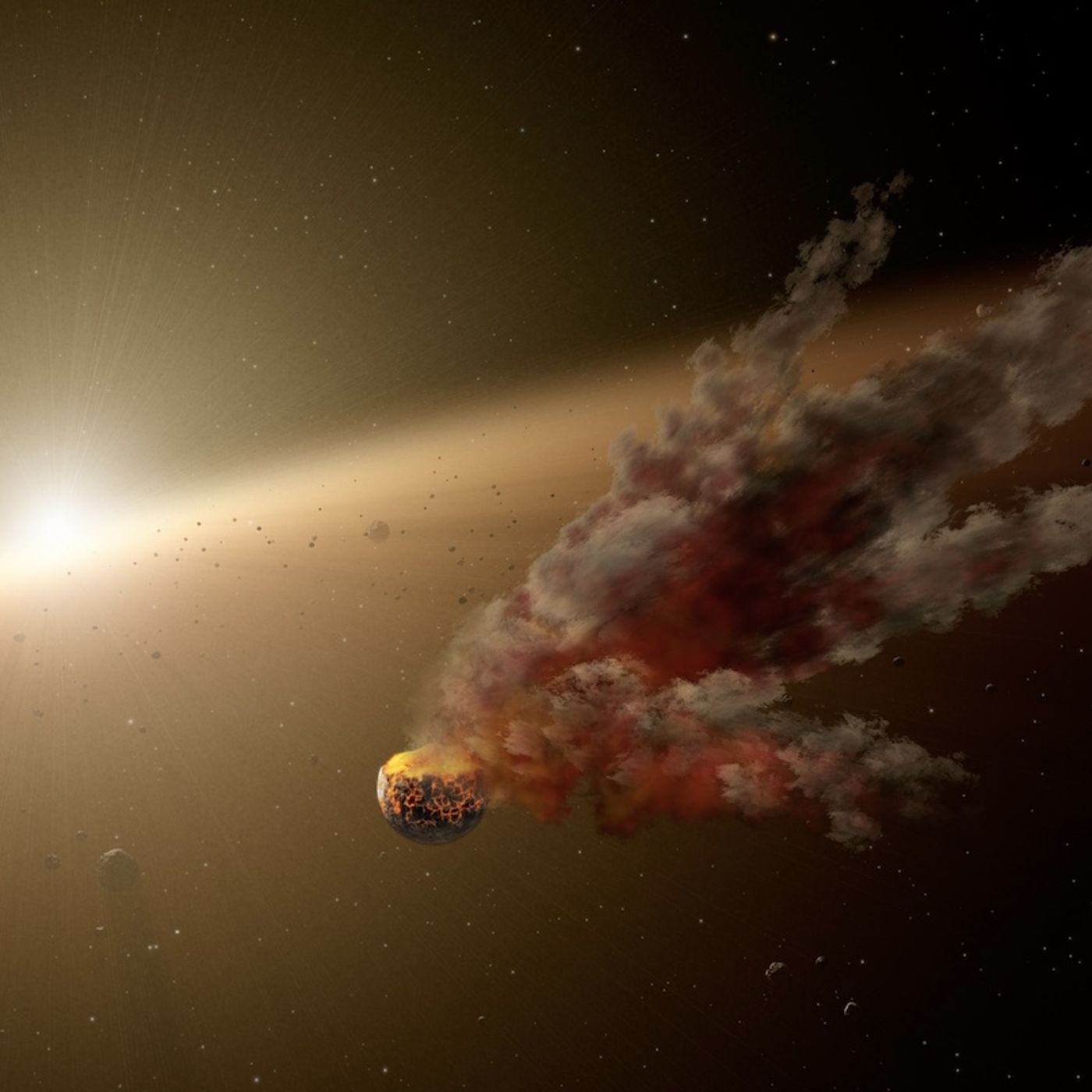
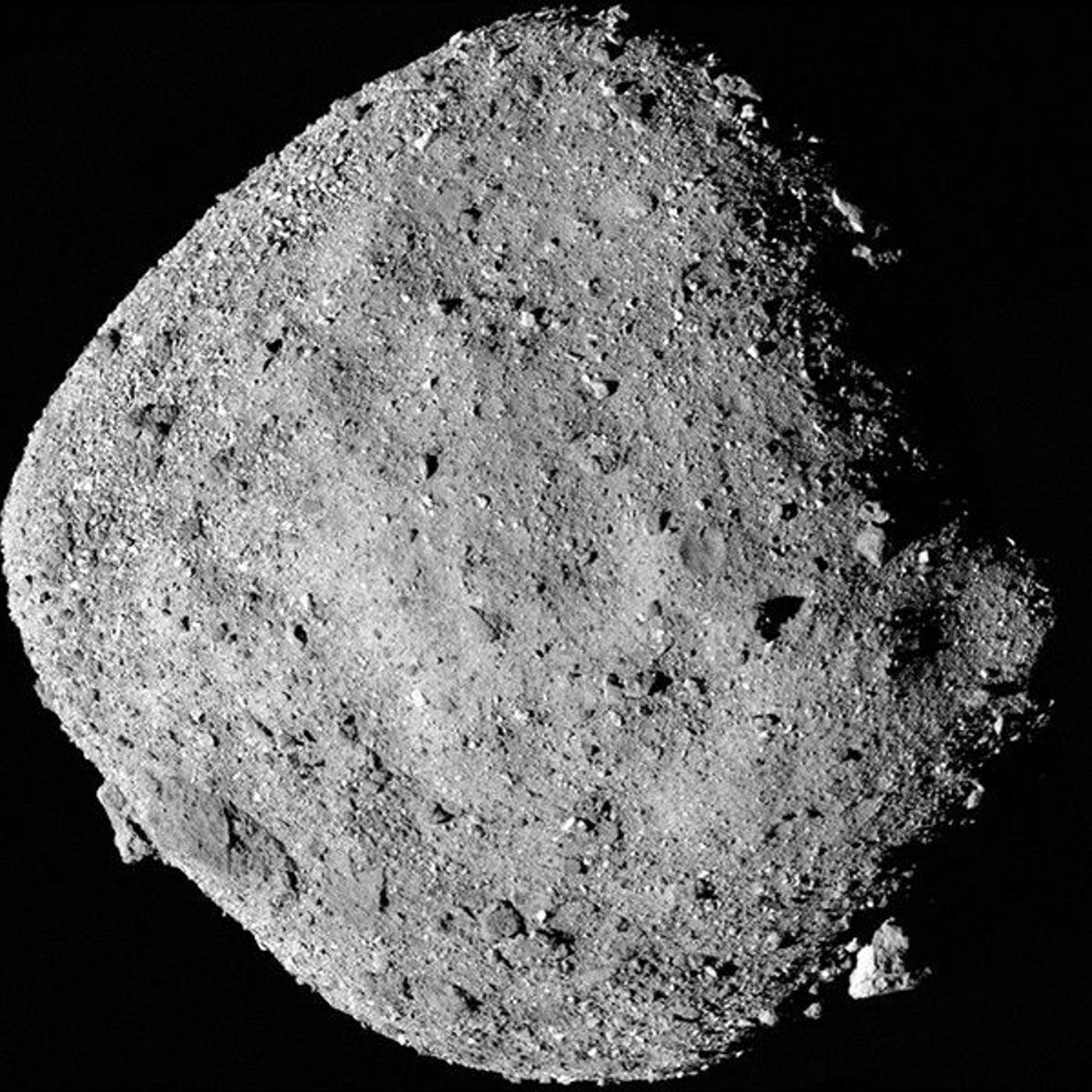
Without additional data, the true nature of the rapidly northward moving point of light my Catalina Sky Survey teammate Carson Fuls had just discovered would have remained a mystery. Fortunately, this new object was tracked by telescopes in both Arizona and New Mexico. These data were used to calculate it's orbit around the Sun, estimate it's size, and give it the name 2017 UX5. When Carson first spotted this enormous 1,200 foot diameter space rock it was more than 30 million miles away traveling in our direction at 10.7 mi/s. It's orbit and that of the Earth's nearly intersect and at the closest point they are about two and one half times the Moon's distance from us apart. An asteroid the size of 2017 UX5 impacts the Earth every 76,000 years or so. According to the impact calculator developed at Purdue University and the Imperial College of London if 2017 UK5 is made of porous rock and came in at an angle of 45 degrees, it would start to break into pieces at an altitude of 41 miles and upon reaching the surface would create a crater 2.2 miles in diameter and 5/8 of a mile deep in sedimentary rock. The results 20 miles away from impact would be that of a 6.4 Richter Scale magnitude Earth quake followed by 176 mph air wind blast which would blow down 90% of the trees and collapse wood frame buildings. Fortunately asteroid hunters have not discovered any object like Carson's discovery with our number on it.

Each episode of Travelers In The Night feels like a quiet, personal conversation under a dark sky. Hosted by astronomer Dr. Albert D. Grauer, this podcast brings the distant cosmos into sharp, intimate focus. Dr. Grauer isn't just an observer; he's an active participant in the hunt, working with the Catalina Sky Survey team that has consistently discovered near-Earth asteroids for years. In these brief and engaging segments, you'll hear firsthand accounts of what it's like to track these ancient celestial travelers-the asteroids and comets that silently pass by our world. The discussions move beyond simple facts to explore the real-world implications of these discoveries, from planetary defense to the sheer wonder of our dynamic solar system. Accompanied by the contemplative music of John Lyell's "Eternity," each installment offers a moment of calm reflection on humanity's place in the universe. It’s a perfect blend of grounded science and cosmic curiosity, making complex astronomical concepts accessible and deeply fascinating. For anyone who has ever looked up and wondered what's out there moving in the dark, this podcast provides a direct line to the front lines of discovery.
Author: Language: English Episodes: 100

Travelers In The Night
Podcast Episodes
877-Close Grazer [not-audio_url] [/not-audio_url]

Duration: 2:01
On a busy night of asteroid hunting with the 90 inch, University of Arizona’s Steward Observatory Bok telescope on Kitt Peak in Arizona, my Catalina Sky Survey teammate Vivian Carvajal discovered 13 new Earth approaching…
364E-396-Jupiter [not-audio_url] [/not-audio_url]

Duration: 2:01
Jupiter has been observed throughout human history and is so bright that you can even spot it under the artificial light dome of one of our cities. Even so it is less than 40 years ago that we were first able to view Jup…
876-Neighborhood Traffic - 9:28:25, 6.28 PM [not-audio_url] [/not-audio_url]

Duration: 2:01
In a recent 60 day period asteroid hunters tracked 24 space rocks which came closer than our Moon. My team the University of Arizona’s Catalina Sky Survey operates 5 telescopes in the mountains around Tucson, Arizona. Ou…
363E-395-House Sized Space Rocks [not-audio_url] [/not-audio_url]

Duration: 2:01
Throughout history small close approaching space rocks have been a part of our environment. Now, thanks to improved telescopes and cameras, asteroid hunters are routinely discovering these small asteroids as they pass cl…
875-Newly Discovered Crater - 9:28:25, 6.13 PM [not-audio_url] [/not-audio_url]

Duration: 2:01
Dr Uisdean Nicholson from Heriot-Watt University and his team of 9 co-authors analyze 3D seismic imaging and drill cuttings from a 1980s oil well to make a convincing case that the Silverpit crater was produced by a the…
362E-394-Tiny Beasts [not-audio_url] [/not-audio_url]

Duration: 2:01
Humans have a long history of partnerships with a variety of micro organisms. Although the proportions vary widely with individuals, recent scientific estimates suggest that a typical human being has approximately the sa…
874-Good night at Bok [not-audio_url] [/not-audio_url]

Duration: 2:01
On a recent clear night my Catalina Sky Survey teammate Hannes Groller was asteroid hunting with the Steward Observatory 90 inch Bok telescope on Kitt Peak, Arizona when he discovered 8 natural visitors to our neighborho…
361E-393-Newest Moon [not-audio_url] [/not-audio_url]

Duration: 2:01
The moon cycle from new moon through full moon and back to new moon again was used by many nations to regulate their activities and forms the basis of the Islamic lunar calendar. A calendar based on the first visibility…
873-Tracking 3I/Atlas [not-audio_url] [/not-audio_url]

Duration: 2:01
Scientists are using many approaches to understanding the nature and history of 3I/Atlas the third known interstellar traveler in the night. At a hyperbolic velocity of 130,000 mph it is the fastest interstellar visitor…
360E-391-Finding Spacerocks [not-audio_url] [/not-audio_url]

Duration: 2:01
Finding a meteorite that has traveled billions of miles through space to reach it's present location is exciting. It might even be worth real money.