China, India and the USA’s different approaches to climate security

China, India and the USA’s different approaches to climate security

Author: Department of War Studies November 11, 2021 Duration: 41:57
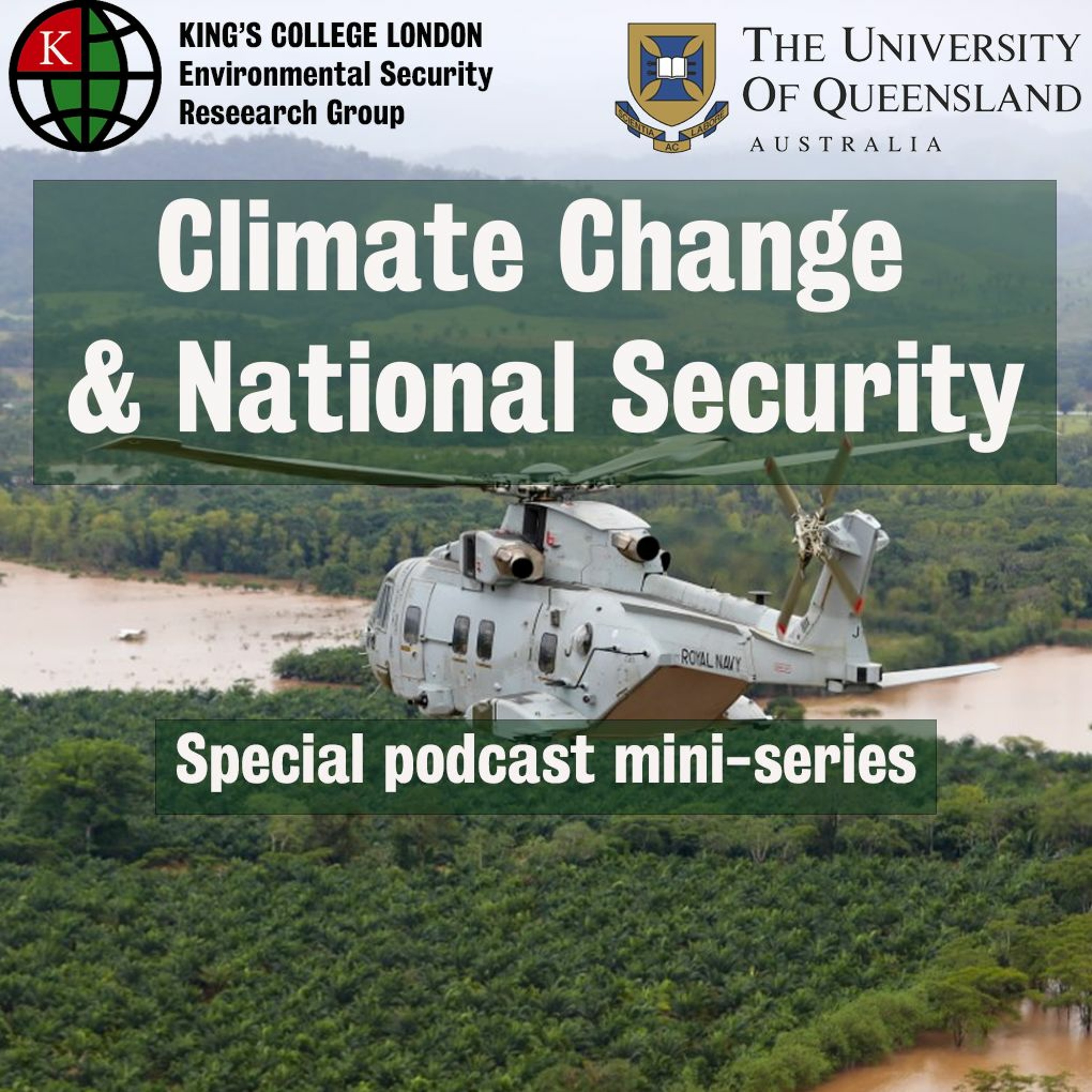
The three major powers at the centre of COP26 - China, India and the USA, have differing perspectives on the link between climate and security. Yet how does this impact their climate policy? What are the drivers behind the ways the different countries think about the relationship between security and the environment? How does this impact the vital cooperation needed to make COP 26 a success? Recorded just as COP 26 was getting underway, the third episode of this five-part mini-series on Climate Change and National Security focuses on these questions. Dr Duraid Jalili from the King’s Environmental Security Research Group and Professor Matt McDonald from the University of Queensland, speak to leading climate security experts including Erin Sikorsky, Director of the Center for Climate and Security and the International Military Council on Climate and Security, Dhanasree Jayaram, Assistant Professor in the department of Geopolitics and International Relations at the Manipal Academy of Higher Education in India, and Karl Hallding, Senior Research Fellow at the Stockholm Environmental Institute. In this honest discussion, reveals where the governments are going wrong the experts reflect on the barriers and obstacles of different climate security approaches as well as emerging opportunites. Including whether China’s Belt and Road initiative is actually as ‘green’ as they claim, how territorial contestations undermine climate cooperation and how bringing a climate lens to security can help strengthen relationships with partners and allies.

Drawn from the work of the School of Security Studies at King's College London, War Studies offers a direct line to one of the world's largest and most dedicated academic communities focused on security, defence, and international relations. This isn't about surface-level headlines; each episode digs into the intricate realities of conflict, diplomacy, and global power. You'll hear scholars and researchers unpack the underlying forces that shape world affairs, moving beyond theory to examine the tangible challenges faced by those navigating these complex spaces. The Department of War Studies produces this podcast to share its world-leading research, treating each conversation as an opportunity to question assumptions and deepen understanding. Tuning in means engaging with rigorous analysis that connects academic insight to the pressing security issues of our time. The consistent thread is a belief that examining the nature of war is essential for comprehending the broader landscape of human conflict and cooperation. Expect thoughtful, evidence-driven discussions that refuse to simplify the difficult questions.
Author: Language: English Episodes: 100

War Studies
Podcast Episodes
World We Got This: The role of space in modern-day warfare [not-audio_url] [/not-audio_url]

Duration: 37:19
**World We Got This Podcast: The role of space in modern-day warfare ** Continuing on from last week we’re sharing another episode of the World We Got this podcast, produced the Faculty of Social Sciences and Public Poli…
The war in Ukraine: Hear from our experts [not-audio_url] [/not-audio_url]

Duration: 36:49
Many pundits did not believe Russia was going to attack Ukraine. Yet on 24th February 2022 Vladimir Putin launched a terrestrial invasion entering through the North, South, and East of the country. As we continue to make…
The fall of the Soviet Union 30 years on [not-audio_url] [/not-audio_url]

Duration: 54:19
“The USSR as a geopolitical reality and subject of international law has ceased to exist.” In December 1991, the Presidents of Russia, the Ukraine and Belarus came together in the forests of the Polish-Belarussian border…
Challenges and Solutions of Climate Geoengineering [not-audio_url] [/not-audio_url]

Duration: 37:11
What is climate engineering? How and why are certain shifting geoengineering policies engendering conflict? How do we differentiate between and prioritise the multitude of governance factors? How does funding affect the…
Climate change and the securitization of vulnerable nations [not-audio_url] [/not-audio_url]

Duration: 39:00
Vulnerable nations are really feeling the negative effects and implications of climate change and the associated security repercussions. To what extent is climate change a security issue in vulnerable states? How are the…