Brian May
 United Kingdom
Listen Brian May on radio stations:



Brian May: The Guitar Virtuoso of British Rock
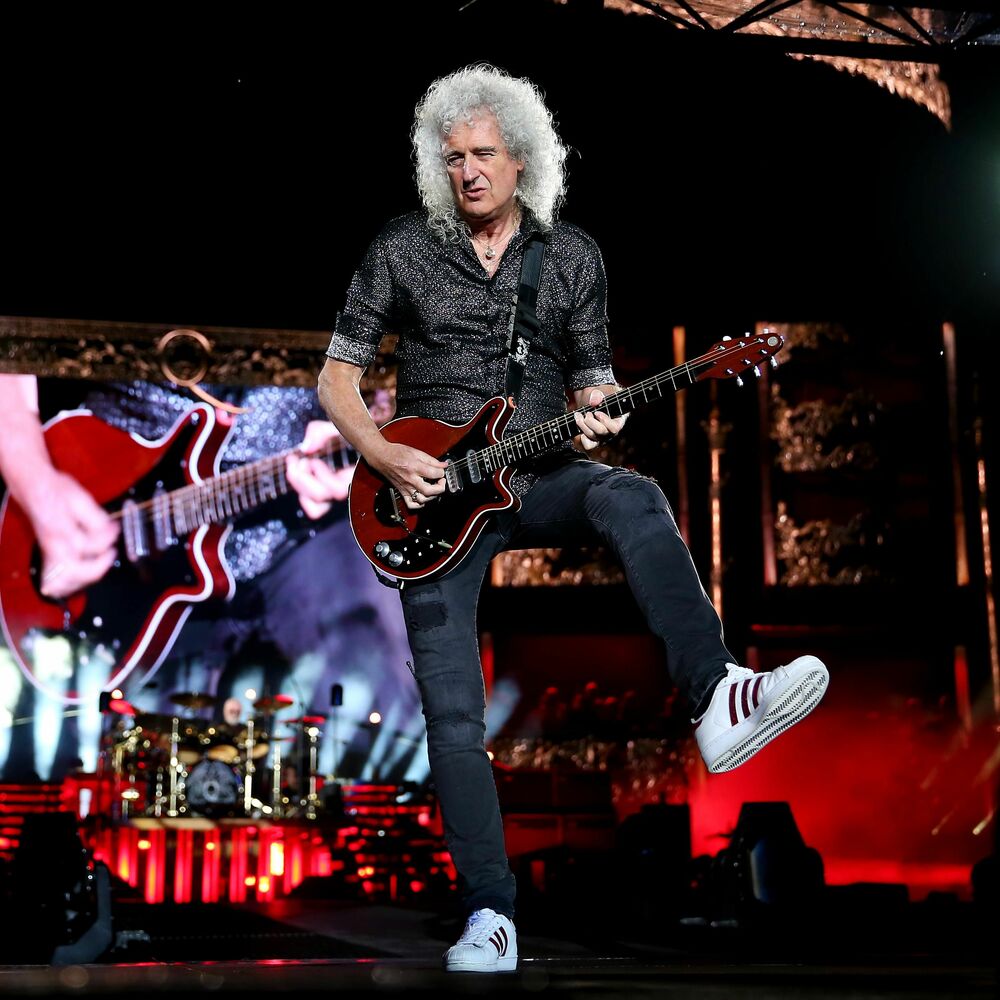
Brian May is the legendary lead guitarist and co-founder of the rock band Queen, hailing from Hampton, England. His career, spanning over five decades, is defined by his unique guitar sound, intricate songwriting, and status as one of rock music's most influential musicians. Beyond his work with Queen, May has also forged a respected solo path and is a recognized astrophysicist.
Early Career
Brian Harold May was born in 1947 and built his first electric guitar, the famous "Red Special," with his father in the early 1960s. He formed the band Smile with drummer Roger Taylor in 1968, which evolved into Queen with the addition of vocalist Freddie Mercury and bassist John Deacon in 1970. May's distinctive, multi-layered guitar harmonies and use of a coin as a plectrum became foundational elements of the band's early sound on their self-titled 1973 debut and its follow-up, *Queen II* (1974).
Breakthrough
Queen's breakthrough arrived with their third album, *Sheer Heart Attack* (1974), and the monumental *A Night at the Opera* (1975). The latter featured "Bohemian Rhapsody," a song whose iconic guitar solo is one of May's most celebrated moments. The album's global success, reaching number one in the UK and number four on the US Billboard 200, cemented the band's superstar status and showcased May's ability to blend hard rock with complex, orchestral arrangements.
Key Tracks
We Will Rock You - Co-written by May, this anthem's stomping beat and powerful guitar riff have made it a permanent fixture in global sports stadiums.
Bohemian Rhapsody - May's soaring guitar solo provides a pivotal emotional climax in Queen's most ambitious and famous recording.
I Want It All - This hard-rocking track from *The Miracle* (1989) features one of May's most aggressive and memorable riff-based performances.
Too Much Love Will Kill You - A poignant ballad that highlights May's sensitive songwriting and vocal abilities, later appearing on his solo album *Back to the Light* (1992).
The Show Must Go On - From Queen's final album with Freddie Mercury, *Innuendo* (1991), May's guitar work underscores the song's dramatic and resilient theme.
Throughout the 1970s and 1980s, Brian May and Queen dominated charts worldwide with albums like *News of the World* (1977), *The Game* (1980), and *Greatest Hits* (1981), one of the best-selling albums of all time in the UK. May also contributed significant songs to the band's catalogue, including "We Will Rock You," "Fat Bottomed Girls," "Flash's Theme," and "Who Wants to Live Forever." His first solo single, "Star Fleet," was released in 1983.
Following Freddie Mercury's passing in 1991, May released his first full solo album, *Back to the Light*, in 1992, which spawned the UK number-one single "Too Much Love Will Kill You." He continued to work on Queen projects, including the 1995 album *Made in Heaven*, and later toured with Queen + Paul Rodgers from 2004 to 2009. Brian May remains an active performer with Queen + Adam Lambert, ensuring the band's monumental rock legacy endures for new generations.
Artists with a similar grandiose approach to British rock include Queen, the band he helped define. The guitar-driven style of Jimmy Page in Led Zeppelin shares a kinship with May's layered, epic sound. For fans of intricate guitar work within classic rock structures, David Gilmour of Pink Floyd offers a similarly expressive approach.