
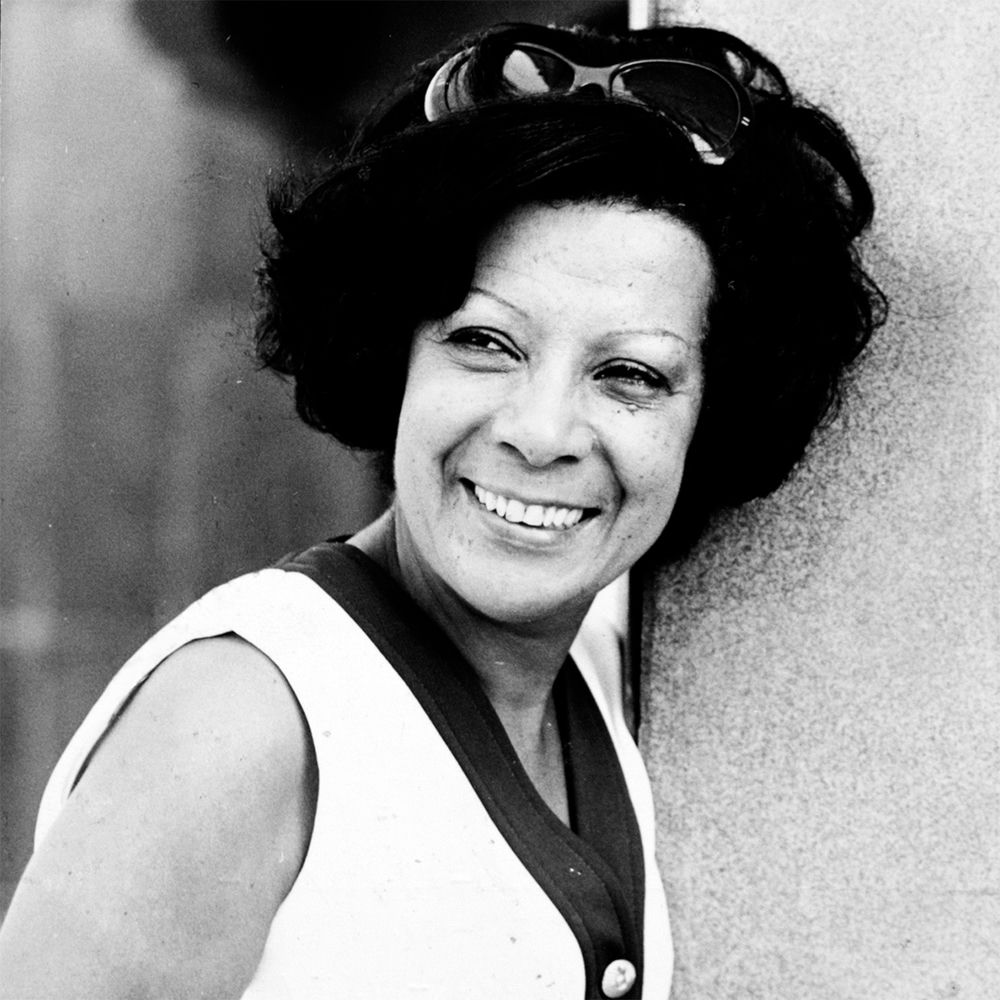
Elizeth Cardoso
 Brazil
Listen Elizeth Cardoso on radio stations:

Elizeth Cardoso: The Empress of Brazilian Samba
Elizeth Cardoso was a legendary Brazilian singer whose profound influence defined the golden age of samba and bossa nova. Hailing from Rio de Janeiro, her career peak is marked by the seminal 1958 album "Canção do Amor Demais," a landmark release that helped launch the bossa nova movement globally.
Early career
Born in 1920 in Rio de Janeiro, Elizeth Cardoso began her professional life not in music but as a hat maker. Her musical journey started in the 1940s, performing in local clubs and on radio programs, which led to her first recordings for the Continental label in the late 1940s.
Her early work established her as a versatile vocalist with a deep, emotive contralto voice, mastering samba-canção and marchinhas. By the mid-1950s, she was a respected figure in Rio's vibrant musical scene, regularly recording and performing.
Breakthrough
Elizeth Cardoso's career-defining moment arrived in 1958 with the album "Canção do Amor Demais." Released by Festa, this collaboration with composer Antônio Carlos Jobim and guitarist João Gilberto featured the first recorded use of Gilberto's revolutionary guitar beat that became the hallmark of bossa nova.
The album itself, while not an immediate commercial blockbuster, became a critical touchstone. It is historically celebrated for introducing the bossa nova style to the world, with Cardoso's impeccable phrasing setting the standard.
Key tracks
Canção do Amor Demais — The title track from the landmark album perfectly showcases the new, intimate bossa nova aesthetic.
Chega de Saudade — This Jobim composition on the same album featured João Gilberto's groundbreaking guitar work, forever changing Brazilian music.
Barracão — A earlier samba hit from 1956 that solidified her reputation as a powerful interpreter of traditional Brazilian genres.
Rosa Morena — Another classic Dorival Caymmi composition that became one of her signature songs, demonstrating her samba mastery.
Following this pivotal period, Cardoso continued a prolific recording career through the 1960s and 1970s for labels like Odeon and Copacabana. She remained a dominant force in samba, performing and recording extensively, and her 1970 live album "Elizeth Soberana" is considered a masterpiece of her later career.
Her collaborations read as a who's who of Brazilian music, including Pixinguinha, Jacob do Bandolim, and Paulinho da Viola. Elizeth Cardoso maintained a revered status in Brazilian culture until her passing in 1990, leaving behind a vast discography that chronicles the evolution of mid-century Brazilian popular music.
Fans of Elizeth Cardoso's sophisticated samba and bossa nova should also explore Nara Leão, another foundational voice of bossa nova known as the "Muse." The timeless elegance of João Gilberto is essential for his revolutionary guitar style first heard with Cardoso. For powerful samba interpretation, listen to Beth Carvalho, a later samba icon who carried the tradition forward. The poetic works of Chico Buarque also share the lyrical depth and melodic sophistication central to Cardoso's repertoire.
The music of Elizeth Cardoso holds a permanent place in the rotation of classic Brazilian music stations and bossa nova specialty streams. Her recordings are staples on channels dedicated to Latin jazz, world music, and the timeless sounds of mid-century Rio.
You can hear the enduring classics of Elizeth Cardoso on radio stations featured across our website. Explore the stations available on onairium.com to discover or revisit the empress of Brazilian samba.