How to clarify, stabilize, and finish cider the right way
The Purpose of Secondary Fermentation when Making Cider
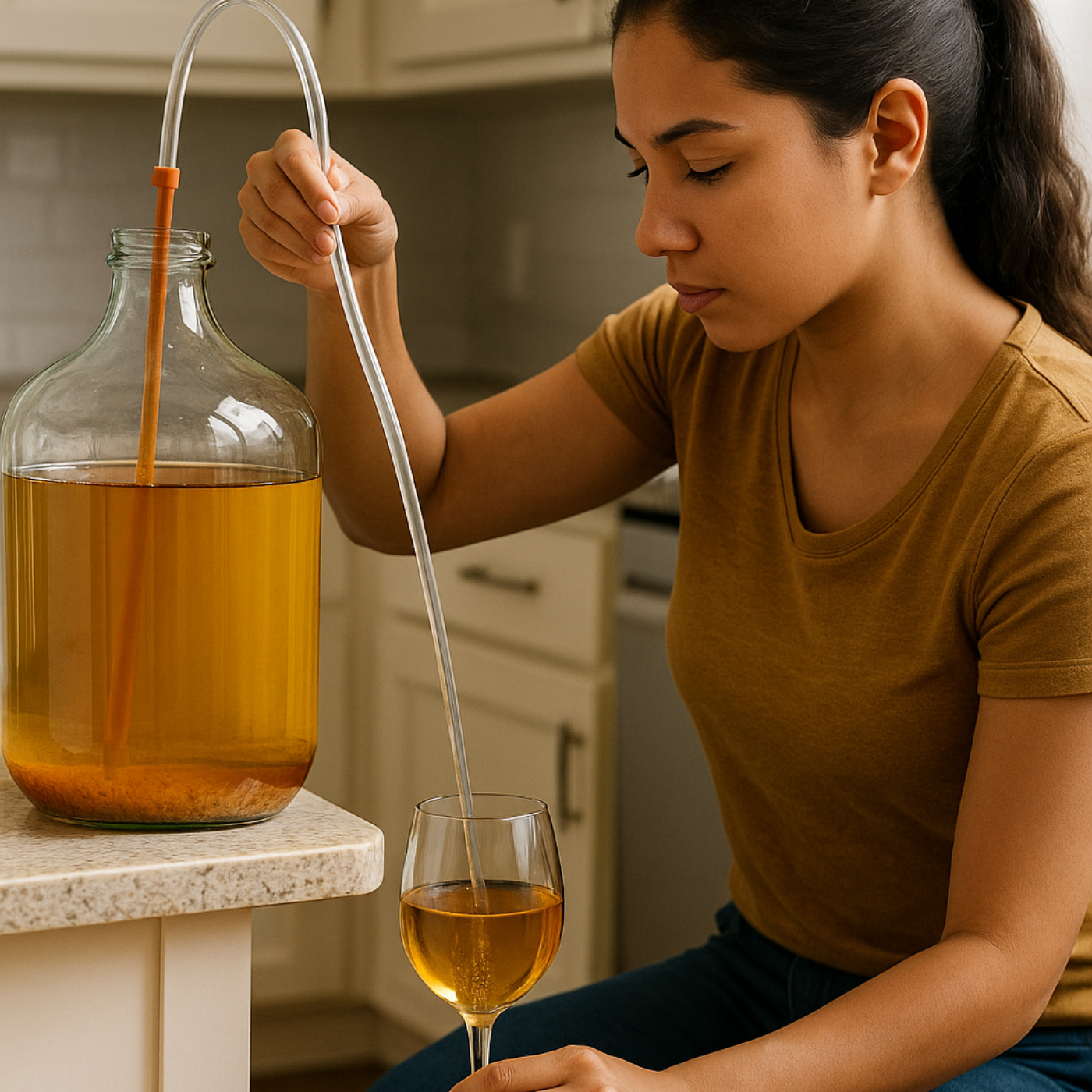
Once the apple juice has started fermented and it is now slowing down, it is time to rack over your cider for secondary fermentation.
Secondary fermentation is where your cider moves from "young" to "refined." This stage improves clarity, stability, and overall quality before bottling or serving.
00:00 – Introduction and Welcome 00:27 – Meet the Host: Ria Windcaller 00:45 – The Magic of Clothes Pins 01:14 – Episode Overview: Secondary Fermentation 01:55 – Replay Announcement: Season 8, Episode 386 02:14 – Cider Making in the Northern Hemisphere 02:34 – Cider Making Resources and Equipment 06:09 – Totally Cider Tours 13:29 – Upcoming New York Cider Festival 15:31 – Featured Presentation: Clearing Cloudy Cider 24:01 – Observing Fermentation Activity 24:21 – Timing and Patience in Cider Making 24:54 – Understanding Racking Over 25:32 – Dealing with Stuck Fermentation 26:59 – Secondary Fermentation Indicators 27:47 – Preparing for Racking Over 29:13 – Racking Over Process 30:49 – Using Sulfites and Equipment 35:32 – Handling Head Space and Lees 38:38 – Final Tips and Bottling 42:43 – Supporters and Closing Remarks
Why Secondary Fermentation Matters
Secondary fermentation helps your cider:
Improve the overall quality and characteristics of the final product during secondary fermentation by;
Clarify: After the vigorous primary fermentation phase, yeast, pulp, and particulate matter settle out. Giving the cider time in secondary creates that clean, bright look in the glass.
Stabilize: Letting the cider relax in a less active fermentation state helps smooth out rough edges and reduces the risk of funky off-character flavors.
Reduce Bottle Sediment: Most of the lees settle in the secondary fermenter — not in your final bottles — giving you a cleaner, professional-looking cider.
Avoid Off-Flavors: Yeast that sits too long on the lees can break down (autolyze) and create harsh, unpleasant aromas. Racking to secondary moves the cider off that yeast layer and protects the finished profile..
Secondary fermentation is a crucial step for refining cider, enhancing its clarity, taste, and stability before it is consumed or sold.
Primary fermentation must be substantially complete. Signs include:
– Airlock activity slows way down – Gravity readings stabilize over several days – Visible bubbling is minimal – A firm lees bed is forming at the bottom – Taste test confirms sugar is mostly gone (unless aiming for sweet
Tubing & a clothes pin ( a Ria tip to have on hand for clamping tubing as you go so it can be managed to insure that the tube doesn't slip down into the lees and stir them up)
Bottle Brush and Cleaning Equipment
Determining when Secondary Fermentation Begins
Completion of Active Primary Fermentation: Watch and notice when the vigorous phase of primary fermentation is complete, which is typically indicated by a significant decrease in airlock activity or specific gravity readings that are close to the target final gravity.
Gravity Readings: Use a hydrometer or refractometer to take consecutive gravity readings over a few days. When readings are consistent, it suggests that fermentation has slowed down enough for secondary transfer.
Visual Clues: Look for a drop in the level of visible activity, such as the reduction of bubbles and the beginning of sediment formation at the bottom of the primary fermenter.
Taste Test: Conduct a taste test for residual sweetness. If the cider is too sweet, it may need more time in primary fermentation unless the desired style of cider is sweet rather than dry.
Timeframe Guidance: Generally, primary fermentation can take anywhere from a few days to two weeks, depending on factors like temperature, yeast strain, and original sugar content.
Avoiding Off-Flavors: Transfer before the cider has sat too long on the lees at the bottom of the carboy to prevent off-flavors that can result from yeast autolysis.
Specific Style Goals: Factor in the specific goals for the cider's style, as some styles may benefit from a longer or shorter primary fermentation before secondary.
Equipment Availability: Ensure that the secondary fermentation vessel is prepared and sanitized before deciding on the transfer to avoid any delays once the cider is ready.
Common Problems during Secondary Ferment
Stalled Fermentation – Adjust fermentation temperature to optimal range.
Excessive Oxidation – Minimize headspace and avoid splashing when transferring.
Contamination – Practice stringent sanitation and possibly discard contaminated batch.
Sulfite Burn – Allow time for dissipation or use activated carbon treatment.
There’s a whole world in a glass of cider, and Cider Chat is your invitation to explore it. Hosted by award-winning cidermaker and writer Ria Windcaller, this podcast travels far beyond the bottle to meet the people who make the global cider culture so vibrant. Each conversation is a journey-you might find yourself in a heritage orchard learning the history of forgotten apple varieties, in a bustling taproom with an importer explaining regional traditions, or in a kitchen with a chef pairing cider with unexpected foods. The discussions get into the delightful nuances, too, whether that’s the semantics of what we even call this drink or how the concept of terroir translates from soil to sip. It’s not just about production; it’s about the community, the travel, and the stories that fermentation unlocks. This is for anyone curious about the craft, history, and sheer enjoyment of fermented apple juice in all its forms. So, pour a glass and settle in for a series that feels like a wide-ranging, informative, and genuinely good-humored chat with friends who happen to be obsessed with cider. You’ll come away with a deeper appreciation for every effervescent, tart, or sweet sip, hearing directly from the growers, makers, and enthusiasts who are shaping this drink’s exciting present and future.
Everything is Right Side Up at Calico The logo of Calico Cidery might be an upside down apple drawn to look like an apple tree, but the setting, the people, orchard and the cider is all right side up and slamming it! Loc…
What is a pomological exhibition? Orchardist Matt Kaminsky has hosted a Pomological Exhibition in Ashfield, Massachusetts for the past 3 years. In this talk recorded at the Cider Pop-UP as part of CiderDays 2.0 events on…
Four Phantoms Looks to Historical Co-Ferments Head Brewer and owner Drew Phillips of Four Phantoms Brewery in Greenfield Massachusetts spoke on Folks Traditions and the Co-Fermentation of Wort and Apple Juice and the bre…
Cider on the Table like Fine Wine at Ragged Hill Steve Garwood and daughter Anne Garwood Hampp are the mastermind duo at Ragged Hill Cider based in West Brookfield, Massachusetts. They brought a selection of bottles to t…
Volunteering for CiderDays, Since 1994 On the first ever CiderDays, which was a one day event held on November 5, 1994, volunteers were stationed at local cider mills to encourage people to learn how to make cider. When…
Celebrities in Cider flocking to CiderDays 2.0 CiderDays and has now been dubbed as CiderDays 2.0 and the celebrities attending can both be found in the bottles and the new and familiar face of cider today at this Novemb…
Going to CiderDays 2.0 | Part 1 This year 2022 is the reboot of America's oldest educational and festive cider event dubbed this year as CiderDays 2.0 and this episode we tip the glass to those who are helping make it ha…
How to Pair Cider with Food "One must taste, taste, taste to know." say maker Eric Bordelet when pairing food with cider. Yes, it is not as simple as seeing the menu, but also knowing how both the Chefs in the kitchen an…
Why a Cider Tour Bus is better than going Solo The obvious reason why taking a bus tour vs driving on your own to visit French cidermakers is that you can imbibe! But wait there is more! In this episode 339, the guest on…
Normandy to Brittany on the French Cider Tour The 2022 French Cider Tour that took travelers from across North America on a trip of a life time was a trip of a life time. Not only were the apple and pear trees laden with…