Critical analysis: not just for students

Critical analysis: not just for students

Author: Ethical Schools May 20, 2021 Duration: 33:30

We speak with Dr. Sam Abrams of the National Center for the Study of Privatization in Education (NCSPE) at Teachers College, Columbia University. Dr. Abrams describes his analyses of statistics released by local and national education systems and widely disseminated by the media. Sometimes the reports are wrong or misleading, which can have serious consequences for students. We also talk about some of the differences between Finland’s schools and our own.

Overview

00:00-00:41 Intros

00:41-05:39 Misleading narrative about admissions to NYC screened high schools

05:39-08:23 Why Department of Education and principals don’t correct the narrative

08:23-12:05 Sam Abrams’s Columbia Journalism Review article

12:05-13:02 How changes in admissions policies at Beacon and Bard High School and Early College will change the schools

13:02-17:31 What an equitable admissions policy could look like; screening; focusing on reducing large economic consequences for students of tracking

17:31-24:15 “Teaching time” in US and other countries—errors in comparative data and their importance

24:15-26:31 Looking at assessment in Finland and the U.S.

26:31-31:22 Educational option plans—implications for integration and for instruction

31:22-33:30 Outro

Transcript

Click here to see the full transcription of this episode. 

References


Conversations about education often focus on test scores and curriculum, but there’s a deeper layer that truly shapes a student’s experience. Ethical Schools digs into that layer, exploring what it means to build a learning community grounded in integrity and care. Each week, hosts Amy and Jon sit down with educators and innovators who are actively reimagining schools. You’ll hear specific, grounded discussions about the practical work of creating environments where every student feels safe and respected. The dialogue frequently addresses how to support young people dealing with trauma, moving beyond theory to share actionable strategies that teachers are using right now. More than just problem-solving, this podcast highlights how to empower students themselves to become advocates and changemakers in their own communities. It’s a series that connects philosophy with daily practice, looking at the social and cultural structures within schools through a lens of ethics. For anyone invested in the future of education-whether you’re a teacher, administrator, or simply a concerned community member-this podcast offers a thoughtful and necessary perspective on the foundational values that make education meaningful.
Author: Language: English Episodes: 240

Ethical Schools
Podcast Episodes
Students doing original research: Project-based learning in Ohio [not-audio_url] [/not-audio_url]

Duration: 56:47
We speak with middle school teachers, Debbie Holecko and Claudia Bestor, and their former student, Rafel Alshakergi, about a student-led research project that led to ethical civic engagement. Rafel explains how the exper…
Abolitionist education: Creating liberatory spaces (Part Two) [not-audio_url] [/not-audio_url]

Duration: 35:30
We continue our conversation with Dr. Edwin Mayorga of Swarthmore College. We discuss the corporatization of schools that reduces students to their test scores. Dr. Mayorga encourages educators to center joy and healing.…
Abolitionist education: Creating liberatory spaces (Part One) [not-audio_url] [/not-audio_url]

Duration: 44:30
We speak with Swarthmore’s Dr. Edwin Mayorga, who explains how abolitionist classrooms and schools create “freedom as a place” in contrast to racial capitalism. Teachers are the lead inquirers and try to “move at the spe…
BIPOC and undocumented: A trauma-filled intersection [not-audio_url] [/not-audio_url]

Duration: 33:10
Dr. Christiana Best, who spent thirty years in the New York City child welfare system before becoming a full-time academic, discusses her personal experience of being left behind in Granada while her mother settled in th…
The impact of deportation policies on Latinx students’ mental health [not-audio_url] [/not-audio_url]

Duration: 28:45
Dr. Randy Capps, Director of Research for U.S. Programs at the Migration Policy Institute, surveyed Latinx high school students to see how fear of deportation – of their parents, relatives, friends, or themselves – impac…
Empowering school counselors to support struggling students [not-audio_url] [/not-audio_url]

Duration: 36:30
Dr. Mandy Savitz-Romer of Harvard Graduate School of Education sees counselors as schools’ academic conscience, the hub for providing holistic support to students. To be effective, they need a seat at the leadership tabl…
Holistic history: The African diaspora [not-audio_url] [/not-audio_url]

Duration: 39:45
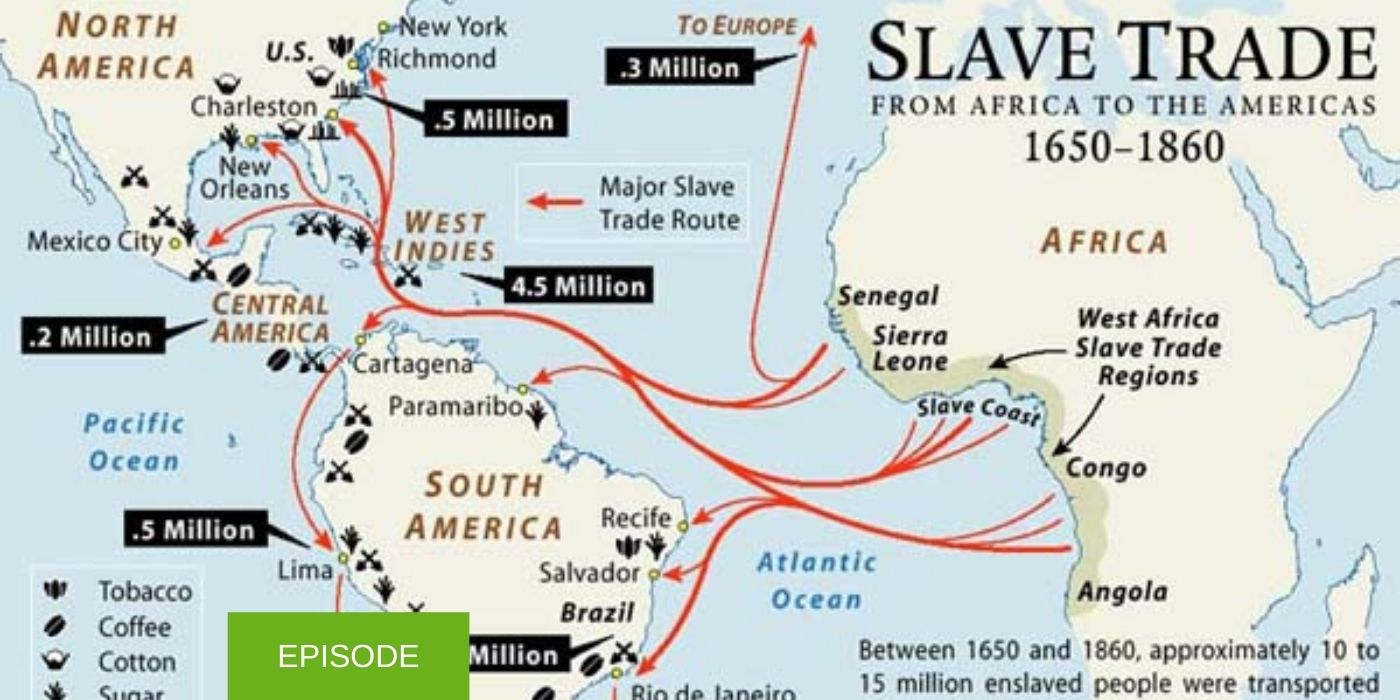
Dr. Kim Butler, who leads Rutgers’s Africana Studies program, says that while we usually teach history and social studies in discreet, testable units, events are complex and interconnected. Slavery throughout the America…
Students leading change: Inclusiveness at an elite school [not-audio_url] [/not-audio_url]

Duration: 49:12
Stacey Cervellino Thorp and Naima Moffett-Warden teach drama at Manhattan’s famed LaGuardia High School, and Abigail Rivera is a senior in the drama studio. Although all LaGuardia students are extraordinarily talented, t…
Teaching economics as political and ethical choices [not-audio_url] [/not-audio_url]

Duration: 37:00
We welcome back Lev Moscow of the Beacon School to discuss his approach to teaching political economy, which actually applies to any social science. It’s not primarily about the numbers but about the human choices behind…