Guantanamo: The Myth vs the Reality
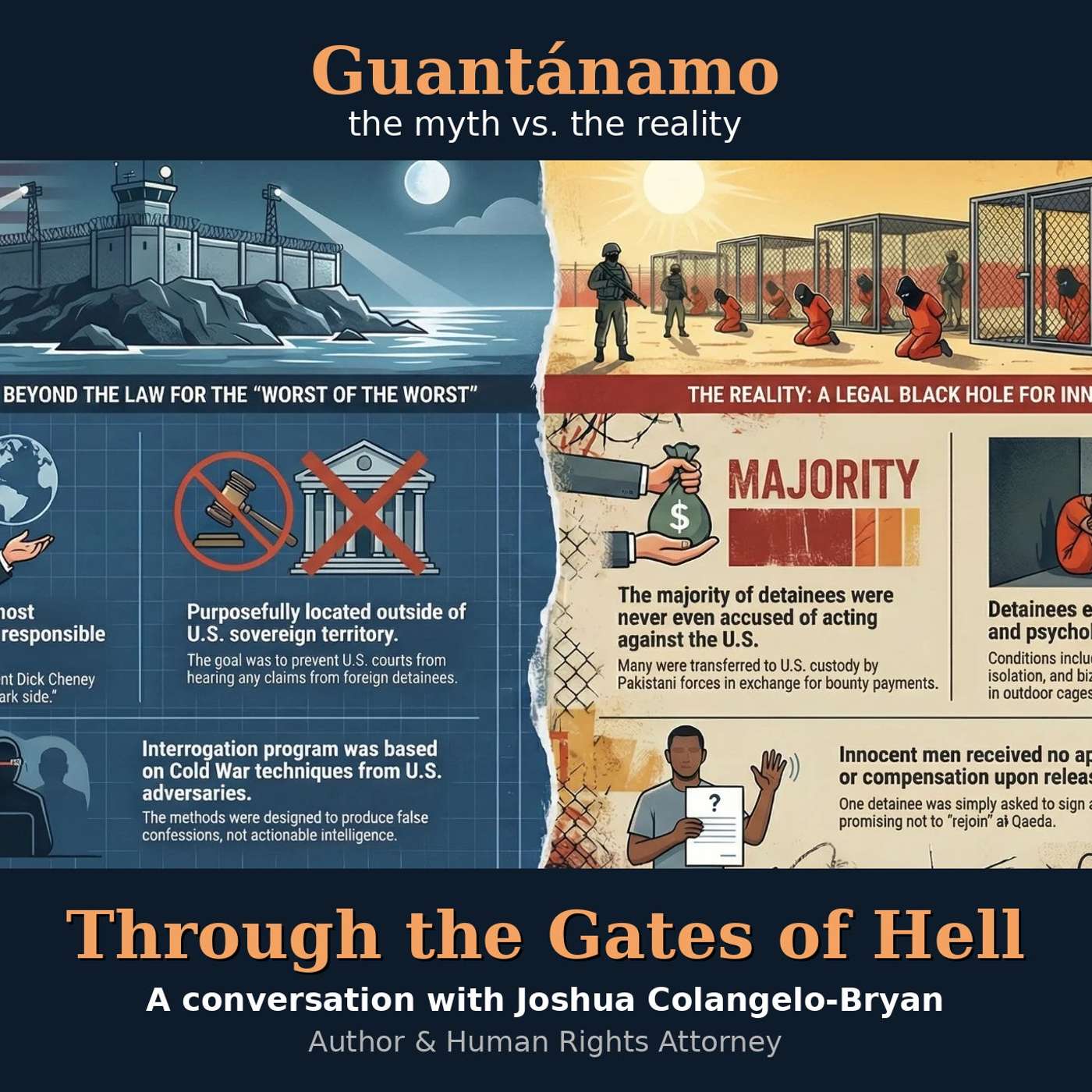
Dick Cheney died four weeks ago, but his dark legacy lives on—quite literally—at Guantanamo Bay. The human rights lawyer Joshua Colangelo-Bryan was among the first attorneys to enter the notorious prison in 2004, and what he found there shattered every official justification for its existence. The “worst of the worst”? Most detainees were never even accused of acting against America. Many were simply sold to the Americans for bounties. The sophisticated interrogation program? Techniques copied from Chinese and Soviet methods designed to extract false confessions, not intelligence. In his new book Through the Gates of Hell, Colangelo-Bryan tells the story of his unlikely friendship with Jaber Mohammed, a Bahraini detainee who spent years in captivity for the crime of being an Arab man in the wrong place (Afghanistan) at the wrong time (post 9/11). Released without apology or compensation—just a form asking him not to “rejoin” organizations he’d never belonged to—Jaber now lives in Saudi Arabia with four children, focusing less on bitterness and more on those rare moments when American guards showed him unexpected kindness. As the Trump administration revives the “worst of the worst” rhetoric against immigrants and once again sends people to Guantanamo, Colangelo-Bryan’s account is a warning from recent history: demonize a racial or religious group, and you will inevitably destroy innocent lives. The gates of hell have once again been opened. Will they ever be closed?
This is a public episode. If you'd like to discuss this with other subscribers or get access to bonus episodes, visit keenon.substack.com/subscribe
The Wicked Art of the Gothic Thriller: Abbott Kahler on writing unnerving literature about unnerving times
10 must read books for 2024: Bethanne Patrick on intriguing fiction and non-fiction to read in the new year
Is the current AI boom just another Silicon Valley bubble? John Thornhill separates the truth from the fiction of today's AI hysteria
Confessions of a Disillusioned Social Scientist: Brian Klaas on why we are all random accidents of chance and chaos
How foreign lobbyists in America threaten democracy around the world: Casey Michel on the dirty overseas money sloshing around both sides of American politics
Should you have sex with your robot?
Should you have sex with your robot? Eve Herold on our narcissistic echo-chamber culture in which we are falling in love with our robots (ie: ourselves)
How American healthcare is rigged against ethical doctors and poor patients: Dr Robert Pearl explains how the system can be reformed in 2024
Why a future of digitally connected brains is now on the horizon: PJ Caldas on the networked tsunami that is about to transform all our realities
What happens when AI "drifts"? Dominique Shelton Leipzig offers protection from the high-risk dangers of algorithmic malfunction
Turning writing into a habit that lasts: Bec Evans on how to start and finish books and why binge writing isn't a bad habit
Why all crises of capitalism are caused by moral failures: Colin Mayer on the social responsibility of business in every industry, from oil to tobacco to genetic engineering and AI
That Will Be The Year: Keith Teare predicts the major political, economic and technological developments for 2024