Guantanamo: The Myth vs the Reality
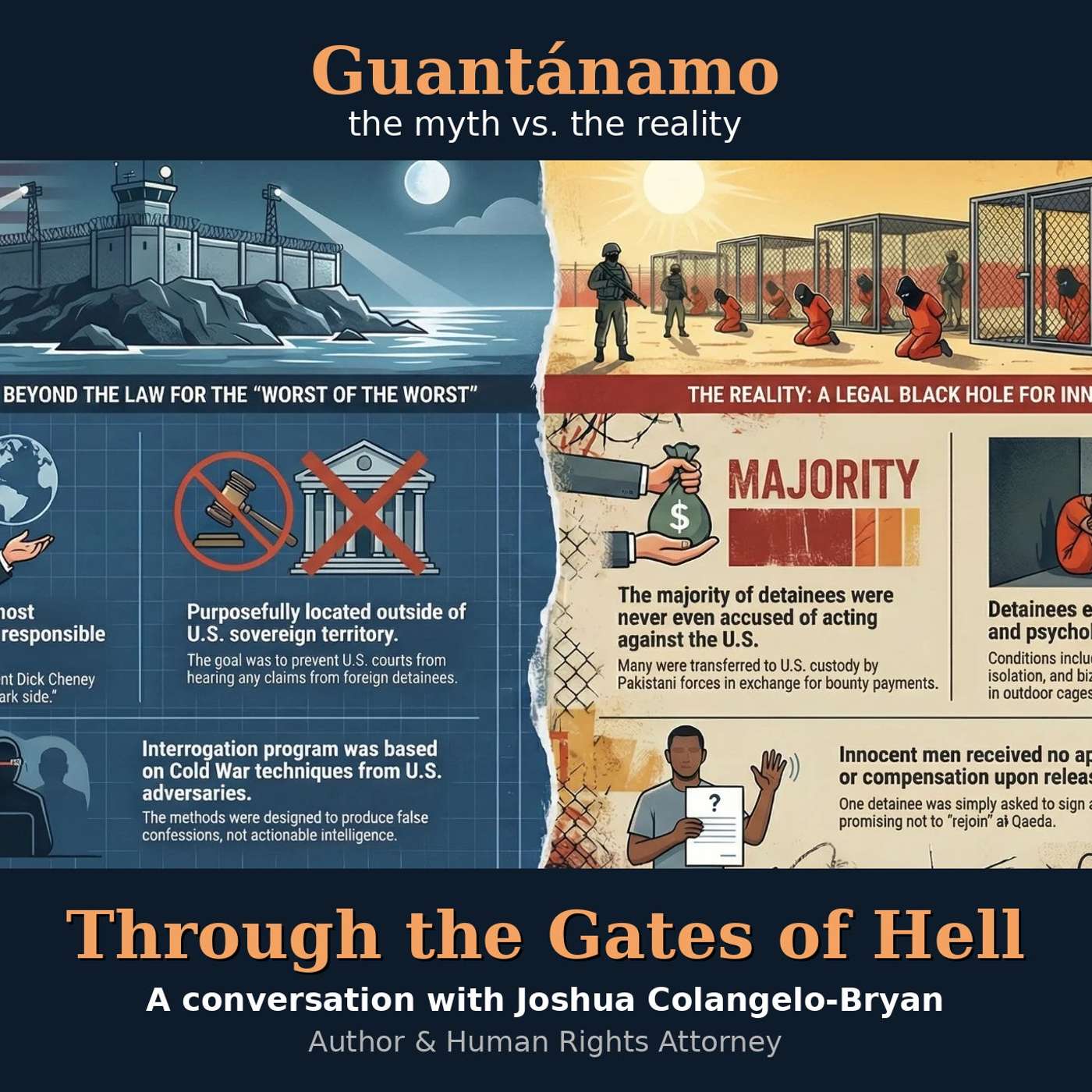
Dick Cheney died four weeks ago, but his dark legacy lives on—quite literally—at Guantanamo Bay. The human rights lawyer Joshua Colangelo-Bryan was among the first attorneys to enter the notorious prison in 2004, and what he found there shattered every official justification for its existence. The “worst of the worst”? Most detainees were never even accused of acting against America. Many were simply sold to the Americans for bounties. The sophisticated interrogation program? Techniques copied from Chinese and Soviet methods designed to extract false confessions, not intelligence. In his new book Through the Gates of Hell, Colangelo-Bryan tells the story of his unlikely friendship with Jaber Mohammed, a Bahraini detainee who spent years in captivity for the crime of being an Arab man in the wrong place (Afghanistan) at the wrong time (post 9/11). Released without apology or compensation—just a form asking him not to “rejoin” organizations he’d never belonged to—Jaber now lives in Saudi Arabia with four children, focusing less on bitterness and more on those rare moments when American guards showed him unexpected kindness. As the Trump administration revives the “worst of the worst” rhetoric against immigrants and once again sends people to Guantanamo, Colangelo-Bryan’s account is a warning from recent history: demonize a racial or religious group, and you will inevitably destroy innocent lives. The gates of hell have once again been opened. Will they ever be closed?
This is a public episode. If you'd like to discuss this with other subscribers or get access to bonus episodes, visit keenon.substack.com/subscribe
Why the "Words of Cesar Chavez" still matter: Peter Slen on the labor leader, Christian Socialist and voice of Hispanic America
The book that transformed how Americans think about economics: Peter Slen on the impact of Rose and Milton Friedman's 1980 defense of free market capitalism, "Free to Chose"
In defense of digital education: William B. Eimicke on how to level the learning curve and create a more inclusive and connected university
Is the current Gazan ceasefire a mirage?Jason Pack on Qatar, Iran, Biden, Hamas, Israel and the road to order in the disordered Middle East
Ten Ways of Winning Differently in the AI Age: Kate Bravery's truths about work, skills and education in the smart machine epoch
Digital Lennonism: Marga Hoek imagines how tech can solve some of the world's greatest challenges
The Last Ships from Hamburg: Steven Ujifusa on the race to save Russia's Jews on the eve of World War I
OpenAI , Sam Altman and the new war over capitalism in Silicon Valley: Keith Teare on the moral fight over technological progress triggered by the OpenAI brouhaha
Eight brilliant books to give this Xmas: Bethanne Patrick's list of literary gifts that will delight even the most discerning reader
The Shame of America's Six Million Homeless People: Kevin F. Adler on the forgotten humanity and broken systems causing today's American homelessness crisis
Why only humans can imagine the future: Margaret Heffernan on art, creative uncertainty and the insatiability of AI moguls like Sam Altman
How to protect our all-too-human superpower of creative thinking: Viktor Mayer-Schonberger on the guardrails needed to regulate big data companies like OpenAI
A Uniquely Glittering Literary Club: Christopher De Hamel on the remarkable people behind a thousand years of medieval manuscripts