Guantanamo: The Myth vs the Reality
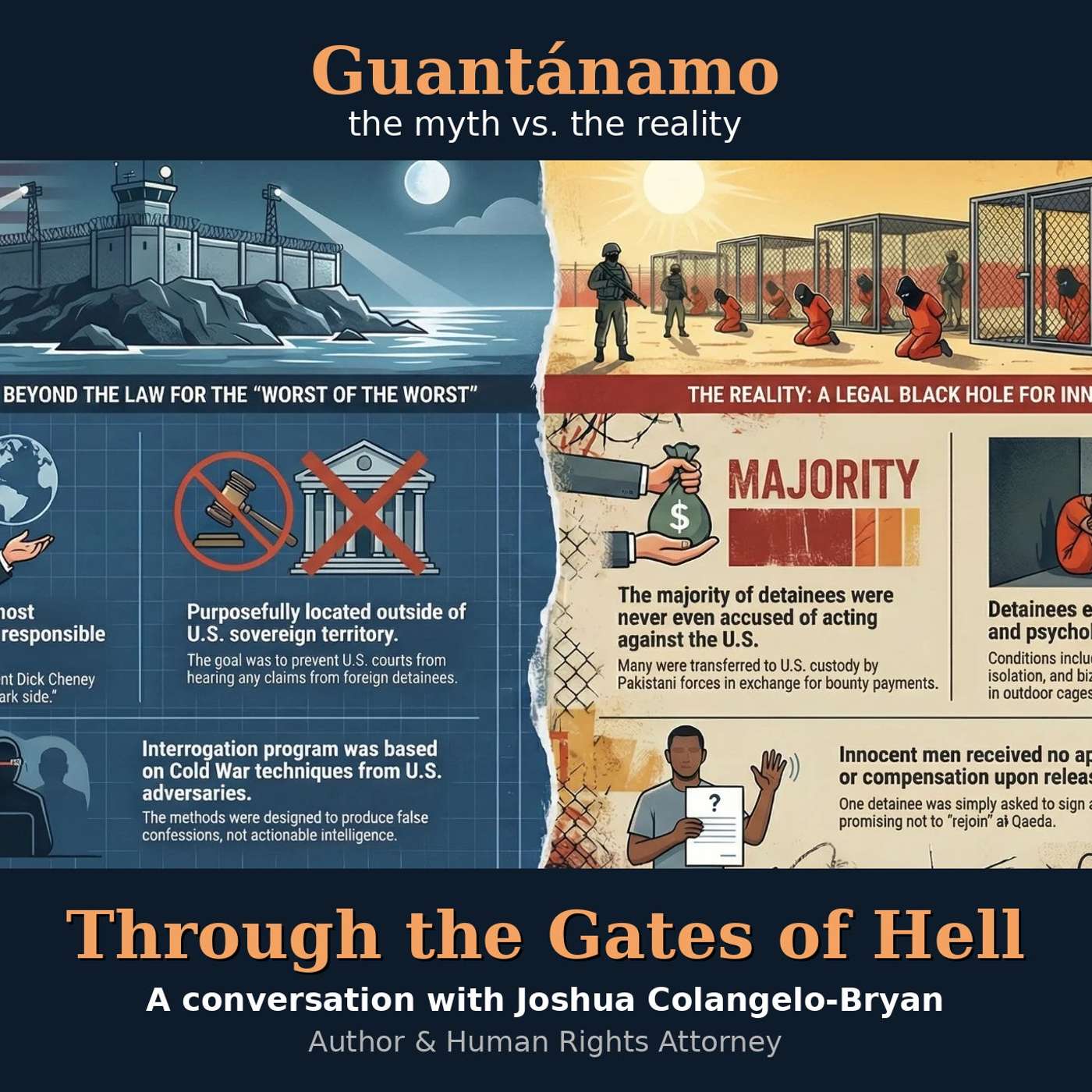
Dick Cheney died four weeks ago, but his dark legacy lives on—quite literally—at Guantanamo Bay. The human rights lawyer Joshua Colangelo-Bryan was among the first attorneys to enter the notorious prison in 2004, and what he found there shattered every official justification for its existence. The “worst of the worst”? Most detainees were never even accused of acting against America. Many were simply sold to the Americans for bounties. The sophisticated interrogation program? Techniques copied from Chinese and Soviet methods designed to extract false confessions, not intelligence. In his new book Through the Gates of Hell, Colangelo-Bryan tells the story of his unlikely friendship with Jaber Mohammed, a Bahraini detainee who spent years in captivity for the crime of being an Arab man in the wrong place (Afghanistan) at the wrong time (post 9/11). Released without apology or compensation—just a form asking him not to “rejoin” organizations he’d never belonged to—Jaber now lives in Saudi Arabia with four children, focusing less on bitterness and more on those rare moments when American guards showed him unexpected kindness. As the Trump administration revives the “worst of the worst” rhetoric against immigrants and once again sends people to Guantanamo, Colangelo-Bryan’s account is a warning from recent history: demonize a racial or religious group, and you will inevitably destroy innocent lives. The gates of hell have once again been opened. Will they ever be closed?
This is a public episode. If you'd like to discuss this with other subscribers or get access to bonus episodes, visit keenon.substack.com/subscribe
Is Web3 technology - Blockchain, Cryptocurrency, DAOs, NFTs et al - just the latest Silicon Valley hype? Alex Tapscott separates the signal from the noise on the internet's next economic and cultural frontier
Tyranny of an Ethnocratic Minority: Steven Levitsky on what an increasingly broken American political system has to learn from the democracies of Brazil and Argentina
When the stink became overwhelming: Corban Addison tells the true story of when large-scale farming went on trial in North Carolina
Your Face Belongs to Us: Kashmir Hill on a secretive startup's quest to end privacy as we know it
Eight novels to take to a desert island this Fall: Bethanne Patrick on new fiction about Haiti, Jamestown, 1984, Malaysia and women on the margins of the Vietnam war
On the Awesomeness of Globalization: Keith Teare explains why the next chapter of globalized technology will undermine the economic and political power of the nation-state
The Economic and Moral Case for Good Jobs: Zeynep Ton on why companies need to bring dignity, pay and meaning to everyone's work
How to stand up to a dictator: Maria Ressa on courage, honesty, perseverance and why must all fight for our future
The shocking saga of big media malfeasance rivaling Succession for its sex, lies and betrayals: Rachel Abrams on the Redstone dynastic struggle, former CBS executive Les Moonves and their significance to the Me Too movement
Why AI threatens not just writing, creativity and thinking, but also democracy: Naomi S. Baron on how new tools like Chat GPT are stopping us knowing who we really are as individuals
The Long Life of a Radical Gerontologist: Ken Dychtwald on how to age with purpose
The $100 Trillion Wealth Transfer: Ken Costa explains why the handover of wealth from Boomers to Gen Z must revolutionize capitalism
Why digital transformation isn't about technology: David Rogers on how to rebuild organizations in our age of continuous change