
"AlgZoo: uninterpreted models with fewer than 1,500 parameters" by Jacob_Hilton

"AlgZoo: uninterpreted models with fewer than 1,500 parameters" by Jacob_Hilton

Author: LessWrong January 27, 2026 Duration: 21:53
Audio note: this article contains 78 uses of latex notation, so the narration may be difficult to follow. There's a link to the original text in the episode description.

This post covers work done by several researchers at, visitors to and collaborators of ARC, including Zihao Chen, George Robinson, David Matolcsi, Jacob Stavrianos, Jiawei Li and Michael Sklar. Thanks to Aryan Bhatt, Gabriel Wu, Jiawei Li, Lee Sharkey, Victor Lecomte and Zihao Chen for comments.

In the wake of recent debate about pragmatic versus ambitious visions for mechanistic interpretability, ARC is sharing some models we've been studying that, in spite of their tiny size, serve as challenging test cases for any ambitious interpretability vision. The models are RNNs and transformers trained to perform algorithmic tasks, and range in size from 8 to 1,408 parameters. The largest model that we believe we more-or-less fully understand has 32 parameters; the next largest model that we have put substantial effort into, but have failed to fully understand, has 432 parameters. The models are available at the AlgZoo GitHub repo.

We think that the "ambitious" side of the mechanistic interpretability community has historically underinvested in "fully understanding slightly complex [...]

---

Outline:

(03:09) Mechanistic estimates as explanations

(06:16) Case study: 2nd argmax RNNs

(08:30) Hidden size 2, sequence length 2

(14:47) Hidden size 4, sequence length 3

(16:13) Hidden size 16, sequence length 10

(19:52) Conclusion

The original text contained 20 footnotes which were omitted from this narration.

---

First published:
January 26th, 2026

Source:
https://www.lesswrong.com/posts/x8BbjZqooS4LFXS8Z/algzoo-uninterpreted-models-with-fewer-than-1-500-parameters

---


Narrated by TYPE III AUDIO.

---

Images from the article:

Neural network architecture diagram showing residual connections with ReLU activations and weight transformations.
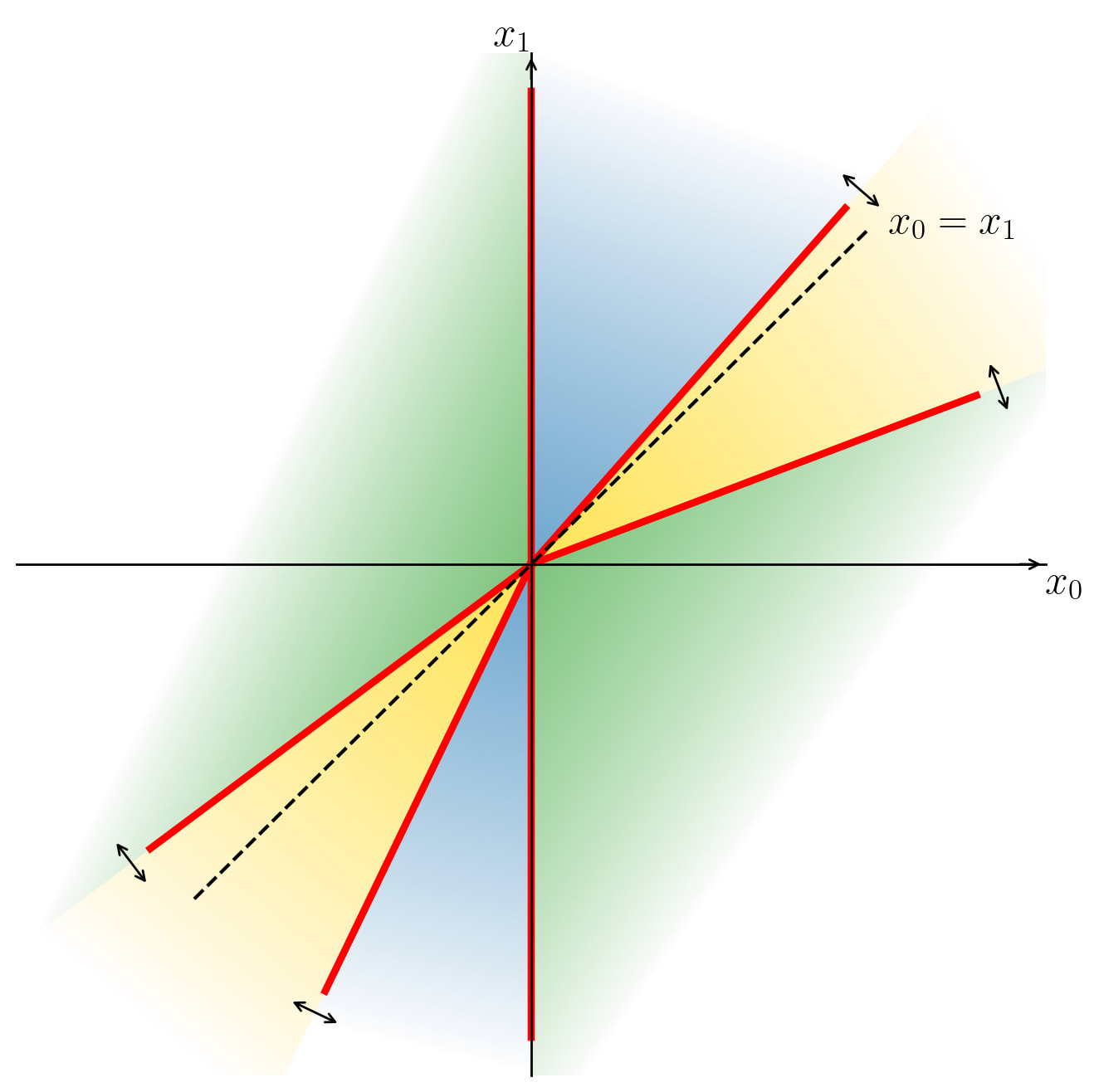
Coordinate system diagram showing angular sector between x₀ and x₁ axes.Apple Podcasts and Spotify do not show images in the episode description. Try Pocket Casts, or another podcast app.


Dive into a stream of ideas where technology, culture, philosophy, and society intersect, all through the lens of the LessWrong (Curated & Popular) podcast. This isn't a traditional talk show with hosts, but rather a curated audio library of the most impactful writing from the LessWrong community. Each episode is a narration of a full post, selected for its high value and interesting arguments, focusing on pieces that have been formally curated or have garnered significant community approval. You'll hear clear, thoughtful readings of essays that tackle complex topics like artificial intelligence, rational thinking, moral philosophy, and the forces shaping our future. The audio format lets you absorb these dense, often paradigm-shifting concepts during a commute or a walk, turning written analysis into an immersive listening experience. This particular feed is deliberately selective, offering a manageable stream of the community's standout work. For those who want an even deeper dive into the discussion, there are broader feeds available. The LessWrong (Curated & Popular) podcast serves as an intellectual filter, delivering the signal through the noise and inviting you to engage with some of the most rigorously examined ideas on the internet.
Author: Language: English Episodes: 100

LessWrong (Curated & Popular)
Podcast Episodes
"How to game the METR plot" by shash42 [not-audio_url] [/not-audio_url]

Duration: 12:05
TL;DR: In 2025, we were in the 1-4 hour range, which has only 14 samples in METR's underlying data. The topic of each sample is public, making it easy to game METR horizon length measurements for a frontier lab, sometime…
"Scientific breakthroughs of the year" by technicalities [not-audio_url] [/not-audio_url]

Duration: 5:55
A couple of years ago, Gavin became frustrated with science journalism. No one was pulling together results across fields; the articles usually didn’t link to the original source; they didn't use probabilities (or even r…
"A high integrity/epistemics political machine?" by Raemon [not-audio_url] [/not-audio_url]

Duration: 19:04
I have goals that can only be reached via a powerful political machine. Probably a lot of other people around here share them. (Goals include “ensure no powerful dangerous AI get built”, “ensure governance of the US and…
“Insights into Claude Opus 4.5 from Pokémon” by Julian Bradshaw [not-audio_url] [/not-audio_url]

Duration: 17:41
Credit: Nano Banana, with some text provided. You may be surprised to learn that ClaudePlaysPokemon is still running today, and that Claude still hasn't beaten Pokémon Red, more than half a year after Google proudly anno…
“The funding conversation we left unfinished” by jenn [not-audio_url] [/not-audio_url]

Duration: 4:54
People working in the AI industry are making stupid amounts of money, and word on the street is that Anthropic is going to have some sort of liquidity event soon (for example possibly IPOing sometime next year). A lot of…
