Monsters and their makers

Monsters and their makers

Author: Kensy Cooperrider – Diverse Intelligences Summer Institute October 23, 2025 Duration: 1:06:06

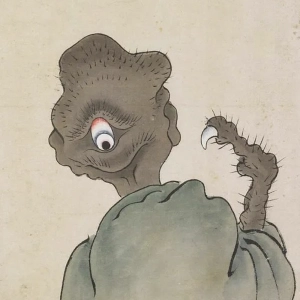
It seems we've always had monsters among us. We've long been enthralled by dragons and giants, by the likes of Frankenstein and Godzilla and Dracula, by witches and werewolves and countless others. They roam our maps and creation myths; they crop up in our dreams, in our children's books, in our political rhetoric. Where do these beings spring from? What do they do for us? How have they changed over time? And, ultimately, what do our monsters say about their makers?

My guests today are Dr. Natalie Lawrence and Dr. Surekha Davies. Both are historians of science and authors of recent books on monsters: Natalie's book is Enchanted creatures: Our monsters and their meanings. Surekha's book is Humans: A monstrous history.

Here, Surekha, Natalie, and I talk about monsters as category breakers and boundary walkers—and about how monstrosity is in the eye of the beholder. We walk through a menagerie of monsters—from the apocryphal blemmyes of old travelogues, to a hairy-faced girl in 16th century France, to the figure of Caliban in The Tempest. We discuss the psychological and cultural forces that generate monsters. And we talk about whether anyone would want to live in a world without them.

Along the way, we touch on the "monstrification" of social groups; psychoanalysis; our primal fear of snakes; curiosity cabinets; therianthropes and the Cave of the Three Brothers; the relationship between monstrosity and geography; our long fascination with so-called monstrous births; the Muppet Show; dinosaurs and sea creatures; and the question of what monsters might do for children in particular.

Alright friends, it's the monstrous season and this is a fun one to help you celebrate. Enjoy!


Notes

3:00 – Grendel's mother has often been a subject of critical discussion and adaptation. See, for instance, the 2018 novel, The Mere Wife.

12:30 – For a classic history-of-science treatment of "wonders" (including monsters) and our conceptions of nature, see here. 

18:30 – For those unfamiliar with muppets, an episode of the Muppet Show, which premiered in 1976.

24:00 – The blemmyes were often the subjects of illustration—for examples, see here.

26:00 – For more on Sir Walter Raleigh and the blemmyes, see Dr. Davies' recent newsletter post.

29:00 – One example of monsters at the margins of maps can be seen in the Psalter World Map.

32:00 – For more on Cave of the Trois-Frères and the Sorcerer, see here. 

34:00 – For more on shamanism, see our recent episode with Manvir Singh. 

37:00 – Therianthropes are relatively rare in cave art, but have nonetheless been widely discussed. For an example, see here.

39:00 – For more on Antonietta Gonsalvus and her family, including examples of how she was represented in paintings of the era, see here. 

45:00 – The trope of monsters in creation stories is often called "chaoskampf."

47:00 – The meanings of Medusa have been widely discussed and debated. See here for an example. 

52:00 – For more about Caliban, and the racial and colonial dimensions of the Tempest, see here. 

57:00 – The Steinbeck quote comes from his book, The Log from 'The Sea of Cortez.'


Recommendations

The Ashgate Research Companion to Monsters and the Monstrous, edited by Asa Simon Mittman & Peter J. Dendle

Spectacle of Deformity, by Nadja Durbach

The Modern Myths, by Philip Ball

The Monsters and the Critics (and other essays), by J.R.R. Tolkien

No Go the Bogeyman, by Marina Warner

Where the Wild Things Are, by Maurice Sendak


Many Minds is a project of the Diverse Intelligences Summer Institute, which is made possible by a generous grant from the John Templeton Foundation to Indiana University. The show is hosted and produced by Kensy Cooperrider, with help from Assistant Producer Urte Laukaityte and with creative support from DISI Directors Erica Cartmill and Jacob Foster. Our artwork is by Ben Oldroyd.

Subscribe to Many Minds on Apple, Stitcher, Spotify, Pocket Casts, Google Play, or wherever you listen to podcasts. You can also now subscribe to the Many Minds newsletter here!

We welcome your comments, questions, and suggestions. Feel free to email us at: manymindspodcast@gmail.com.

For updates about the show, visit our website or follow us on Bluesky (@manymindspod.bsky.social).


There's a quiet revolution happening in how we understand intelligence, and it's not just about humans. Many Minds, hosted by Kensy Cooperrider of the Diverse Intelligences Summer Institute, digs into this expansive idea. Each episode is a journey into the inner worlds of creatures and creations we share the planet with. You'll hear from researchers who decode the complex social minds of crows, who map the sensory universe of an octopus, or who grapple with the emerging cognition of artificial systems. This isn't a dry lecture series; it's a collection of thoughtful conversations that feel like pulling up a chair with experts who are genuinely redefining what it means to think, feel, and learn. The Many Minds podcast operates from a simple but profound premise: to grasp our own human experience, we need to listen to the many other kinds of minds around us. Tune in every other week for explorations that are as much about philosophy and wonder as they are about science and education, all grounded in rigorous research and a deep curiosity about the beings-animal, human, and artificial-that fill our world.
Author: Language: English Episodes: 100

Many Minds
Podcast Episodes
Varieties of childhood [not-audio_url] [/not-audio_url]

Duration: 1:28:48
Childhood is a special time, a strange time. Children are adored and catered to—they're given their own menus and bedrooms. They're considered delicate and precious, and so we cushion them from every imaginable risk. Kid…
Science, AI, and illusions of understanding [not-audio_url] [/not-audio_url]

Duration: 59:47
AI will fundamentally transform science. It will supercharge the research process, making it faster and more efficient and broader in scope. It will make scientists themselves vastly more productive, more objective, mayb…
The primeval soil of play [not-audio_url] [/not-audio_url]

Duration: 56:37
Puppies wrestling and mock-biting each other. Toddlers playing hide and seek. Kittens pouncing—repeatedly—on a toy mouse. You've no doubt looked on at scenes like this with amusement. And you've no doubt seen some of tho…
The big five and beyond [not-audio_url] [/not-audio_url]

Duration: 1:46:39
If you've heard anything about the study of human personality, you've probably heard about the "big five." This is a framework that attempts to characterize human personality in terms of five broad factors or dimensions—…
Philosophers on psychedelics [not-audio_url] [/not-audio_url]

Duration: 1:40:49
Some call it the "psychedelic renaissance." In the last decade or so, interest in psychedelic drugs has surged—and not just among Silicon Valley types and psychiatrists and neuroscientists. It's also surged among a stere…
The cuttlefish and its coat of many colors [not-audio_url] [/not-audio_url]

Duration: 1:33:38
We humans have a hard time becoming invisible. For better or worse, we're basically stuck with the skin and body we have; we're pretty fixed in our color, our shape, our overall appearance. And so we're fascinated by cre…
Life, free energy, and the pursuit of goals [not-audio_url] [/not-audio_url]

Duration: 1:06:49
You've probably come across the "free energy principle." It's become one of the most influential ideas in the broader cognitive sciences. Since the neuroscientist Karl Friston first introduced it in 2005, the theory has…
Universal emotions in fact and fiction [not-audio_url] [/not-audio_url]

Duration: 1:20:22
Are human emotions universal? Or do they vary from one place to the next and from one time period to the next? It's a big question, an old question. And every discipline that's grappled with it brings its own take, its o…
From the archive: Fermentation, fire, and our big brains [not-audio_url] [/not-audio_url]

Duration: 1:05:36
Hi friends, We're taking care of some spring cleaning this week. We'll be back in two weeks with a new episode. In the meantime, enjoy this favorite from our archives! - The Many Minds team ––––––––– [originally aired Fe…
Howl, grunt, sing [not-audio_url] [/not-audio_url]

Duration: 1:13:38
The tree of life is a noisy place. From one branch come hoots and howls, from another come clicks and buzzes and whines. And coming from all over you hear the swell of song. But what is all this ruckus about? Why do so m…