No one is an island. We all depend on each other in critical, often tangled ways. And when I say "we" and "each other" I don't just mean humans. Yes, we humans rely on other humans. But we also rely on bees, yeasts, dogs, bacteria, and countless other creatures big and small. These interspecies dependencies—or mutualisms, as biologists call them—have deflected and inflected our history. And there's no doubt they will also inflect our future.
My guest today is Dr. Rob Dunn. Rob is Professor of Applied Ecology at North Carolina State University, where he studies the creatures and ecologies all around us—in our homes, in our foods, in our belly buttons. He's the author of eight books, including, most recently, The Call of the Honeyguide: What Science Tells Us about How to Live Well with the Rest of Life. This book is the focus of our conversation today.
Rob and I talk about the idea of mutualism—in which two or more species benefit each other—and how human life is sustained by mutualisms all the way down. We consider how the benefits of mutualism are measured—whether in terms of biological fitness, or longevity, or pleasure. We talk about the best-documented cases of humans collaborating with other species to find honey or hunt fish. We consider how our liaisons with yeasts have shaped human history—and how we might even say that yeasts domesticated us. We linger on our relationships with dogs and cats and the benefits we get from them, some obvious and some less so. Finally, we talk about what it would mean to more fully embrace our mutualisms, what it would mean to create what Rob calls "a less lonely future." Along the way, Rob and I talk about cheese, worms, and maggots; bread, beer, and honey; face mites and armpits; parasites, inquilines, and commensals; what sauerkraut does to our immune systems; honeyguides and dolphins, leopards and house cats; morbid curiosity; and how dogs might give us a kind of access to our subconscious.
This is a fun one folks. But, before we get to it, a couple of announcements.
First: Applications are now open for the 2026 Diverse Intelligences Summer Institute. This is a three-week intensive, transdisciplinary exploration of the different forms of mind and intelligence that animate our world. If you like the themes we talk about on this show, you would almost certainly get a kick out of DISI. More info at www.disi.org. That's d-i-s-i. org. Review of applications begins pretty soon, so don't dither!
Second: We have just put out our first ever Many Minds audience survey! Whether you're a longtime superfan or just an occasional listener, we would love to hear from you. Your input will help guide the show as we consider our next chapter.
Alright, friends—without further ado, on to my conversation with Rob Dunn. Enjoy!
Notes
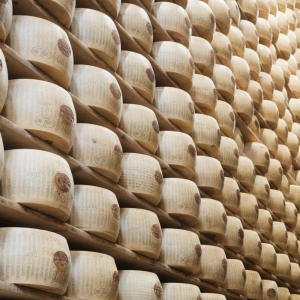
4:00 – For the fuller story of Menocchio, see The Cheese and the Worms, by Carlo Ginzburg.
7:00 – Dr. Dunn's lab has been involved in public-facing projects about fermented foods—see here for a series of webinars.
10:00 – The Sardinian cheese we discuss is called casu martzu.
14:00 – A study by Dr. Dunn and colleagues about human face mites. This is not the only aspect of bodily geography he and colleagues have examined: see also this study of the organisms in our belly buttons.
18:30 – For a primer on honeyguide birds, see here.
21:30 – For more on the calls humans use to communicate with honeyguides, see here.
24:30 – For more on human-dolphin collaborative hunting, see this recent study.
27:30 – For more about the theologian Aminah Al-Attas Bradford, a researcher in Dr. Dunn's lab, see here.
33:00 – We also discussed fermentation at length in an earlier episode here.
35:00 – A study by Dr. Dunn and colleagues on the microbial composition of sourdough starters.
37:00 – For more on our—and other animals'—relationships with alcohol, see our earlier episode.
40:00 – A study by Dr. Dunn and colleagues on the evolution of sour taste in humans.
42:00 – For more on the domestication of chickens, see here.
49:00 – For more on the concept of "morbid curiosity," see here.
55:00 – For more on our armpits—and the bacterial communities we harbor therein—see this study by Dr. Dunn and colleagues.
1:04:00 – The study by Dr. Dunn and colleagues about the spiders in people's homes. The spider poem by Kobayashi Issa.
Recommendations
An Immense World and I Contain Multitudes, by Ed Yong (former guest!)
Stories by Anton Chekhov
Poems by Kobayashi Issa
Tile art image: Image by Robert Bye via Unsplash
Many Minds is a project of the Diverse Intelligences Summer Institute, which is made possible by a generous grant from the John Templeton Foundation to Indiana University. The show is hosted and produced by Kensy Cooperrider, with help from Assistant Producer Urte Laukaityte and with creative support from DISI Directors Erica Cartmill and Jacob Foster. Our artwork is by Ben Oldroyd.
Subscribe to Many Minds on Apple, Stitcher, Spotify, Pocket Casts, Google Play, or wherever you listen to podcasts. You can also now subscribe to the Many Minds newsletter here!
We welcome your comments, questions, and suggestions. Feel free to email us at: manymindspodcast@gmail.com.
For updates about the show, visit our website or follow us on Bluesky (@manymindspod.bsky.social).