Mental Health In Literature, Part 3

Mental Health In Literature, Part 3

Author: Mental Health Training Information November 16, 2023 Duration: 19:53

Our previous session discussed how literature and the media manipulated public opinion and shaped people’s beliefs and behaviours.

Today, we have a closer look at Fake News. The Obsessive-Compulsive Disorder Spectrum and a book reflecting the counterculture movement and challenges the traditional values, institutionalisation and incarceration in the 1960s.

Can you guess what it is?


Propaganda has historically shaped public opinion by disseminating information or ideas to promote a particular agenda and ideology. It often involves emotional appeals, censorship, and distorted presentation of facts.

Propaganda often involves:

  • Deliberately disseminating information or ideas to promote a particular agenda or viewpoint.
  • Using emotional appeals.
  • Censorship.
  • Selective presentation of facts to control public perception.

Today, fake news continues to manipulate public opinion.

Fake news is often compelling because it taps into people’s emotions and pre-existing beliefs. It plays on people’s fears, biases, and desires, making it easier for them to be swayed and believe in the false information presented.

Some evidence suggests that instilling a new positive belief is more effective than rescinding an existing belief in correcting false beliefs. This is because humans tend to hold on to their beliefs, even if proven wrong.

By introducing a new positive belief, individuals may be more inclined to accept the correction as it aligns with their need for cognitive consistency.

Therefore, instilling a new positive belief may be a potentially more effective method for correcting false beliefs. 

Fake news continues to manipulate public opinion today by tapping into those emotions and pre-existing beliefs.

Previous examples include Pizzagate, which manufactured ‘news’ that Hillary Clinton ran a child-sex ring, or the Bowling Green Massacre.

Even saying Pope Francis endorsed Donald Trump for president, and the list continues.

We had previously considered Annie Wilkes's behaviour in the psychological horror film “Misery”. Was there evidence pointing to her alleged anxiety disorder?

Organising a collection of porcelain figurines alone is not enough to diagnose someone with either an obsessive-compulsive personality disorder (OCPD) or obsessive-compulsive disorder (OCD).

While both disorders involve obsessive thoughts or behaviours, there are distinct differences between them, which are available in the training section of mentalhealthtraining.info for your perusal.

For example, individuals who have Obsessive-Compulsive Personality Disorder (OCPD) are preoccupied with orderliness, perfectionism, and control.

However, organising a collection of figurines alone does not necessarily indicate obsessive-compulsive personality disorder (OCPD), as many people enjoy organising and arranging their possessions without it causing significant distress or impairing their daily functioning.

Cameron Diaz told Good Housekeeping magazine she is a “neat freak” who has to have everything in its place. 

This is in contrast to the retired soccer player David Beckham, who said in a Netflix documentary he must have everything in “perfect symmetry” and spends hours cleaning the house after his family has gone to bed.

Within obsessive-compulsive personality disorder (OCPD) individuals may exhibit a strong need for order, perfectionism, and rigid adherence to rules or schedules. They may feel distressed if their environment is disorganised or chaotic.

Learn More Understanding Obsessive-Compulsive Disorder: A Comprehensive Guide


We all navigate a world that constantly tests our emotional and psychological resilience, yet practical guidance on maintaining mental well-being can feel scattered or overly clinical. Mental Health Training cuts through the noise, offering grounded conversations that connect the dots between personal fitness, our cultural environment, and the health of our relationships. Hosted by Mental Health Training Information, each episode functions like an accessible workshop, translating complex psychological concepts into everyday language and actionable strategies. You’ll hear discussions that range from managing daily stressors and building emotional fitness to understanding how societal pressures shape our individual mental landscapes. This isn't about quick fixes; it's about cultivating a sustainable, informed approach to your inner life. The podcast draws from a broad spectrum of expertise, reflecting its roots in education and society, to provide listeners with a comprehensive toolkit. Tune in for a thoughtful blend of personal stories, expert insights, and practical exercises designed to strengthen your mental framework. Find more depth and continue the conversation beyond the audio by visiting the show's website for extended resources. This is a space for anyone looking to move beyond awareness and into the practice of genuine mental health training.
Author: Language: English Episodes: 100

Mental Health Training
Podcast Episodes
Helping your child sleep better. [not-audio_url] [/not-audio_url]

Duration: 12:43
Helping your child sleep better. The number of children being prescribed the previous jet lag hormone melatonin to help their child sleep has nearly tripled in the past seven years. Melatonin is indeed not a sleep hormon…
Let's talk about your inner monologue [not-audio_url] [/not-audio_url]

Duration: 3:36
Building upon a previous podcast on self-talk because many of us, when we read something, you hear a little voice in our head. Most of us would refer to this as an inner monologue. Just in case you didn’t know, many indi…
Therapy on a budget for generation Z [not-audio_url] [/not-audio_url]

Duration: 8:25
According to the National Institute of Mental Health, in 2020, young adults aged 18 to 24 had the highest prevalence of mental health issues. Though mental health issues are common among Gen Z, indi­vid­u­als born betwee…
I’m certainly SAD, how about you? [not-audio_url] [/not-audio_url]

Duration: 10:51
As the Christmas holiday is approaching, many consider it a magical and charming time for adults and children alike. However, it’s the least wonderful time of the year for sunlight. Winter blues or seasonal affective dis…
Positive Self Talk [not-audio_url] [/not-audio_url]

Duration: 7:55
Positive Self Talk Self-talk: How often do you hear that little voice in your head tell you that you aren’t good enough? Negative self-talk can hinder your progress in life and hold you back from fulfilling your dreams.…
Overcome Obstacles by Removing Self-Doubt [not-audio_url] [/not-audio_url]

Duration: 2:59
Overcome Obstacles by Removing Self-Doubt People doubt themselves and their abilities. When it becomes a chronic situation, it can hold people back from getting what they want. Confidence will break through the barriers…
Six  Beneficial Ways to Deal with Critical Individuals [not-audio_url] [/not-audio_url]

Duration: 2:25
Six Beneficial Ways to Deal with Critical People Constructive criticism is fine, but some people are so relentlessly negative that they can suck the joy out of life. No matter what happy news you might have, they are gua…
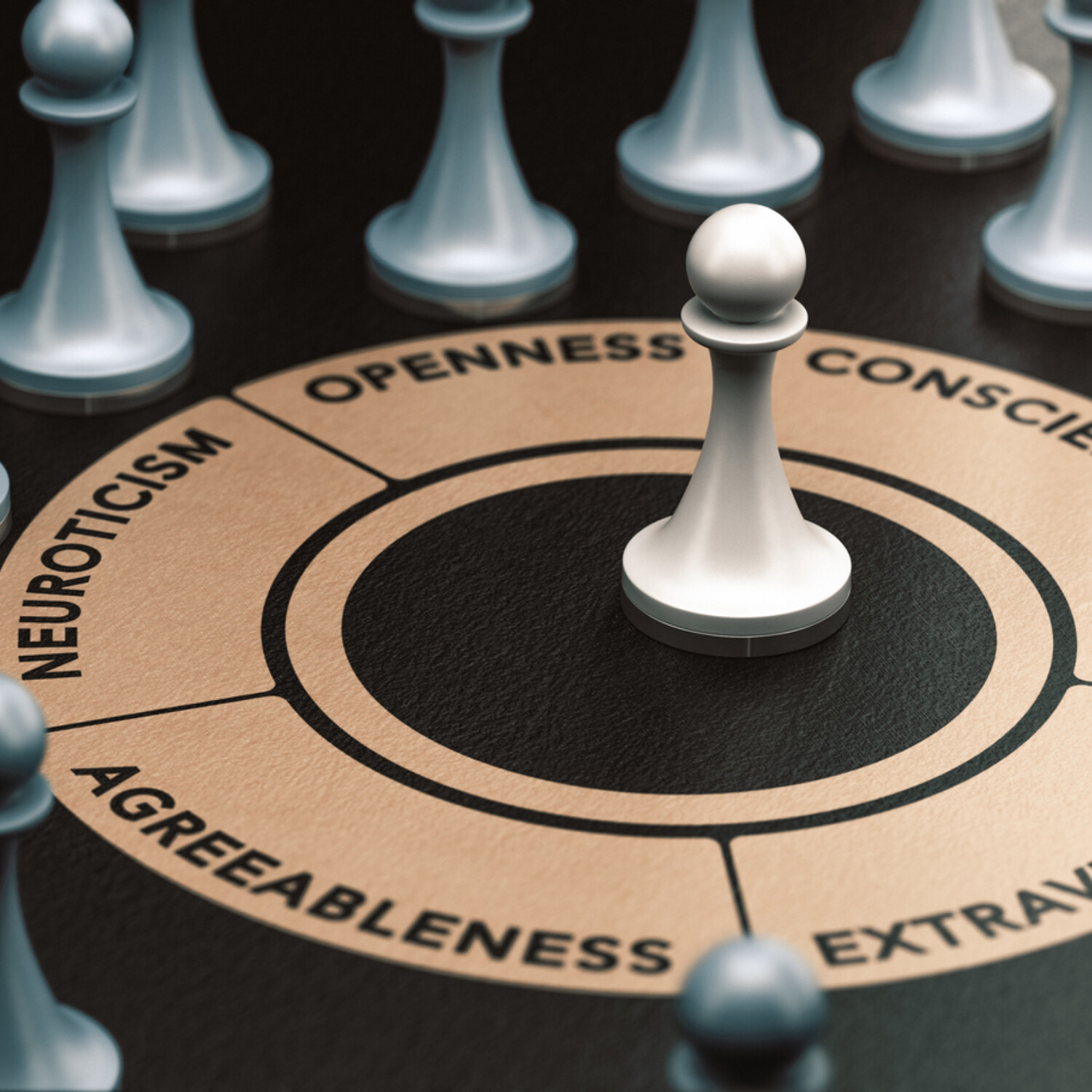
Big five personality traits: Who are you? [not-audio_url] [/not-audio_url]

Duration: 11:54
An individual’s personality traits define how they perceive the world around them. It is a set of characteristics and features that cause them to think, feel, and behave in a particular way. Personality traits are charac…
Doom and Gloom Thinking [not-audio_url] [/not-audio_url]

Duration: 13:51
Doom and Gloom Thinking Expecting the worst to happen in any situation can harm your mental health. How do we stop this unhealthy thinking Imagine you’ve applied for a dream appointment and have now been nominated for th…
Co-dependency Malaise [not-audio_url] [/not-audio_url]

Duration: 14:49
Co-dependency Malaise Robert Burney once coined the term “co-dependent” in the 1940s and defined it as someone who depends on another person to meet their emotional needs. Co-dependency is putting somebody else’s needs b…