Unlock Peak Performance with Strategic Napping — Dr. Shane Creado's Sleep Research Combined with The Silva Method
Author: Andrea Samadi
November 23, 2025
Duration: 27:28
Episode 378 revisits Dr. Shane Creado’s science-driven advice on sleep, strategic napping, and why sleep is foundational for health, hormones, immunity, and performance. Learn practical nap protocols (10–20 minutes or 90-minute recovery naps), timing, environment tips, and how to protect your morning from cortisol-spiking habits like checking phones.
The episode also shows how combining a short nap with the Silva Method — setting an intention and entering alpha — can boost creativity, insight, and problem-solving. It concludes with actionable routines to improve sleep consistency, support shift workers, and make sleep a strategy for better productivity and well-being.
✔Learn practical nap protocols (10–20 minutes or 90-minute recovery naps), timing, environment tips, and how to protect your morning from cortisol-spiking habits like checking phones.✔The episode also shows how combining a short nap with the Silva Method — setting an intention and entering alpha — can boost creativity, insight, and problem-solving. ✔ It concludes with actionable routines to improve sleep consistency, support shift workers, and make sleep a strategy for better productivity and well-being.
Welcome back to SEASON 14 of The Neuroscience Meets Social and Emotional Learning Podcast, where we connect the science-based evidence behind social and emotional learning and emotional intelligence training for improved well-being, achievement, productivity and results—using what I saw as the missing link (since we weren’t taught this when we were growing up in school), the application of practical neuroscience.
I’m Andrea Samadi, and seven years ago, launched this podcast with a question I had never truly asked myself before: (and that is) If productivity and results matter to us—and they do now more than ever—how exactly are we using our brain to make them happen?
Most of us were never taught how to apply neuroscience to improve productivity, results, or well-being. About a decade ago, I became fascinated by the mind-brain-results connection—and how science can be applied to our everyday lives.
That’s why I’ve made it my mission to bring you the world’s top experts—so together, we can explore the intersection of science and social-emotional learning. We’ll break down complex ideas and turn them into practical strategies we can use every day for predictable, science-backed results.
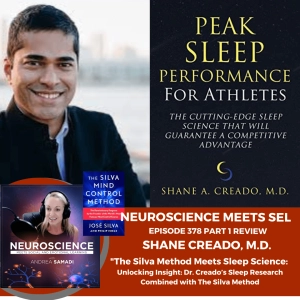
This week, in our review of EP 72 with Shane Creado, MD and his book Peak Sleep Performance for Athletes and will learn:
How strategic napping, morning brain habits, and even the Silva Method all work together to reset your brain, boost performance, and transform your health from the inside out.
Clip 1: The Science of Strategic Napping
In Clip 1, Dr. Shane Creado explains why every cell in the body follows its own circadian rhythm—and why humans were historically wired for polymodal sleep, with natural dips in alertness that make afternoon naps biologically appropriate.You’ll learn:
Why the “post-lunch crash” is actually a melatonin rise, not just fatigue
Why old advice to “avoid naps” is outdated
How short, intentional naps can boost alertness, learning, mood, and performance
The simple rules behind strategic napping: length, timing, and environmentThis clip lays the groundwork for using naps as a tool—not a crutch—for better brain function.
Clip 2: Your Morning Cortisol Curve & Hidden Sleep Dangers
Clip 2 shifts the focus to the first moments of your day.Dr. Creado warns that checking your phone the moment you wake up spikes cortisol and sends your brain into danger mode, increasing anxiety and disrupting emotional regulation for the entire day.You’ll also learn:
Why shift work fragments DNA
Why the WHO classifies shift work as a possible carcinogen
How sleep protects your hormones, immune system, gut health, and long-term agingThis clip reinforces that sleep is foundational biology, not optional or replaceable.
How This All Connects to The Silva Method
We clo