Helen Atthowe shares her secrets for long term ecological farming success: redux

Helen Atthowe shares her secrets for long term ecological farming success: redux

Author: Oliver Goshey August 4, 2025 Duration: 1:19:30
A lot of my work these days revolves around communicating with farmers around Europe who are at various stages of a transition towards regenerative management. For many different reasons farmers are looking for solutions outside of the conventional industry of chemical and technological manipulations and are rediscovering the potential of partnering with natural cycles and processes. Though there are a handful of examples of growers who’ve been pioneering these practices around the continent, the vast majority are fairly early in their journeys. It’s still rare to find an experienced commercial grower who has found success through organic, no-till, low input systems.  Luckily there are a few who have shown that this is possible and are sharing their knowledge and experience and I’m thrilled to feature one of them in this session.Helen Atthowe has worked for 35 years to connect farming, food systems, land stewardship, and conservation. She currently farms and does soil- and natural enemies’ habitat- building research on her new 5-acre farm in Western Montana. Helen has an M.S. in Horticulture from Rutgers University and even studied with renowned Japanese farmer Masanobu Fukuoka. She has worked in education and research at Rutgers, the University of Arkansas, and Oregon State University and was a Horticulture Extension Agent in Montana for 17 years. Helen was a board member for the Organic Farming Research Foundation 2000-2005 and advisor for Wild Farm Alliance in 2018 & 2019.  She first owned and operated a 30 acre certified organic vegetable/fruit farm in Montana and later co-owned with her late husband a 26 acre certified organic orchard in California. Together they then moved to a 211 acre organic farm in Eastern Oregon doing mainly orchard and vegetable production. The two of them also created educational videos on their YouTube channel called Agrarian Dreams, and did video presentations about their ecological farming methods. She is the author of “The Ecological Farm: A Minimalist No-Till, No-Spray, Selective-Weeding, Grow-Your-Own-Fertilizer System for Organic Agriculture”. And that is exactly what we’ll be focusing on in our interview today.As a reflection of many of the discussions happening within the Climate Farmer’s community at the moment, Helen and I really dug into the unique goals she and her husband had during their farming careers and how they gauged their success. We talk about the way they measured progress on their journey towards a healthy yet low input system for both their orchard and vegetable crops as well the routines and practices that brought them the best results.Much more than just the knowledge and practices of her farming experience, Helen brings a remarkable mindset of constant learning and experimentation to this conversation that is now informing her new 5 acre project in Montana.We also cover the most important learnings that she has gained through her career and how it informs the establishment of all her new research.

What does it mean to live a regenerative life, and how do we actually do it? That's the central question explored in Regenerative Skills, hosted by Oliver Goshey. This isn't just about theory; it's a practical dialogue focused on stewardship of the natural world and fostering strong, resilient communities. Every week, Oliver brings conversations with a diverse range of global experts right to your ears, translating their knowledge into actionable steps you can integrate into your daily habits. You'll hear tangible strategies for everything from soil health and sustainable food systems to building local networks and re-skilling ourselves for a better future. The aim is to move beyond sustainability toward active regeneration, providing the tools and perspectives needed to make a tangible difference right where you are. Tune into this educational podcast for a grounded, hopeful, and deeply informative journey. Together, these discussions build a comprehensive guide for anyone looking to heal their relationship with the environment and their neighbors, proving that positive change is woven from countless small, intentional actions.
Author: Language: en-us Episodes: 100

Regenerative Skills
Podcast Episodes
Diving deep into ocean farming, with Joost Wouters [not-audio_url] [/not-audio_url]

Duration: 45:29
Today I want to continue with a deeper dive into the topic of water, literally, by going to the furthest point downstream, where terrestrial water enters the ocean. Marine ecosystems are much less understood by the gener…
The essentials of rainwater harvesting, with Rob Avis [not-audio_url] [/not-audio_url]

Duration: 46:45
In keeping with the theme of water regeneration this month I spoke to Rob Avis, the co-author along with Michelle Avis of their book in the New Society Essentials series called Rain Water Harvesting. Rob and Michelle fou…
How to plant the rain in drylands and beyond, with Brad Lancaster [not-audio_url] [/not-audio_url]

Duration: 1:01:06
If at any point you’ve been interested in water harvesting in dryland contexts, it’s almost impossible that you’ve missed Brad Lancaster’s work. His pioneering activities and projects in Tucson, AZ have propelled a movem…
Repairing eroded and incised waterways, with Van Clothier [not-audio_url] [/not-audio_url]

Duration: 24:21
In today’s episode I spoke with Van Clothier about an innovative and subtle water erosion mitigation technique, and how to build a one rock dam. I know this might seem oddly specific, but after an interview with Brad Lan…
Regenerating lakes and ponds with floating islands, with Bruce Kania [not-audio_url] [/not-audio_url]

Duration: 56:54
I had done one other episode in the past on the topic of floating wetlands that I’d like to revisit today as we continue with this series on regenerative water solutions. In today’s episode I got to speak with Bruce Kani…
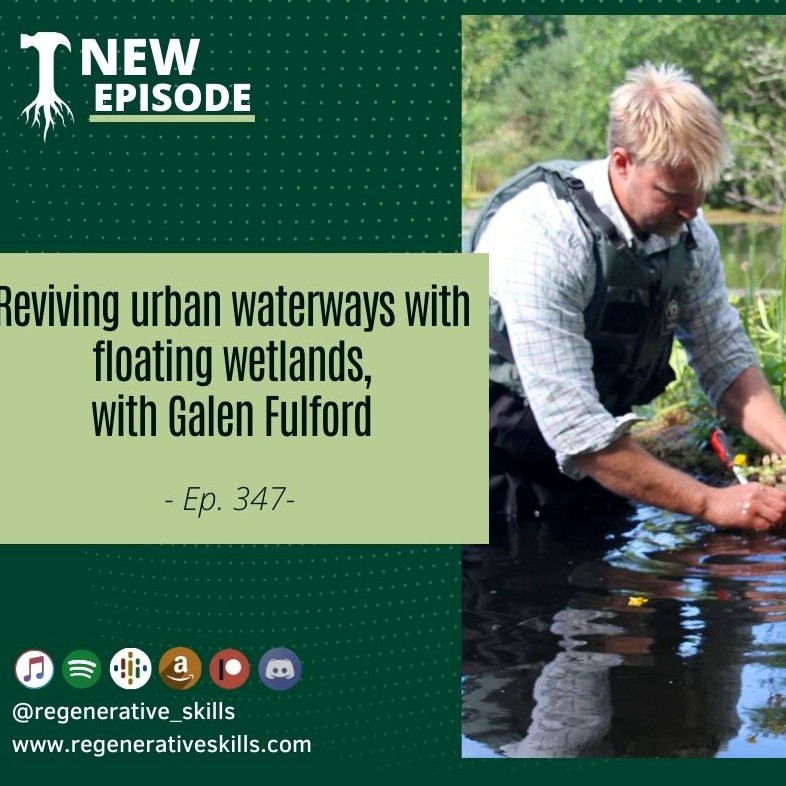
Reviving urban waterways with floating wetlands, with Galen Fulford [not-audio_url] [/not-audio_url]

Duration: 57:20
Today we’re going to take a look at fresh water systems and specifically, how to decontaminate them through biological methods. Some of you may remember an interview I did with Tom Duncan about his floating wetlands and…
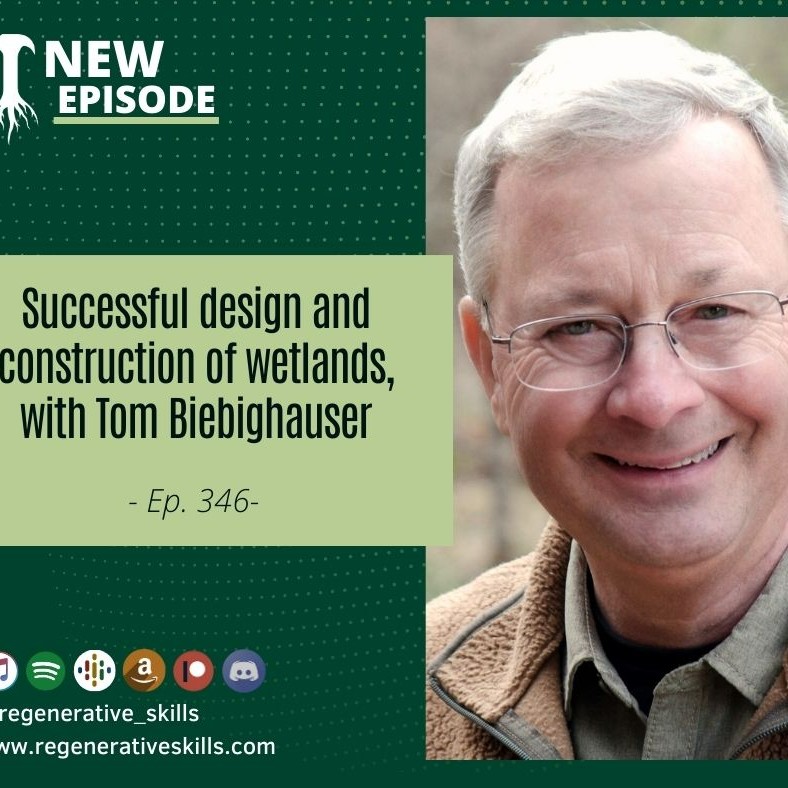
Successful design and construction of wetlands, with Tom Biebighauser [not-audio_url] [/not-audio_url]

Duration: 1:37:52
One of the most crucial natural environments for the health and stability of landscape hydrology are wetlands. They also usually happen to be areas of the highest density of wildlife and biodiversity when they are health…