Pioneering regenerative  dairy production, with Phyllis Van Amburgh: redux

Pioneering regenerative dairy production, with Phyllis Van Amburgh: redux

Author: Oliver Goshey July 11, 2025 Duration: 1:15:06
At this point I’ve covered a wide array of practices and management styles that fall under the broad umbrella of regenerative agriculture. Some could be considered traditional while others are more modern and innovative and they span continents, climates, biomes and industries. Nonetheless I’ve noticed a pretty big gap that I’ve yet to cover in detail that I hope to begin to fill in today.  Dairy farming has been under sharp criticism in recent times. Scrutiny over everything from the appropriateness of dairy in the diet to the methane emissions of cows and the controversial practices of early separation of calves from their mothers to maximize milk production have all contributed to a diminished reputation.  Though these critiques are very legitimate, what if there were solutions to all of them without the need to turn to non-dairy alternatives? Today to explore these solutions is one of the leaders in regenerative dairy and a growing movement of dairy producers working to develop a new way of managing dairy cows and the pastures they coexist with. Phyllis Van Amburgh along with her husband Paul and their family are leaders in holistic land use, biodiverse cultivation, Organic dairy herd management, and more.  Together they are dairy farmers in upstate New York, and have been involved in key innovations in the dairy industry, mostly in western parts of the world, re-integrating dairy cows as a cornerstone for ecological health and for human communities to thrive. Phyllis and Paul have also helped develop the Grass-fed certification program with NOFA-NY and PCO.  In this interview Phyllis starts by sharing her inspiring story of transitioning away from her previous career as she and Paul embraced a gradual move into full time farming.  We explore the intuition she had that much of the conventional wisdom and ways of doing things in the dairy industry were not really in the interest of either the cows nor the farmers and how that led them to rethink their own dairy operation.  Phyllis outlines the key aspects they consider essential for managing a dairy herd regeneratively and the pioneering journey they’re on to make exclusively grass fed dairy cows viable through selective breeding and holistic managed grazing.  We also explore Phyllis’ insights from her work helping large dairy operations in the USA and Europe to transition to regenerative management and the challenges and opportunities that the wider industry has to transform.  

What does it mean to live a regenerative life, and how do we actually do it? That's the central question explored in Regenerative Skills, hosted by Oliver Goshey. This isn't just about theory; it's a practical dialogue focused on stewardship of the natural world and fostering strong, resilient communities. Every week, Oliver brings conversations with a diverse range of global experts right to your ears, translating their knowledge into actionable steps you can integrate into your daily habits. You'll hear tangible strategies for everything from soil health and sustainable food systems to building local networks and re-skilling ourselves for a better future. The aim is to move beyond sustainability toward active regeneration, providing the tools and perspectives needed to make a tangible difference right where you are. Tune into this educational podcast for a grounded, hopeful, and deeply informative journey. Together, these discussions build a comprehensive guide for anyone looking to heal their relationship with the environment and their neighbors, proving that positive change is woven from countless small, intentional actions.
Author: Language: en-us Episodes: 50

Regenerative Skills
Podcast Episodes
Practical considerations for designing and installing water systems [not-audio_url] [/not-audio_url]

Duration: 1:02:46
Since water management and landscape rehydration is a topic that I’ve covered in depth over years now, I wanted to try and dig into some of the often overlooked, and sometimes less exciting considerations for water. Toda…
Alternative markets and sales strategies for farm products [not-audio_url] [/not-audio_url]

Duration: 50:39
As important as it is to manage the land well to create healthy and abundant produce, it's just as important to sell that produce to a market that values its quality. Many large scale markets buy volume at the lowest pri…
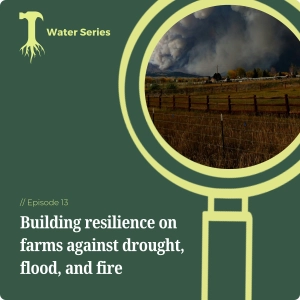
Building resilience on farms against drought, flood, and fire [not-audio_url] [/not-audio_url]

Duration: 1:07:29
Wherever you’re listening to this right now you’re probably feeling the changes this summer in a big way. It’s not only us here in the Mediterranean region of Europe who are experiencing record heat waves, droughts, and…
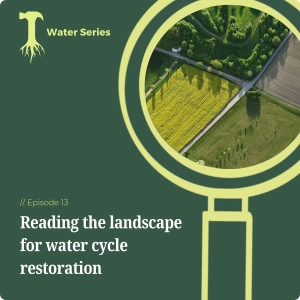
Reading the landscape for water cycle restoration [not-audio_url] [/not-audio_url]

Duration: 43:36
Following up from the last episode in which I explained some of the broader concepts of water cycles and their relationship with land, vegetation, and management practices, we're going to go down to ground level to explo…
Farm centered research and learning [not-audio_url] [/not-audio_url]

Duration: 56:24
As we’ve explored in recent episodes of the Regenerative Skills Podcast, there’s an unfortunate disconnect between academic institutions, independent research, and real farms. We all know there are endless opportunities…
The fundamentals of water management for farms [not-audio_url] [/not-audio_url]

Duration: 58:38
Today we're going to pause our deep-dive episodes to launch a new series supporting a regenerative agriculture master’s program being developed with European universities, starting with regenerative water management . In…
Small-Scale Processing and Rural Micro-Industry panel [not-audio_url] [/not-audio_url]

Duration: 51:02
Farm viability depends on much more than what happens in the field. While we often focus on production and farm management, many of the biggest challenges farmers face are shaped by what happens. After harvest: processin…
Undervalued biodiversity: Fostering overlooked lifeforms [not-audio_url] [/not-audio_url]

Duration: 1:19:26
After the biodiversity panel from the last episode, I got to thinking about how protecting biodiversity is so often reduced to the life forms that humans value. The ones we find beautiful, friendly, or otherwise useful t…
Wildlife on farms: Challenges and benefits of coexistence [not-audio_url] [/not-audio_url]

Duration: 54:28
This month we’re tackling the challenges and benefits of wildlife in all its forms. Wildlife and wild spaces are often spoken about as if they're at odds with the goals of farms. We often talk about battling weeds, deter…
Are carbon markets the best way to finance regenerative transition? [not-audio_url] [/not-audio_url]

Duration: 1:09:19
It’s been over a year now since Climate Farmers let go of its Carbon credit program, and yet I know that many people who’ve been following our company don’t know the full story about how we got started in the carbon mark…