Nuclear doubts, bigger hail, and new clues about aging brains

Nuclear doubts, bigger hail, and new clues about aging brains

Author: Scientific American March 16, 2026 Duration: 11:20
In this episode of Science Quickly, we cover the record release of global emergency oil reserves amid escalating conflict, a breakdown of why nuclear experts say Iran was not close to building a nuclear weapon, new research that shows how climate change is increasing both the likelihood and size of severe hail and a study that reveals how aging gut microbiomes may impair cognitive function through the gut-brain connection. Recommended Reading: War in Iran triggers an unprecedented disruption in global oil Iran was nowhere close to a nuclear bomb, experts say The reason the Middle East has so much oil is the same reason it’s all stuck there now The gut microbiome may influence brain aging, mouse study suggests E-mail us at sciencequickly@sciam.com if you have any questions, comments or ideas for stories we should cover! Discover something new everyday: subscribe to Scientific American and sign up for Today in Science, our daily newsletter. Learn more about your ad choices. Visit megaphone.fm/adchoices

Ever feel like you want to stay on top of the latest science news but don't have hours to dig through journals? That's the space where Science Quickly lives. Each episode is a compact, engaging conversation designed to fit into your daily routine, whether you're commuting or just taking a break. Host Rachel Feltman brings her sharp curiosity and a journalist's eye to every topic, joined by other seasoned reporters from Scientific American who are out there talking to the researchers on the front lines. You'll hear more than just headlines; this podcast delves into the how and why behind fascinating discoveries, from quirky animal behaviors to groundbreaking climate tech and the inner workings of the human brain. The tone is conversational and often witty, making complex ideas accessible without oversimplifying them. It’s a variety show in the best sense, meaning you might explore a deep dive on neutrino detection one day and the science of a perfect cookie the next. Tuning in regularly feels like having a direct line to the most interesting developments, explained by people who are genuinely excited to share them. For anyone with a budding interest in how the world works or a long-time science enthusiast looking for a efficient update, this series from Scientific American consistently delivers substance and surprise in a manageable format.
Author: Language: en-us Episodes: 100

Science Quickly
Podcast Episodes
Can AI Ease the Pain of Loss? [not-audio_url] [/not-audio_url]

Duration: 13:10
Griefbots—artificial-intelligence-powered chat tools that simulate conversations with the deceased—are helping some people navigate loss in unexpected ways. Science writer David Berreby shares his firsthand experience wi…
Why Some Foods Gross Us Out [not-audio_url] [/not-audio_url]

Duration: 12:43
In this episode of Science Quickly, Rachel Feltman introduces interim host Kendra Pierre-Louis, a climate journalist with a strong aversion to mayonnaise—and a knack for turning that disgust into fascinating science repo…
The Science of Headaches [not-audio_url] [/not-audio_url]

Duration: 15:06
Headaches are among the most common human experiences—yet science still struggles to explain them. Journalist Tom Zeller, Jr., joins host Rachel Feltman to explore the cultural, gender-related and scientific blind spots…
Why Defiance Can Be a Virtue [not-audio_url] [/not-audio_url]

Duration: 16:41
Many of us are taught from a young age that being “good” means being obedient—but that conditioning can make it hard to speak up when it counts. In this episode, Cornell University professor Sunita Sah explains how defia…
How Hurricane Melissa Became a Meteorologic Outlier [not-audio_url] [/not-audio_url]

Duration: 12:15
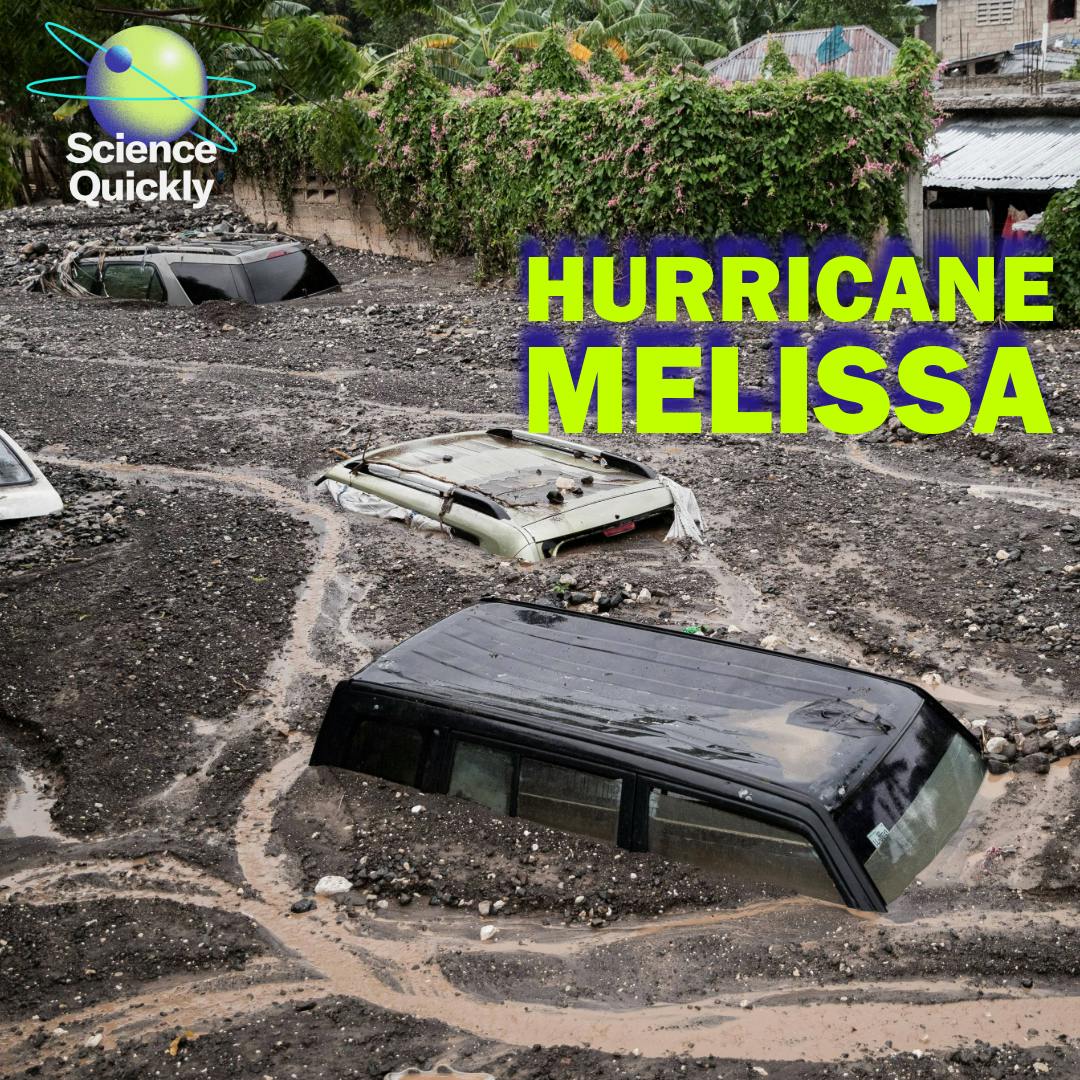
Hurricane Melissa stunned meteorologists with its rare intensity, reaching wind speeds that are more typical of Pacific supertyphoons and maintaining Category 5 strength for more than 24 hours. Scientific American senior…
How to Trick-or-Treat Your Gut [not-audio_url] [/not-audio_url]

Duration: 8:56
Halloween might be a treat for your taste buds, but what about the trillions of microbes in your gut? Gastroenterologist Chris Damman joins host Rachel Feltman to explore how different candies affect your gut microbiome—…
How TikTok’s Algorithm Could Shift with a U.S. Spin-off [not-audio_url] [/not-audio_url]

Duration: 14:35
TikTok’s algorithm has become a cultural force, shaping what more than a billion users see and share, but its future may be shifting. As the platform prepares for a U.S.-only spin-off, Kelley Cotter, an assistant profess…
Mosquitoes Invade Iceland, Earth Darkens, and Bird Flu Returns [not-audio_url] [/not-audio_url]

Duration: 10:04
Mosquitoes settle in Iceland for the first time as climate change reshapes the Arctic, and Earth’s darkening albedo may be accelerating global warming. Host Rachel Feltman also dives into rising bird flu cases, foodborne…
Why Medication Safety in Pregnancy Is Still a Mystery [not-audio_url] [/not-audio_url]

Duration: 12:29
When the U.S. president claimed that acetaminophen use during pregnancy could cause autism in a person’s offspring, it reignited a deeper conversation about how little we know about medication safety for pregnant people.…
The Science of a Convincing Sorry [not-audio_url] [/not-audio_url]

Duration: 11:16
What makes an apology sound sincere? Psychologist Shiri Lev-Ari joins host Rachel Feltman to explore how the effort we put into our words—especially through longer, easier-to-understand language—can signal genuine remors…