Why the World Has Always Been Weird — and Why That Matters

Why the World Has Always Been Weird — and Why That Matters

Author: Jeff Utecht & Tricia Friedman September 14, 2026 Duration: 18:52
Uncle John's All-Knowing Bathroom Reader, Curiosity, and the Weirdness of Human History

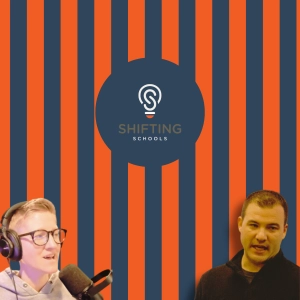
Brian Boone joins the show to talk about why the world has always been weird—not just now. The conversation ranges from animal history and television oddities to fact-checking, collaboration, and why curiosity is the engine behind good stories and human wisdom. In this episode, Tricia and Brian Boone discuss how access to information can make the present feel stranger than the past, even though human behavior has always been full of surprises. They also explore the storytelling and editorial work behind Uncle John's All-Knowing Bathroom Reader, including how the team verifies claims, chooses topics, and turns obscure facts into accessible reading.

Key topics
  • Why the world has always been weird, even if modern media makes us more aware of it
  • Why dogs have so many breeds while cats have comparatively few
  • How horses helped shape agriculture, travel, trade, language exchange, and city states
  • Why fact-checking is more important—and more difficult—in an age of copied information
  • The story of J. Fred Muggs, the chimp who co-hosted Today in the early days of television
  • How risk-taking and strange ideas contribute to human innovation
  • Why fads are much older than mass media
  • How writers, editors, designers, and marketers collaborate on the bathroom reader
  • How colleagues' different passions can make unfamiliar subjects fascinating
  • Why curiosity may be the engine behind wisdom and connection
Timestamps
00:00

— Why the world feels weirder now than it used to

00:42

— The case for "the world has always been weird"

01:55

— Why cats have far fewer breeds than dogs

03:18

— How horses helped shape the modern era

05:23

— Why fact-checking is harder in an age of copied information

06:41

— The strange story of J. Fred Muggs on Today

08:42

— Why risk-taking and weird ideas are part of human progress

10:23

— Fads are older than mass media

12:51

— How the bathroom reader team collaborates

14:21

— Learning from coworkers with radically different interests

15:46

— Curiosity as the engine of wisdom


Ever feel like the conversation around education moves faster than a school day? Shifting Schools: Conversations for K12 Educators is here to slow things down just enough for a meaningful dialogue. Hosted by practicing educators Jeff Utecht and Tricia Friedman, this podcast creates a necessary space for teachers and administrators to dig into the real work of modern teaching. Instead of just theory, you’ll hear from fellow practitioners and thought leaders who are navigating the same challenges you face daily. The discussions move beyond surface-level trends to unpack practical strategies and tools that can be adapted for your own classroom or school. Whether it’s rethinking assessment, integrating technology with purpose, or fostering a more inclusive learning environment, each episode is grounded in the shared goal of improving outcomes for every student. Tuning in feels less like another professional development requirement and more like a candid staff room conversation with colleagues who get it. This is where the abstract ideas about educational change meet the concrete reality of the K-12 world, offering actionable insights for anyone committed to the craft of teaching. Find Shifting Schools wherever you listen to your favorite podcasts for a regular dose of perspective and practical ideas.
Author: Language: English Episodes: 50

Shifting Schools: Conversations for K12 Educators
Podcast Episodes
Will this be the summer of vibe coding? [not-audio_url] [/not-audio_url]

Duration: 26:32
In this episode of Shifting Schools, Jeff and Tricia talk about vibe coding: the emerging practice of using AI tools to help turn prompts, sketches, hunches, and half-formed ideas into working prototypes. They look at wh…
Meredith Walker on Why "Be Yourself" Isn't Enough [not-audio_url] [/not-audio_url]

Duration: 17:36
What do we really mean when we tell young people to "be yourself"? In this episode, Tricia Friedman speaks with Meredith Walker, co-founder of Smart Girls with Amy Poehler and author of Be Yourself and Other Bad Advice.…
How to build a story one ingredient at a time with Keala Kendall [not-audio_url] [/not-audio_url]

Duration: 27:49
Join us as Keala Kendall, author of the compelling gothic novel That Which Feeds Us, takes us through her creative process, the importance of representation in storytelling, and how horror can serve as a mirror to societ…
Dr. Brittney Cooper on Picture Books, Collaboration, and Love [not-audio_url] [/not-audio_url]

Duration: 16:49
This week, Tricia Friedman welcomes Dr. Brittney Cooper to the podcast to talk about her new picture book, Mama Says I'm Fine, illustrated by Tamisha Anthony. The conversation explores the story behind the book, the emot…
Why Patricia Cornwell Still Believes in Stories [not-audio_url] [/not-audio_url]

Duration: 17:03
Patricia Cornwell joins Tricia Friedman for a conversation about memory, writing, curiosity, forensic science, and the memoir she never expected to write. In this episode, Cornwell reflects on the childhood experiences t…
Great gifts for Teacher Appreciation Week [not-audio_url] [/not-audio_url]

Duration: 21:42
This week Jeff and Tricia share their five top gifts to celebrate the special educator in your life. They take you through why these five gifts celebrate creativity, learning, wellness, and show personal recognition duri…
What we learn when we listen to students [not-audio_url] [/not-audio_url]

Duration: 16:06
What happens when you stop talking about students and start talking with them? In this episode, Jeff Utecht sits down with high schoolers and asks a question most adults skip: what do you actually need from school right…