HVAC systems are changing. The margin for error is shrinking.
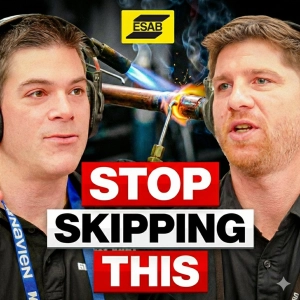
Host Andrew Brown sits down with Jay Henderek, Sales Director at ESAB, to examine why process discipline in the Skilled Trades matters more today than it did even a decade ago. As HVAC industry trends push systems to become smaller, more complex, and increasingly influenced by A2L refrigerant legislation, shortcuts that once caused minor issues can now create serious safety risks.
Jay explains why nitrogen purging for brazing is no longer a “best practice” but a baseline requirement. What some technicians still treat as optional directly impacts contamination control, joint integrity, and long-term system performance. Under modern refrigerant standards, HVAC technician safety is tied to every step of preparation and execution.
The conversation also explores contractor tool buying research and why disciplined professionals evaluate tools with the same care they apply to installation. In today’s environment, preparation separates respected contractors from reactive ones.
From HVAC to Plumbing, Electrical, and the broader Construction trades, this episode reinforces a clear reality: as systems evolve, standards must rise with them.
IN THIS EPISODE
(00:00) – Why Skipping Steps Carries Greater Risk Today: How modern HVAC industry trends increase system complexity and raise the stakes for HVAC technician safety.
(02:45) – Nitrogen Purging for Brazing: Protecting Joint Integrity - Why nitrogen purging for brazing prevents contamination and failure in sealed systems.
(04:40) – A2L Refrigerant Legislation and Flammability Considerations: How A2L refrigerant legislation shifts risk profiles and demands tighter execution standards.
(08:25) – Contractor Tool Buying Research: Discipline Before the Purchase: Why professional contractors evaluate tools deliberately instead of chasing features or price alone.
(12:05) – Long-Term Strength vs. Quick Fixes: Why proper brazing preparation outperforms temporary patches in durability and safety.
(16:45) – Reinforcing Standards Across the Skilled Trades: How manufacturers, educators, and contractors share responsibility in raising industry standards.
Key Takeaways
- Modern HVAC systems demand greater discipline because tighter tolerances and evolving refrigerant standards reduce the margin for error.
- Nitrogen purging for brazing protects system integrity by preventing oxidation and contamination inside sealed lines.
- A2L refrigerant legislation increases flammability considerations, making preparation and procedural adherence essential for HVAC technician safety.
- Contractor tool buying research reflects professionalism. The best contractors approach purchases with evaluation, peer insight, and long-term thinking.
- In the Skilled Trades, standards do not stay static. As technology evolves, responsibility must evolve with it.
About the Guest
Jay Henderek is Sales Director at ESAB, a global manufacturer of welding, brazing, and cutting technologies. Through brands such as TurboTorch, ESAB supports HVAC technicians, plumbers, electricians, millwrights, and contractors working in demanding field conditions.
Jay focuses on advancing HVAC technician safety, reinforcing nitrogen purging for brazing standards, and helping contractors navigate HVAC industry trends and A2L refrigerant legislation through disciplined processes and education.
Keywords
HVAC Industry Trends, Nitrogen Purging for Brazing, A2L Refrigerant Legislation, HVAC Technician Safety, Contractor Tool Buying Research, Skilled Trades, Trades Industry, HVAC, Plumbing, Electrical, Construction, Contractors, Craftsmanship, Andrew Brown, Jay Henderek, ESAB, Skilled Trades Advisory Council
RESOURCE LINKS
LinkedIn: https://www.linkedin.com/in/jay-henderek/
ESAB Website: https://esab.com/us/nam_en/
SUPPORT THE SHOW
If you’re getting value from these conversations and want to help keep the mics on, consider supporting the show here → https://andrewbrowntrades.kit.com/products/toolbox
Every contribution helps us continue bringing experience-backed insights from the trades—focused on safety, standards, and long-term performance.