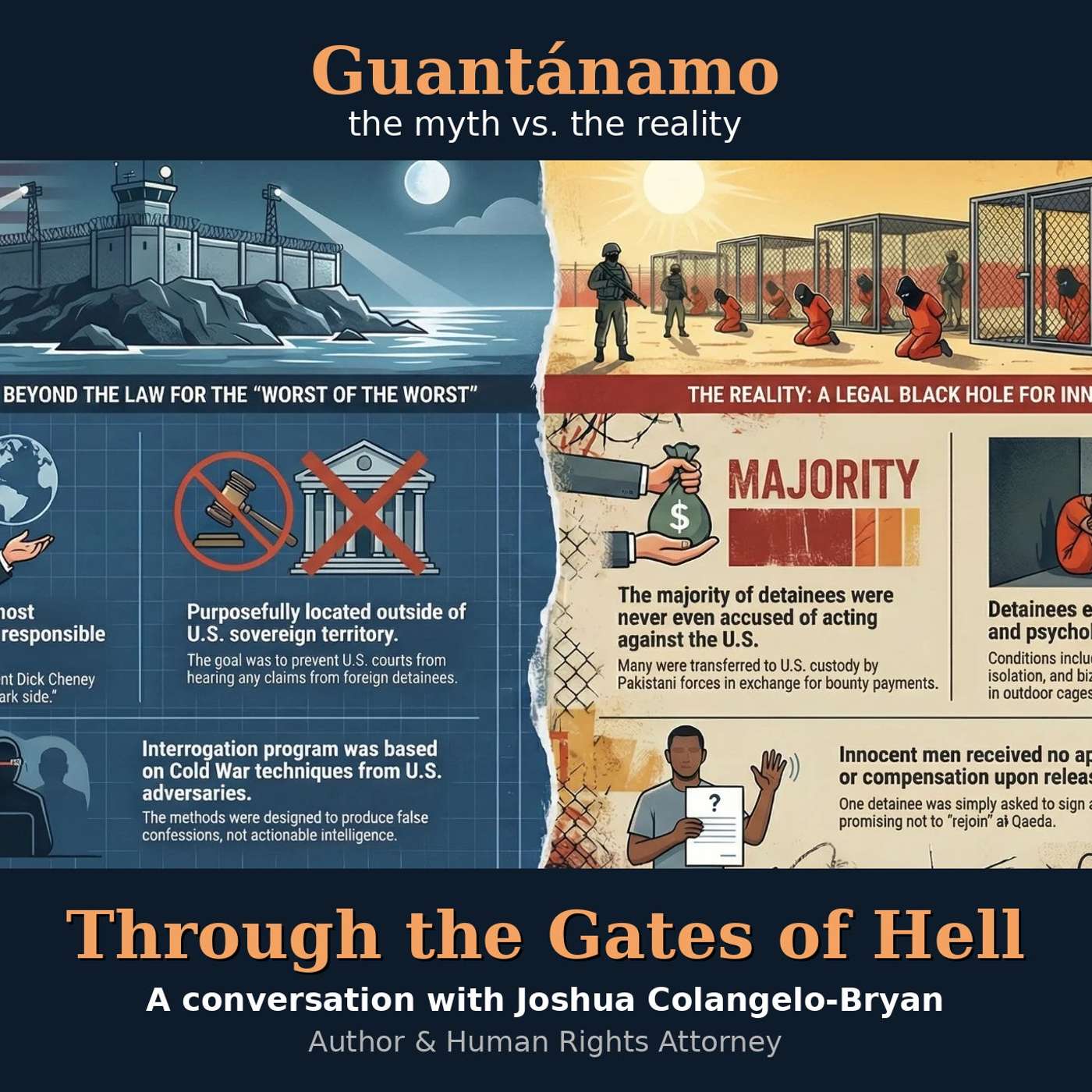

Guantanamo: The Myth vs the Reality
Dick Cheney died four weeks ago, but his dark legacy lives on—quite literally—at Guantanamo Bay. The human rights lawyer Joshua Colangelo-Bryan was among the first attorneys to enter the notorious prison in 2004, and what he found there shattered every official justification for its existence. The “worst of the worst”? Most detainees were never even accused of acting against America. Many were simply sold to the Americans for bounties. The sophisticated interrogation program? Techniques copied from Chinese and Soviet methods designed to extract false confessions, not intelligence. In his new book Through the Gates of Hell, Colangelo-Bryan tells the story of his unlikely friendship with Jaber Mohammed, a Bahraini detainee who spent years in captivity for the crime of being an Arab man in the wrong place (Afghanistan) at the wrong time (post 9/11). Released without apology or compensation—just a form asking him not to “rejoin” organizations he’d never belonged to—Jaber now lives in Saudi Arabia with four children, focusing less on bitterness and more on those rare moments when American guards showed him unexpected kindness. As the Trump administration revives the “worst of the worst” rhetoric against immigrants and once again sends people to Guantanamo, Colangelo-Bryan’s account is a warning from recent history: demonize a racial or religious group, and you will inevitably destroy innocent lives. The gates of hell have once again been opened. Will they ever be closed?
This is a public episode. If you'd like to discuss this with other subscribers or get access to bonus episodes, visit keenon.substack.com/subscribe
Why Social Media Still Matters: Jeff Jarvis on the origins of blogging , what went wrong at Twitter and Facebook, and how he still believes in the social potential of the Internet
The 1963 Birmingham Campaign: Paul Kix on the ten weeks that changed America
Is American Capitalism Irredeemably Rotten? Brendan Ballou on Private Equity's Plan to Pillage and Plunder the United States
HELL TO PAY: Michael Lind explains how the suppression of wages and unions is destroying America
From Solitaire to Heartstopper: Alice Oseman on asexuality, authentic story telling and book banning
The First Lady of World War II: Shannon McKenna Schmidt on Eleanor Roosevelt's remarkable heroism during the War
The Miracle That the United States Needs Right Now: John Blake's personal story on how to get beyond race and racism in America today
Telling Our Stories Our Way: Angeline Boulley on the need to get beyond "trauma "in Native American literature
The Promise of Second Life: Amber Atherton on the rise (and fall) of virtual communities
Excellent Advice for Living (and Dying): Kevin Kelly on how to become improbable versions of ourselves and why we should be intimate with our ancestors
The Art of Fictionalizing Non-Fiction: Katie Hafner on Kafka, Silicon Valley and the truish story behind her novel "The Boys"
Trump Was a Joke: Sophia McClennen on how satire makes sense of a President who didn't
Free and Equal: Daniel Chandler on what a fair society should look like