Safety First: Why a Regulated Brain Is the Key to Learning (Revisiting Dr. Bruce Perry)
Author: Andrea Samadi
February 16, 2026
Duration: 24:37
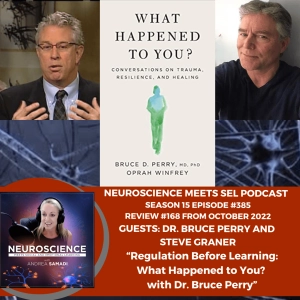
In this episode Andrea Samadi revisits Season 15’s foundation with Dr. Bruce Perry to explore how safety, regulation, and patterned experience shape the brain’s capacity to learn and create. We examine why potential must be activated through repetition, rhythm, and low-threat environments, and how trauma, stress, or dysregulation block learning.
Takeaways include practical steps for educators, parents, and leaders: prioritize nervous-system safety before instruction, use micro-repetition to build skills, and employ storytelling to make scientific ideas stick.
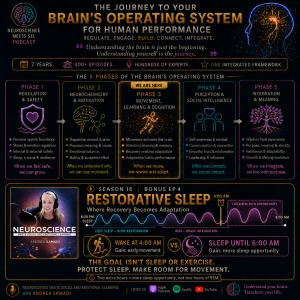
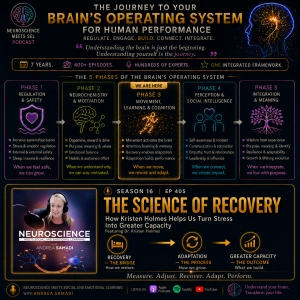
This episode anchors Phase 1 of the season: regulation, rhythm, repetition, and relational safety as the prerequisites for sustainable performance and lasting change.
This week, Episode 385—based on our review of Episode 168 recorded in October 2021—we explore:
✔ 1. Genetic Potential vs. Developed CapacityWe are born with extraordinary biological potential.But experience determines which neural systems become functional.The brain builds what it repeatedly uses.
✔ 2. The Brain Is Use-DependentLanguage, emotional regulation, leadership skills, motor precision—all are wired through patterned, rhythmic repetition.
✔ 3. Trauma, Regulation & LearningA dysregulated nervous system cannot efficiently learn.Safety, rhythm, and relational connection come before strategy.
✔ 4. “What Happened to You?” vs. “What’s Wrong with You?”Shifting from judgment to curiosity changes how we approach:
Children
Students
Teams
Ourselves
✔ 5. Early Experience Shapes Long-Term ExpressionDevelopmental inputs—especially patterned, early ones—determine which capacities are strengthened.
✔ 6. Repetition Builds ConfidenceConfidence is not a personality trait.It is neural circuitry built through structured repetition in safe environments.
✔ 7. Story Makes Science StickFrom Dr. Perry’s experience writing with Oprah:You can’t tell everybody everything you know.Impact comes from:
One core idea
Wrapped in story
Delivered with restraint
✔ 8. Information Overload Weakens LearningDepth > VolumeClarity > DensityRetention > Impressive Data
✔ 9. Regulation Comes Before MotivationBefore goals.Before performance.Before achievement.The nervous system must feel safe.
✔ 10. Season 15’s Foundational QuestionIs the nervous system safe enough to learn?
Welcome back to Season 15 of the Neuroscience Meets Social and Emotional Learning Podcast.
I’m Andrea Samadi, and here we bridge the science behind social and emotional learning, emotional intelligence, and practical neuroscience—so we can create measurable improvements in well-being, achievement, productivity, and results.
When we launched this podcast seven years ago, it was driven by a question I had never been taught to ask—not in school,not in business,and not in life:
If results matter—and they matter now more than ever—how exactly are we using our brain to make these results happen?
Most of us were taught what to do.Very few of us were taught how to think under pressure,how to regulate emotion,how to sustain motivation,or even how to produce consistent results without burning out.
That question led me into a deep exploration of the mind–brain–results connection—and how neuroscience applies to everyday decisions, conversations, and performance.
That’s why this podcast exists.
Each week, we bring you leading experts to break down complex science and translate it into practical strategies you can apply immediately.
If you’ve been with us through Season 14, you may have felt something shift.
That season wasn’t about collecting ideas.
It was about integrating these ideas into our daily life, as we launched our review of past episodes.
Across conversations on neuroscience, social and emotional learning, sleep, stress, exercise, nutrition, and mindset frameworks—we heard from voices like Bob Proctor, José Silva, Dr. Church, Dr. John Medina, and others—one thing became clear:
These aren’t separate tools that we are covering in each ep