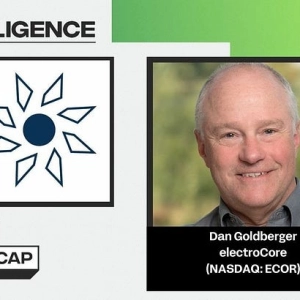
My guest today is Dan Goldberger, CEO of electroCore (NASDAQ: ECOR). electroCore is a commercial-stage neuromodulation company developing a suite of non-invasive vagus nerve stimulation devices—delivering a two-minute therapy session designed to rebalance the autonomic nervous system. Built around its nVNS platform, the company operates across three channels: prescription medical devices for headache and migraine, the fast-growing Truvaga direct-to-consumer wellness brand, and a specialized military and government division built around its ruggedized tac-stim product.
Founded in 2006 as a non-invasive alternative to implanted vagus nerve stimulators, electroCore has evolved into a multi-indication business with seven FDA authorizations for headache, serving major customers like the U.S. Department of Veterans Affairs and the UK’s National Health Service. I invited Dan to the show to discuss all of this, as well as:
* How nVNS platform works and the science behind vagus nerve modulation
* electroCore’s evolution from implanted alternatives to multi-channel neuromodulation
* The prescription business model across the VA, NHS, and managed care
* Truvaga’s growth in the wellness market and why awareness is the primary competitor
* The tac-stim military program and its role as a meaningful revenue stream
* Strategic priorities heading into 2026—profitability, capital allocation, and commercial execution
* Challenges around insurance coverage and overcoming the “chicken and egg” problem
* The path toward becoming a $150–200 million business and the long-term vision for the platform
For more information about electroCore, please visit: https://www.electrocore.com/
Watch on YouTube:
Summary:
electroCore is a commercial-stage company developing a suite of non-invasive nerve stimulation products for medical conditions as well as the broader health and wellness market. Its core technology—non-invasive vagus nerve stimulation (nVNS)—is delivered via handheld, portable devices that provide a two-minute therapy session.
The business operates across three distinct channels:
* Prescription medical devices
* Direct-to-consumer (DTC) wellness products
* Military and government contracts
The prescription channel is anchored by electroCore’s two largest customers: the U.S. Department of Veterans Affairs (VA) and the UK’s National Health Service (NHS), where the therapy is provided free to patients for headache indications. A key strategic priority is increasing penetration within these established systems—particularly the VA, where electroCore currently reaches only ~2% of the eligible population.
The company’s rapidly growing DTC wellness brand, Truvaga, targets stress, sleep, and focus, and is described by management as a “huge blue ocean opportunity.”
The company’s primary challenge remains securing broad commercial insurance coverage in the United States. This process is slowed by a “chicken-and-egg” dynamic: insurers require claims data to justify coverage, while claims data requires coverage to be generated at scale. Management has acknowledged investor concerns around cash runway and forecast credibility, noting the company is “unfairly in the doghouse.”
electroCore’s central corporate objective is to reach profitability in 2026, achieved by prioritizing capital deployment into proven sales and marketing channels while deferring major R&D initiatives. Longer term, management envisions building a $150–200 million revenue business over a three- to five-year horizon.
I. Company Overview & Technology
Core Business
electroCore’s foundational technology is non-invasive vagus nerve stimulation. CEO Dan Goldberger summarizes the company succinctly:
“electroCore has a growing suite of non-invasive nerve stimulation products for health and wellness and for certain medical conditions.”
Technology and Mechanism of Action
* Therapy is delivered via a handheld, personal-use device with two electrodes on the “business end.”
* Users are trained to locate the carotid artery in the neck and place the device over that location, where the vagus nerve travels within the same sheath.
* A standard therapy session lasts two minutes.
* Vagus nerve stimulation restores balance in the autonomic nervous system—shifting the body from a “fight-or-flight” state to a “rest-and-digest” state.
* As described by management: if a user is anxious, stimulation brings them down; if lethargic, it brings them up.
Company History and Evolution
* Founded in 2006 by three physician entrepreneurs as an “overnight success that was started 20 years ago.”
* Original thesis: develop a non-invasive alternative to implanted vagus nerve stimulators used for epilepsy and depression in the 1990s.
* Early trials focused on epilepsy and immune response; anecdotal patient feedback (“my headache went away”) led to a strategic pivot.
* 2017: First FDA De Novo authorization for cluster headache.
* Commercial operations began in 2017–2018.
* Today, electroCore holds seven FDA indications for headache and migraine—acute and preventive—in adults and adolescents.
II. Key Business Segments & Products
A. Prescription Medical Devices
Higher-energy devices available by prescription for specific medical conditions.
Indications
* Primary commercial focus: migraine and cluster headache.
* FDA breakthrough designation for PTSD symptoms, with an authorization program underway.
* Published data supporting use in mild traumatic brain injury (concussion).
Key Customers & Business Model
* U.S. Department of Veterans Affairs (VA)
* Largest customer; covers ~9.5 million lives.
* Prescriptions written by VA clinicians; devices shipped directly to patients.
* Therapy is free to veterans.
* Recently secured a new five-year contract with improved pricing, removing renewal overhang.
* UK National Health Service (NHS)
* Second-largest customer.
* Similar model with therapy provided free to patients.
* Managed Care
* Recently contracted with a large regional managed care organization.
* Uses DME distributor JERS to manage prescriptions, co-pays, deductibles, and collections.
B. Direct-to-Consumer (DTC) Wellness Products
* Brand: Truvaga
* Product: Truvaga Plus
* Lower-energy, app-enabled device
* Price point: $499
* Use Cases: Stress reduction, improved sleep, enhanced focus and attention
* Market Opportunity: Described as a “huge blue ocean,” competing primarily against lack of consumer awareness
* Sales Channel: Primarily e-commerce
* Growth: Management describes the segment as “growing very, very rapidly”
C. Military & Government Contracts
* Product: tacstim
* Ruggedized, milspec version of the device
* Vibration-proof, dust-proof, water-resistant
* Development funded via an Air Force grant
Use Cases
* Air Force
* Drone pilots (improved accuracy, faster target identification, reduced caffeine use)
* Air Mobility Command and long-range bomber crews
* Army
* Used by multiple Special Forces units
Significance
* Represents a meaningful revenue stream
* Limited public disclosure
* Devices are also used in training rooms of professional and Division I football, hockey, and baseball teams
D. Acquired Assets
Quell Platform
* Acquired from Neurometrics in May
* Indication: fibromyalgia
* Described as “exquisite technology” with “fantastic” clinical data
* Acquired at a “very, very low price” due to seller distress
* Added to VA contract and selling well through existing channels
III. Strategic Priorities & Growth Catalysts
Primary Goal
Achieve profitability in 2026
This objective informs capital allocation, including deferring next-generation device R&D to preserve cash.
Capital Allocation Strategy
* Prescription Channel
* Increased sales force penetration (“feet on the street”)
* Targeting VA expansion beyond current 2% penetration
* Building momentum within managed care
* Consumer Channel
* Media-driven growth (social, podcasts, affiliates)
* Improving return on ad spend
* Market Access
* Ongoing efforts to expand insurance coverage
Key Catalysts
2026
* VA and managed care penetration gains
* FDA label expansion for PTSD
2027+
* Additional CMS and commercial insurance coverage decisions
IV. Challenges & Competitive Moat
A. Key Challenges
* Insurance Coverage
* DME classification creates reimbursement delays
* Mean time from FDA breakthrough to Medicare coverage is ~7 years
* Investor Perception
* Management acknowledges credibility concerns around forecasts
* Core issues: cash runway, dilution risk, and timeline to self-sustainability
B. Competitive Moat
* Patent Portfolio
* Extensive IP estate
* Currently being tested in federal court against a European competitor
* Regulatory & Commercial Barriers
* FDA clearances and VA/NHS contracts create high barriers to entry
* Incumbency & Platform Leverage
* Established channel presence enables cross-selling and bolt-on acquisitions (e.g., Quell)
V. Long-Term Vision & Outlook
* Focus on “building a great company” using the existing platform
* Core business expected to grow at its historical five-year CAGR
* Truvaga expected to accelerate post-profitability
* Long-term revenue target: $150–200 million within 3–5 years
* While no acquisition discussions are active, management believes electroCore could become an attractive target due to:
* High gross margins
* Scalable operating model
* Significant profitability once public company costs are removed
This podcast was recorded and is being made available by SNN, Inc. (together with its affiliates and its and their employees, “SNN”) solely for informational purposes. SNN is not providing or undertaking to provide any financial, economic, legal, accounting, tax, or other advice in or by virtue of this podcast. The information, statements, comments, views, and opinions provided in this podcast are general in nature, and such information, statements, comments, views, and opinions, and the viewing of/listening to this podcast are not intended to be and should not be construed as the provision of investment advice by SNN. The information, statements, comments, views, and opinions expressed in this podcast do not constitute and should not be construed as an offer to buy or sell any securities or to make or consider any investment or other course of action.
The information, statements, comments, views, and opinions expressed in this podcast (including by guest speakers who are not officers, employees, or agents of SNN) are not necessarily those of SNN and may not be current. Reference to any specific third-party entity, product, service, materials, or content does not constitute an endorsement or recommendation by the SNN. SNN assumes no responsibility or liability for the accuracy or completeness of the content contained in third party materials or on third party sites referenced in this podcast or the compliance with applicable laws of such materials and/or links referenced herein. The views expressed by guest speakers are their own and their appearance on this podcast does not imply an endorsement of them or any entity they represent. SNN does not make any representation or warranty as to the accuracy or completeness of any of the information, statements, comments, views, or opinions contained in this podcast, which may include forward-looking statements where actual results may differ materially. SNN does not undertake any obligation whatsoever to provide any form of update, amendment, change, or correction to any of the information, statements, comments, views or opinions set forth in this podcast.
SNN EXPRESSLY DISCLAIMS ANY AND ALL LIABILITY OR RESPONSIBILITY FOR ANY DIRECT, INDIRECT, INCIDENTAL, SPECIAL, CONSEQUENTIAL OR OTHER DAMAGES ARISING OUT OF ANY INDIVIDUAL’S USE OF, REFERENCE TO, RELIANCE ON, OR INABILITY TO USE, THIS PODCAST OR THE INFORMATION PRESENTED IN THIS PODCAST.
By accessing this podcast, the listener acknowledges that the entire contents and design of this podcast, are the property of SNN, or used by SNN with permission, and are protected under U.S. and international copyright and trademark laws. Except as otherwise provided herein, users of this podcast may save and use information contained in the podcast only for personal or other non-commercial educational purposes. No other use, including without limitation, reproduction, retransmission, or editing of this podcast may be made without the prior written consent of SNN.
This is a public episode. If you would like to discuss this with other subscribers or get access to bonus episodes, visit
microcapnewsletter.substack.com