Episode 41: Criminal justice and forensic science

Episode 41: Criminal justice and forensic science

Author: Tom Chivers and Stuart Ritchie June 18, 2024 Duration: 1:01:35

The criminal justice system and science are both broadly looking for the same thing - the truth. But in many cases the two don’t mix well. Whether it’s court cases that attempt to decide the truth of a scientific dispute, or the use of fingerprints, DNA, or statistics by the prosecution in a murder case, a lot can go wrong - and there’s a lot at stake.

Inspired by the recent discussion, or perhaps lack of discussion, around [a criminal case nobody in the UK can talk about for legal reasons], Tom and Stuart spend this episode looking into what happens when science meets the law.

Our favourite online magazine is Works in Progress - so it’s particularly pleasing that they’re the sponsors of The Studies Show. Works in Progress publish in-depth essays on underrated ideas to improve the world, covering the history and future of science and technology. Go to worksinprogress.co to read their entire archive for free.

Show notes

* UK man arrested for airport-related joke (2010); UK man arrested and punished (narrowly avoiding prison) for saying “burn auld fella, buuuuurn” upon the death of “Captain Tom” (2022)

* Simon Singh successfully sued by chiropractors (but then successfully appeals; 2010)

* Paper on the Italian criminal cases that helped fuel the anti-vaccine movement

* Jim Carrey campaigns against vaccines

* Tom’s 2018 New Scientist article on glyphosate and cancer

* 1995 article on the “phantom risks” of breast implants

* Helen Joyce on the Sally Clark case

* Tom’s 2024 Unherd article on “the dangers of trial by statistics

* 2022 Royal Statistical Society report on the same topic

* How Bayes-savvy statisticians helped overturn Lucia de Berk’s conviction

* Gerd Gigerenzer on OJ Simpson

* 2022 philosophy paper on the issues with forensic science

* 2016 White House report on the gaps in forensic science

* Dror & Hampikian (2011) study on bias in DNA interpretation

* 2009 “Texas sharpshooter” paper on the rarity (or not) of DNA matches

* Useful 2023 review of human factors research in forensic science

* Interviews with 150 forensic examiners on potential biases in their work

Credits

The Studies Show is produced by Julian Mayers at Yada Yada Productions.


This is a public episode. If you'd like to discuss this with other subscribers or get access to bonus episodes, visit sciencefictionspod.substack.com/subscribe

Every week, Tom Chivers and Stuart Ritchie pull apart the biggest arguments and most confusing claims making headlines. Science Fictions isn't just about celebrating breakthroughs; it's a necessary dive into the messy, contested, and often surprising realities of how science actually works. You'll hear them unpack heated debates, examine questionable studies, and explore why even solid research can sometimes lead to public confusion. This podcast serves as a guide through the noise, separating compelling evidence from overblown narratives. Each episode feels like a conversation with two deeply informed friends who aren't afraid to ask tough questions, offering clarity on topics that matter. For anyone curious about the stories behind the science headlines, this is an essential listen. Tune in for thoughtful analysis that goes beyond the press release, grounded in a genuine fascination with how we know what we know.
Author: Language: English Episodes: 100

Science Fictions
Podcast Episodes
Episode 36: Vitamin D [not-audio_url] [/not-audio_url]

Duration: 59:21
Preventing cancer. Curing depression. Single-handedly ending the COVID-19 pandemic. Oh, and something to do with your bones. Is there anything Vitamin D can’t do?Maybe the answer is: “quite a lot”. In this episode of The…
Episode 35: The loneliness epidemic [not-audio_url] [/not-audio_url]

Duration: 54:48
We can all agree that being lonely is bad. But apparently, science shows it’s really, really bad. Indeed, being lonely is so dangerous to your health that its equivalent to smoking 15 cigarettes a day. And it gets worse:…
Paid-only Episode 7: Youth gender medicine & the Cass Review [not-audio_url] [/not-audio_url]

Duration: 10:41
This is a free preview of a paid episode. To hear more, visit sciencefictionspod.substack.comThe evidence for puberty blockers and cross-sex hormones for young people with gender dysphoria is “remarkably weak”. That’s ac…
Episode 34: Does depression exist? [not-audio_url] [/not-audio_url]

Duration: 1:02:54
Several previous episodes of The Studies Show have covered depression and treatments for it, but none have really considered what depression is. It’s time to do that. It turns out that some scientists have made serious c…
Episode 33: Probability (and Tom's new book) [not-audio_url] [/not-audio_url]

Duration: 1:02:12
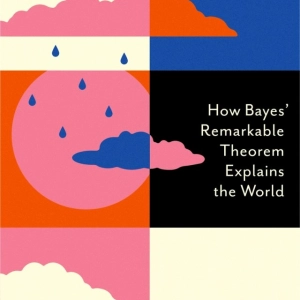
Everything is Predictable: How Bayes' Remarkable Theorem Explains the World. That’s the new book—out on April 25 in the UK and May 7 in the US—by our very own Tom Chivers!In this episode of The Studies Show, Tom and Stua…
Episode 32: Microplastics [not-audio_url] [/not-audio_url]

Duration: 1:00:30
Microplastics are everywhere: there are teeny-tiny plastic particles in your drinking water, your food, your air - and perhaps even in your internal organs. How worried should you be?In this episode of The Studies Show,…
Studies Show Short 1: Emotional Intelligence [not-audio_url] [/not-audio_url]

Duration: 22:33
As an extra way of thanking our paid subscribers, we’re going to post some shorter episodes in addition to the usual weekly hour-long ones.This first short episode (available to everyone for free; after this they’re paid…
Paid-only Episode 6: Bicycle helmets [not-audio_url] [/not-audio_url]

Duration: 10:06
This is a free preview of a paid episode. To hear more, visit sciencefictionspod.substack.comMost people think it’s obvious that you should wear a helmet when cycling. It might save your life if you fall off and hit your…
Episode 31: The trouble with meta-analysis [not-audio_url] [/not-audio_url]

Duration: 1:09:35
We all love to cite meta-analyses. They’re the review studies where scientists take every single piece of research ever published on a particular question, and then calculate the overall “true” effect across all of them.…

«1...678910