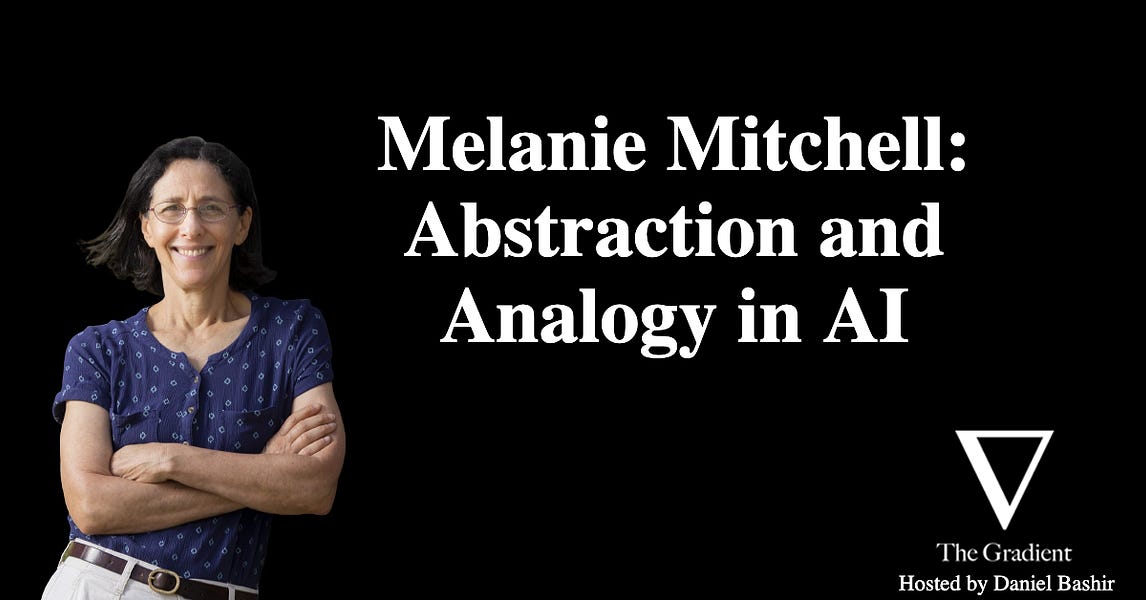
Melanie Mitchell: Abstraction and Analogy in AI

Melanie Mitchell: Abstraction and Analogy in AI

Author: Daniel Bashir December 15, 2022 Duration: 54:47

Have suggestions for future podcast guests (or other feedback)? Let us know here!

In episode 53 of The Gradient Podcast, Daniel Bashir speaks to Professor Melanie Mitchell.

Professor Mitchell is the Davis Professor at the Santa Fe Institute. Her research focuses on conceptual abstraction, analogy-making, and visual recognition in AI systems. She is the author or editor of six books and her work spans the fields of AI, cognitive science, and complex systems. Her latest book is Artificial Intelligence: A Guide for Thinking Humans

Subscribe to The Gradient Podcast:  Apple Podcasts  | Spotify | Pocket Casts | RSSFollow The Gradient on Twitter

Outline:

* (00:00) Intro

* (02:20) Melanie’s intro to AI

* (04:35) Melanie’s intellectual influences, AI debates over time

* (10:50) We don’t have the right metrics for empirical study in AI

* (15:00) Why AI is Harder than we Think: the four fallacies

* (20:50) Difficulties in understanding what’s difficult for machines vs humans

* (23:30) Roles for humanlike and non-humanlike intelligence

* (27:25) Whether “intelligence” is a useful word

* (31:55) Melanie’s thoughts on modern deep learning advances, brittleness

* (35:35) Abstraction, Analogies, and their role in AI

* (38:40) Concepts as analogical and what that means for cognition

* (41:25) Where does analogy bottom out

* (44:50) Cognitive science approaches to concepts

* (45:20) Understanding how to form and use concepts is one of the key problems in AI

* (46:10) Approaching abstraction and analogy, Melanie’s work / the Copycat architecture

* (49:50) Probabilistic program induction as a promising approach to intelligence

* (52:25) Melanie’s advice for aspiring AI researchers

* (54:40) Outro

Links:

* Melanie’s homepage and Twitter

* Papers

* Difficulties in AI, hype cycles

* Why AI is Harder than we think

* The Debate Over Understanding in AI’s Large Language Models

* What Does It Mean for AI to Understand?

* Abstraction, analogies, and reasoning

* Abstraction and Analogy-Making in Artificial Intelligence

* Evaluating understanding on conceptual abstraction benchmarks


Get full access to The Gradient at thegradientpub.substack.com/subscribe

Hosted by Daniel Bashir, The Gradient: Perspectives on AI moves beyond surface-level headlines to explore the intricate machinery and human ideas shaping artificial intelligence. Each episode is built on a foundation of deep research, leading to conversations that are both technically substantive and broadly accessible. You'll hear from researchers, engineers, and philosophers who are actively building and critiquing our technological future, discussing not just how AI systems work, but the larger implications of their integration into society. This isn't about speculative hype; it's a grounded examination of real progress, persistent challenges, and ethical considerations from those on the front lines. The discussions peel back layers on topics like model architecture, policy, and the fundamental science behind the algorithms becoming part of our daily lives. For anyone curious about the substance behind the buzz-whether you have a technical background or are simply keen to understand a defining technology of our age-this podcast offers a crucial and thoughtful resource. Tune in for a consistently detailed and nuanced take that treats artificial intelligence with the complexity it deserves.

Author: Language: English Episodes: 100

The Gradient: Perspectives on AI
Podcast Episodes
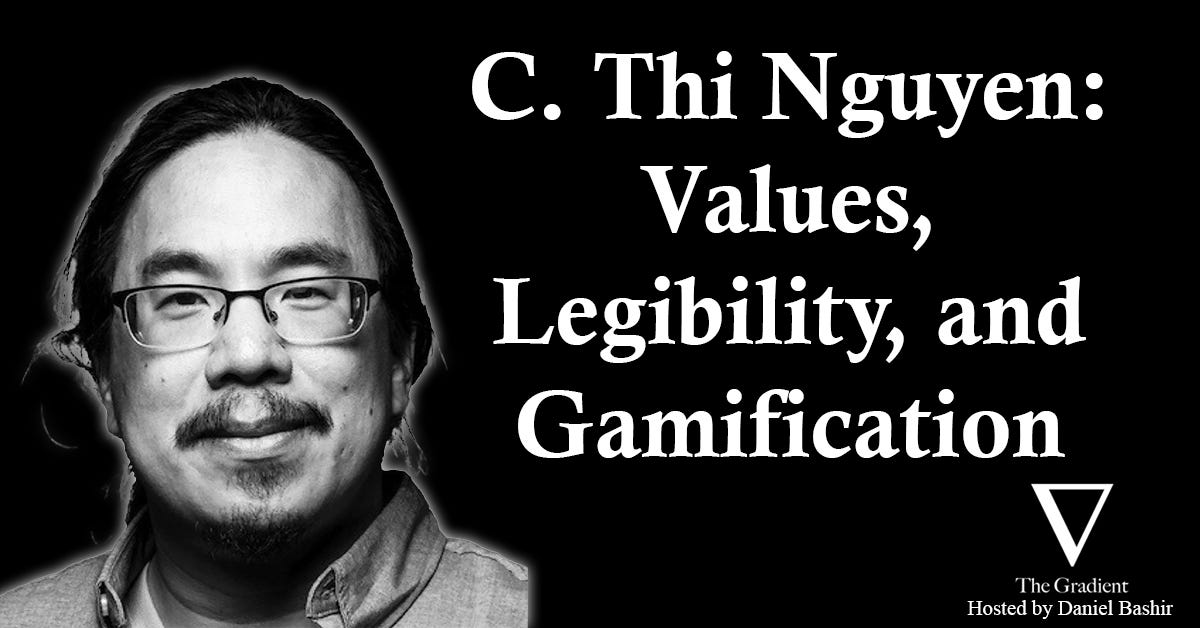
C. Thi Nguyen: Values, Legibility, and Gamification [not-audio_url] [/not-audio_url]

Duration: 1:30:13
Episode 127I spoke with Christopher Thi Nguyen about:* How we lose control of our values* The tradeoffs of legibility, aggregation, and simplification* Gamification and its risksEnjoy—and let me know what you think!C. Th…
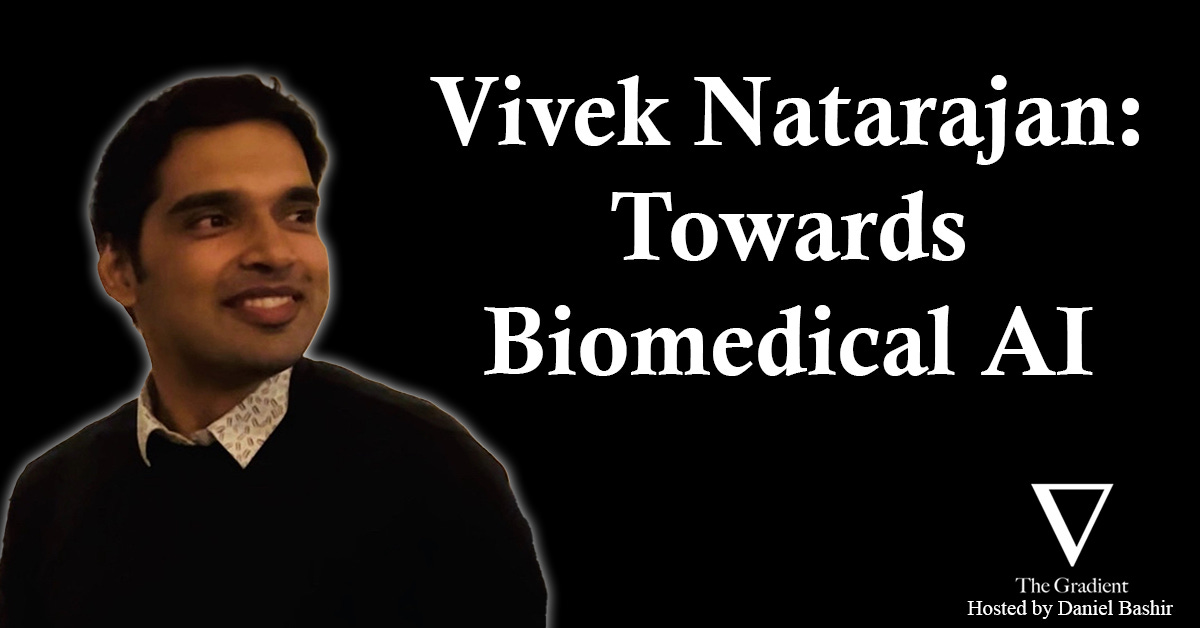
Vivek Natarajan: Towards Biomedical AI [not-audio_url] [/not-audio_url]

Duration: 1:55:03
Episode 126I spoke with Vivek Natarajan about:* Improving access to medical knowledge with AI* How an LLM for medicine should behave* Aspects of training Med-PaLM and AMIE* How to facilitate appropriate amounts of trust…
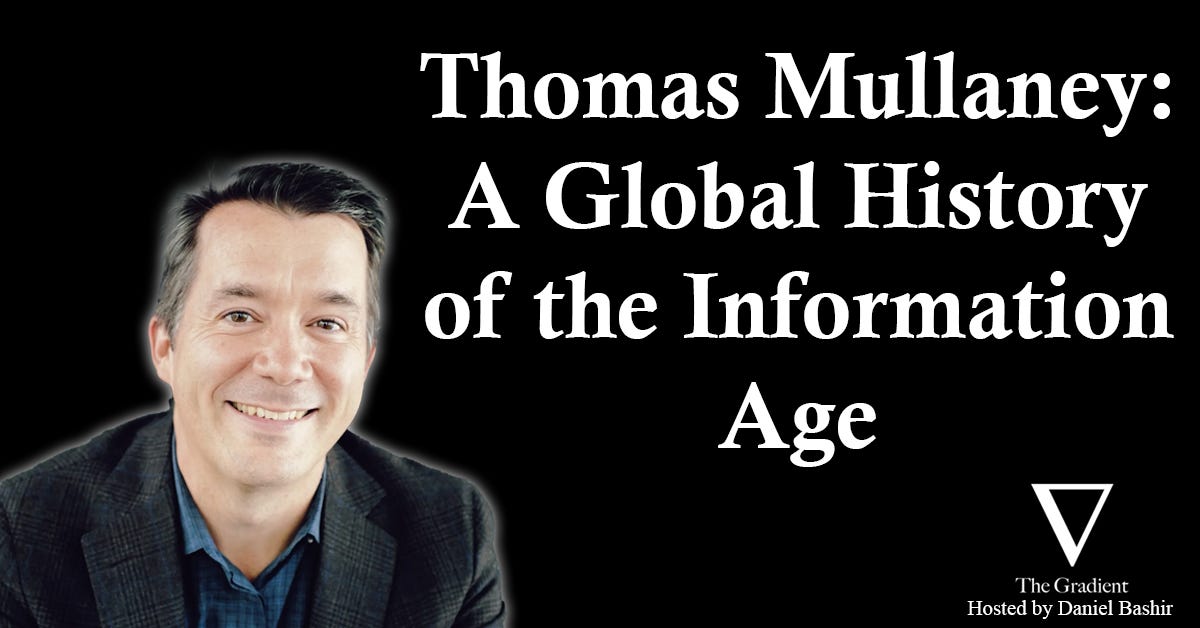
Thomas Mullaney: A Global History of the Information Age [not-audio_url] [/not-audio_url]

Duration: 1:43:45
Episode 125False universalism freaks me out. It doesn’t freak me out as a first principle because of epistemic violence; it freaks me out because it works. I spoke with Professor Thomas Mullaney about:* Telling stories a…
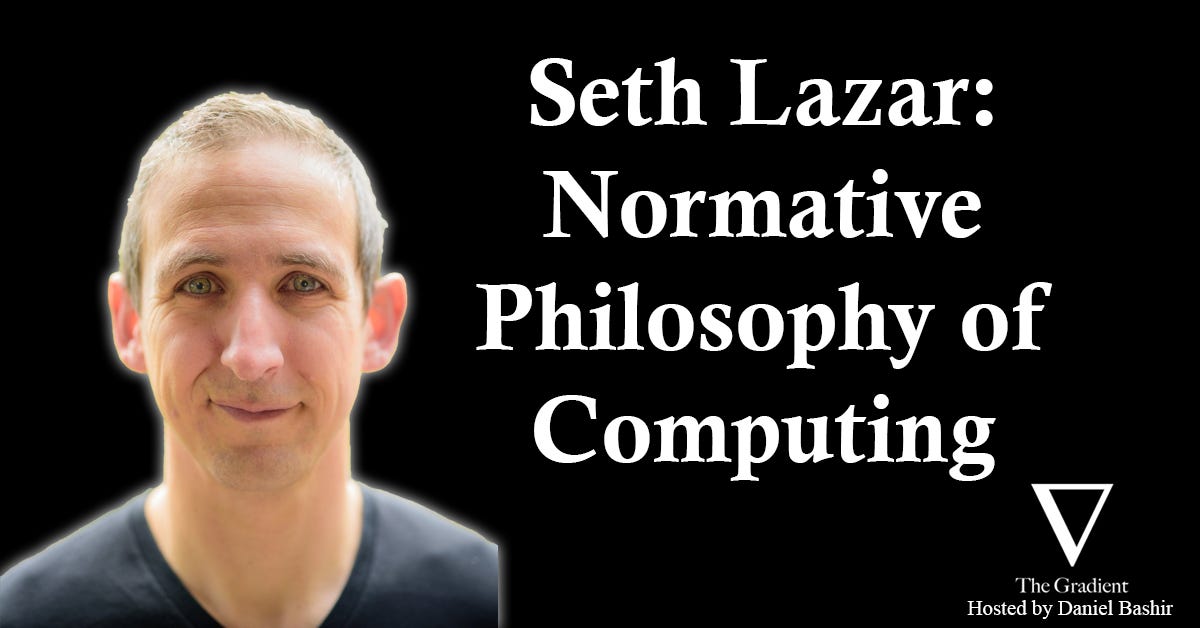
Seth Lazar: Normative Philosophy of Computing [not-audio_url] [/not-audio_url]

Duration: 1:50:17
Episode 124You may think you’re doing a priori reasoning, but actually you’re just over-generalizing from your current experience of technology.I spoke with Professor Seth Lazar about:* Why managing near-term and long-te…
Suhail Doshi: The Future of Computer Vision [not-audio_url] [/not-audio_url]

Duration: 1:08:07
Episode 123I spoke with Suhail Doshi about:* Why benchmarks aren’t prepared for tomorrow’s AI models* How he thinks about artists in a world with advanced AI tools* Building a unified computer vision model that can gener…
Azeem Azhar: The Exponential View [not-audio_url] [/not-audio_url]

Duration: 1:46:25
Episode 122I spoke with Azeem Azhar about:* The speed of progress in AI* Historical context for some of the terminology we use and how we think about technology* What we might want our future to look likeAzeem is an entr…
David Thorstad: Bounded Rationality and the Case Against Longtermism [not-audio_url] [/not-audio_url]

Duration: 2:19:02
Episode 122I spoke with Professor David Thorstad about:* The practical difficulties of doing interdisciplinary work* Why theories of human rationality should account for boundedness, heuristics, and other cognitive limit…
Michael Sipser: Problems in the Theory of Computation [not-audio_url] [/not-audio_url]

Duration: 1:28:21
In episode 119 of The Gradient Podcast, Daniel Bashir speaks to Professor Michael Sipser.Professor Sipser is the Donner Professor of Mathematics and member of the Computer Science and Artificial Intelligence Laboratory a…